-
.jpg) Bethphage:
Bethphage:Traditional site where Jesus began his triumphal entry into Jerusalem on Palm Sunday.
Jesus seeks a donkey to enter Jerusalem, as foretold in the prophecy of Zechariah... In this small village stands the Franciscan church, designed by Antonio Barluzzi.
Matthew 21:1, Mark 11:1, Luke 19:0
-
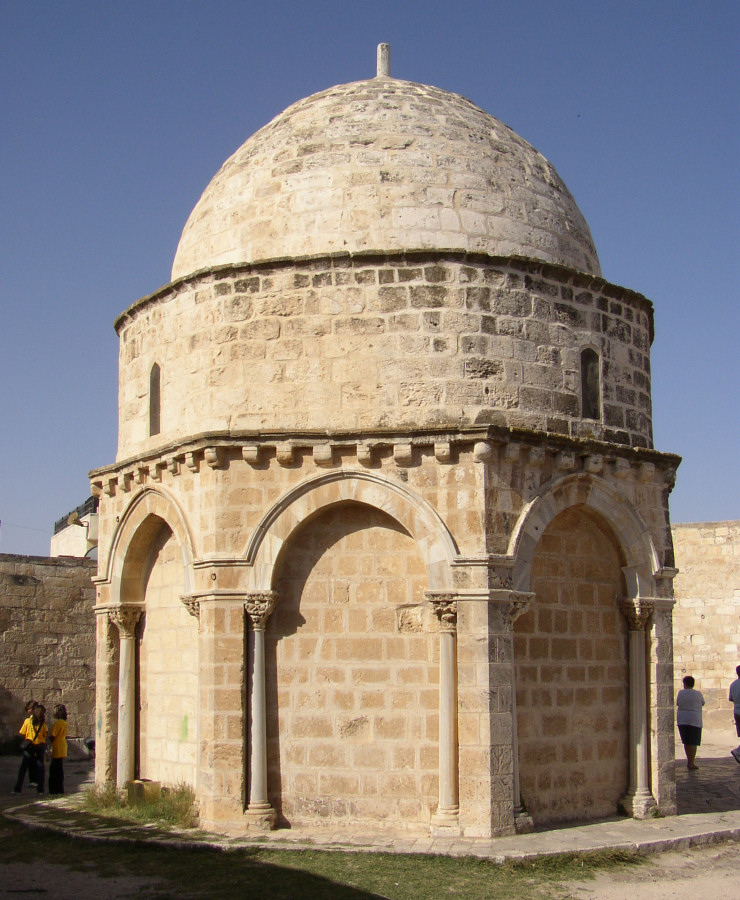 Church of the Ascension:
Forty days after the resurrection, Jesus ascends to heaven from this place, entrusting his mission to his disciples.
Crusader construction from the 12th century... Inside the compound is the stone believed by Christian tradition to bear the footprint of Jesus.
Luke 24:50–51, Acts of the Apostles 1:9–12
-
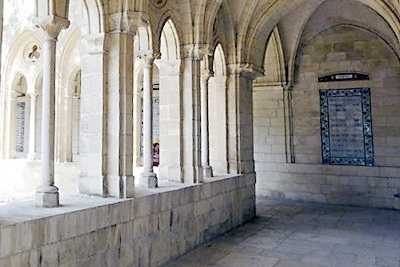 Church of the Pater Noster (Eleona):
Jesus taught his disciples the traditional prayer.
Founded by Helena, mother of Constantine... Today it belongs to the French Carmelite Community.
Matthew 6:9–13, Luke 11:1–4
-
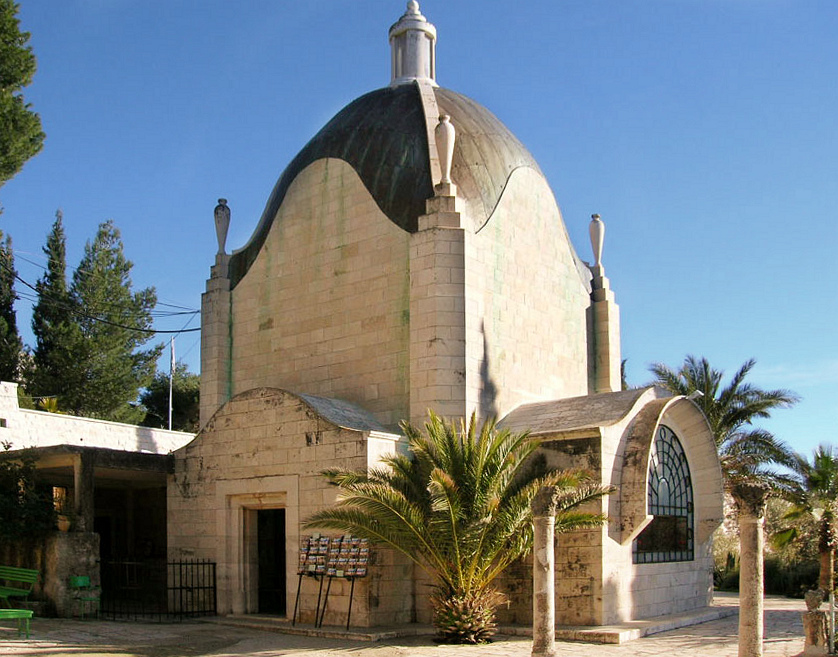 Dominus Flevit Church:
Jesus wept over Jerusalem, prophesying its destruction.
Designed by Antonio Barluzzi, it offers one of the most iconic views of the Old City.
Luke 19:41
-
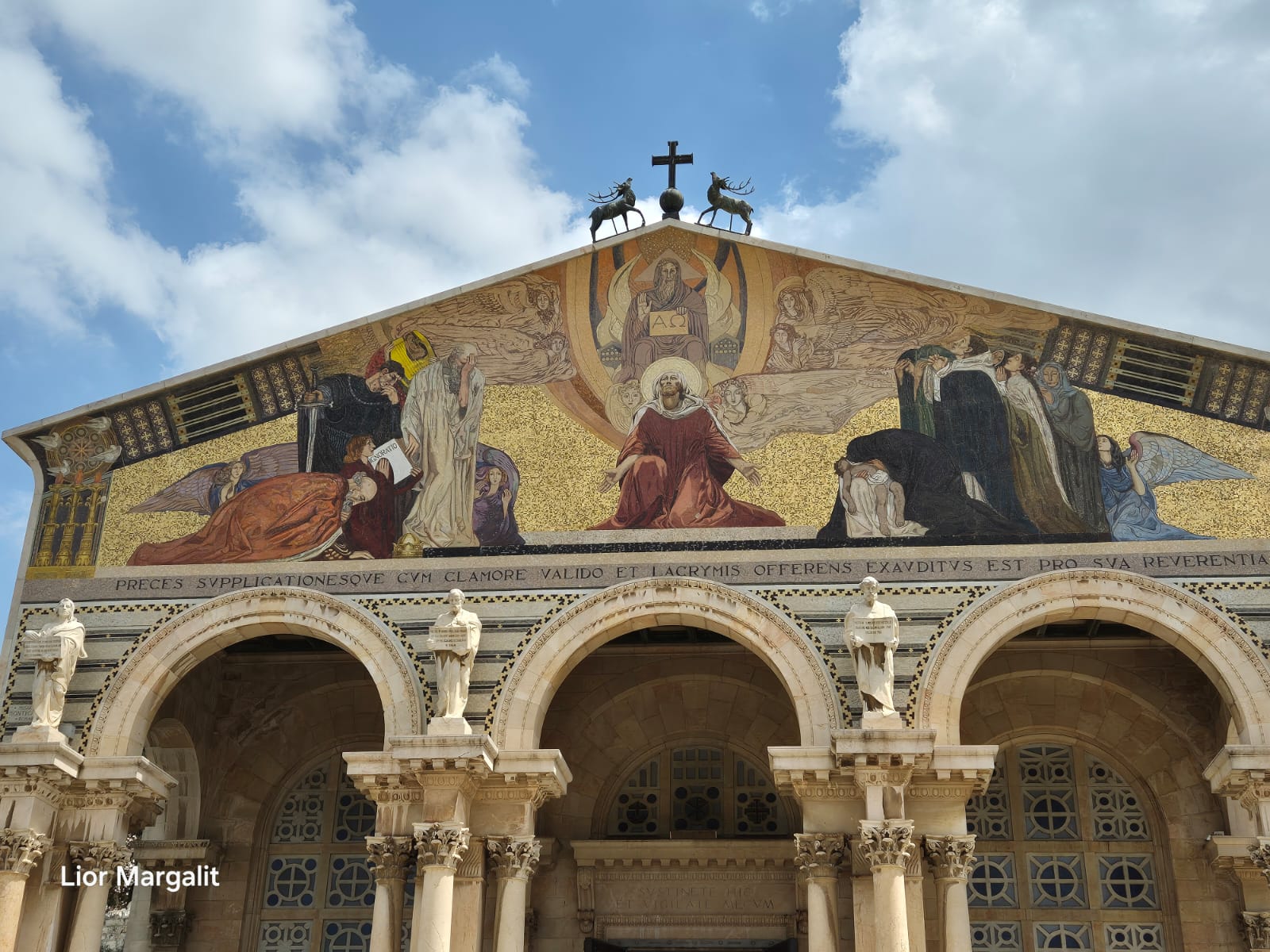 Basilica of the Agony – Church of Gethsemane (Church of All Nations):
Jesus prays before being taken to trial.
Built by Antonio Barluzzi over Byzantine remains... The altar is placed over the rock where Jesus is believed to have prayed.
Luke 22:39–46
-
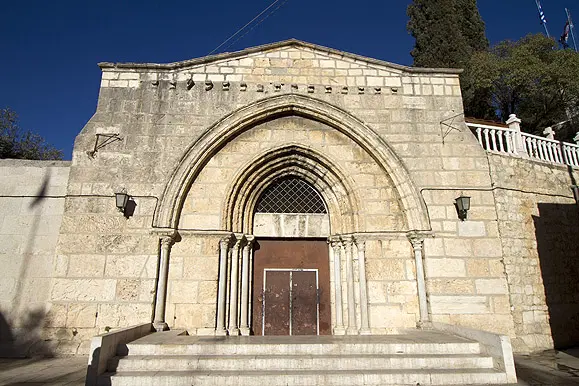 Tomb of the Virgin Mary:
According to Eastern tradition, this is the place where Mary was buried.
Built by the Franciscans in the 14th century... Inside lies the tomb of Queen Melisende.
-
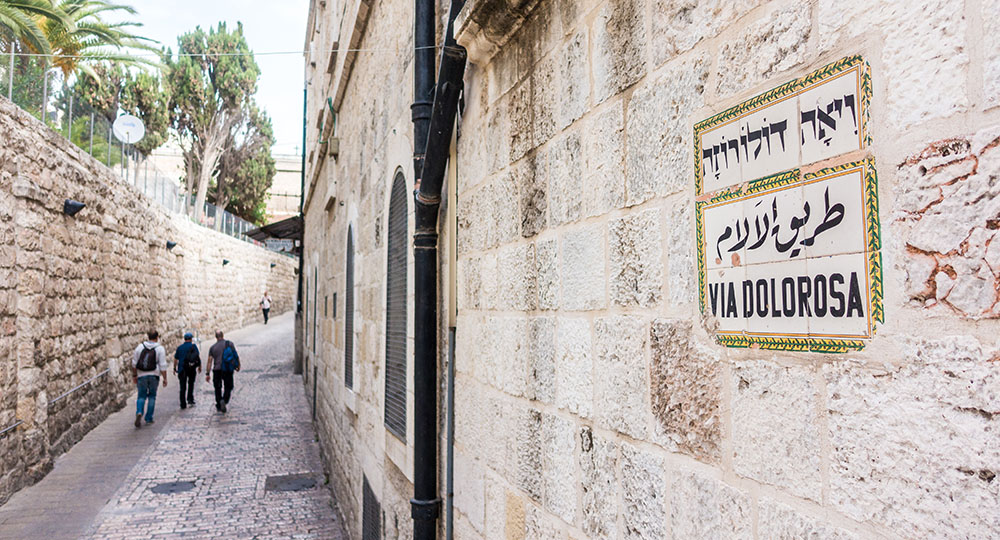 Via Dolorosa
The path Jesus walked to his crucifixion, ending at the Church of the Holy Sepulchre.
The traditional route followed every Friday by Franciscan monks, starting at the Chapel of the Flagellation (Station II) and ending at the Holy Sepulchre.
According to Christian faith, Jesus is condemned to the cross at Station I (now the Omariya School), scourged and made to carry the cross (Station II), and from there to Golgotha, now located within the Church of the Holy Sepulchre. -
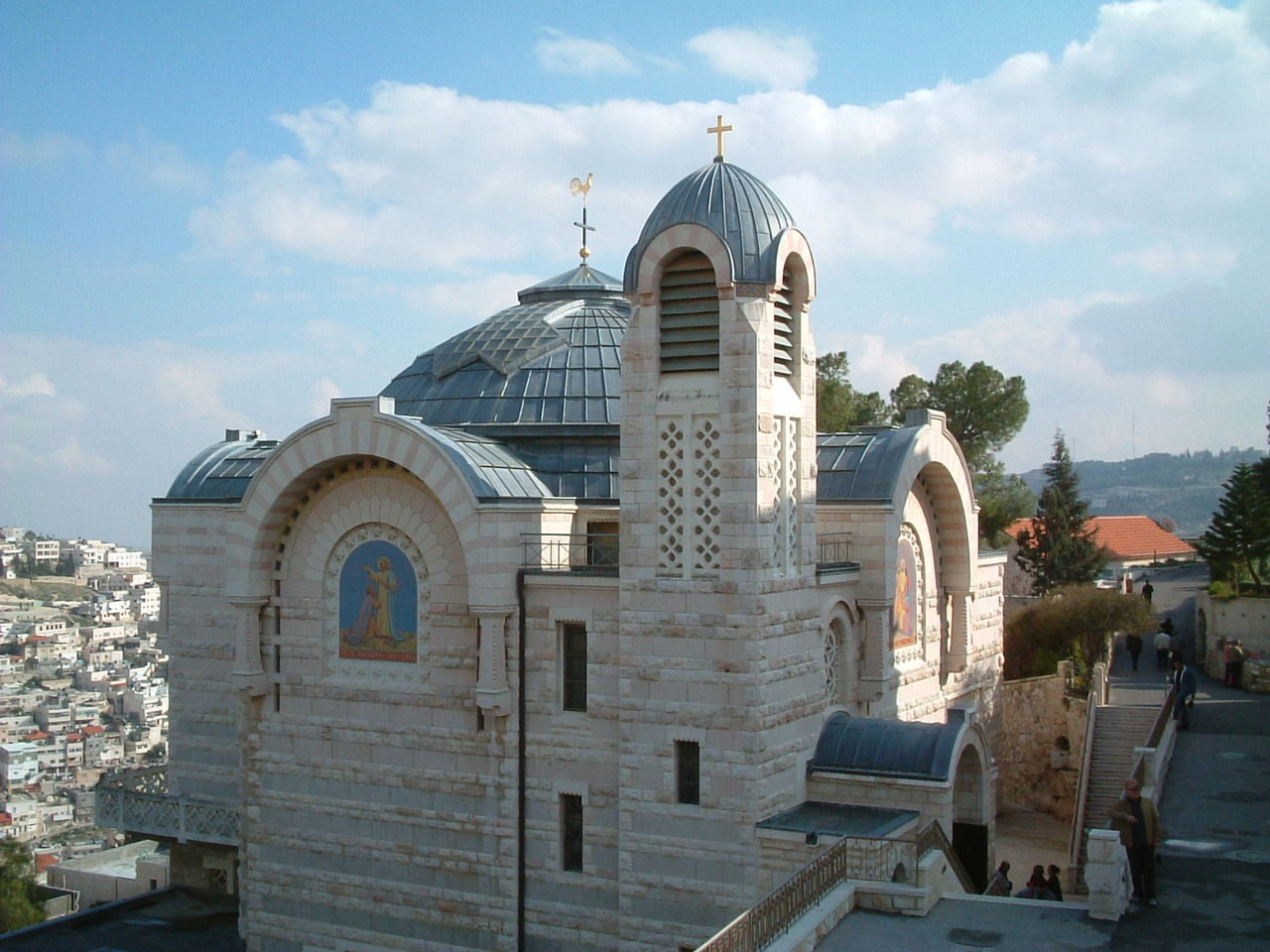 Church of Saint Peter in Gallicantu
Likely the house of the High Priest Caiaphas, where Jesus was held before being taken to Pontius Pilate.
This church, designed in the shape of a cross, was built over the ruins of a Byzantine church destroyed during the Muslim conquest in the 7th century. It is believed to be the site of Caiaphas’s house, where Jesus and Peter were imprisoned before being brought before Pontius Pilate.
The church’s name comes from the New Testament account in which Jesus tells Peter he will deny him three times before the rooster crows. And so it happened: when Jesus was arrested in Gethsemane and taken to Caiaphas’s house, Peter denied knowing him three times, until the rooster crowed.Matthew 26:69–75, Mark 14:66–72, Luke 22:54–62, John 18:15–27
-
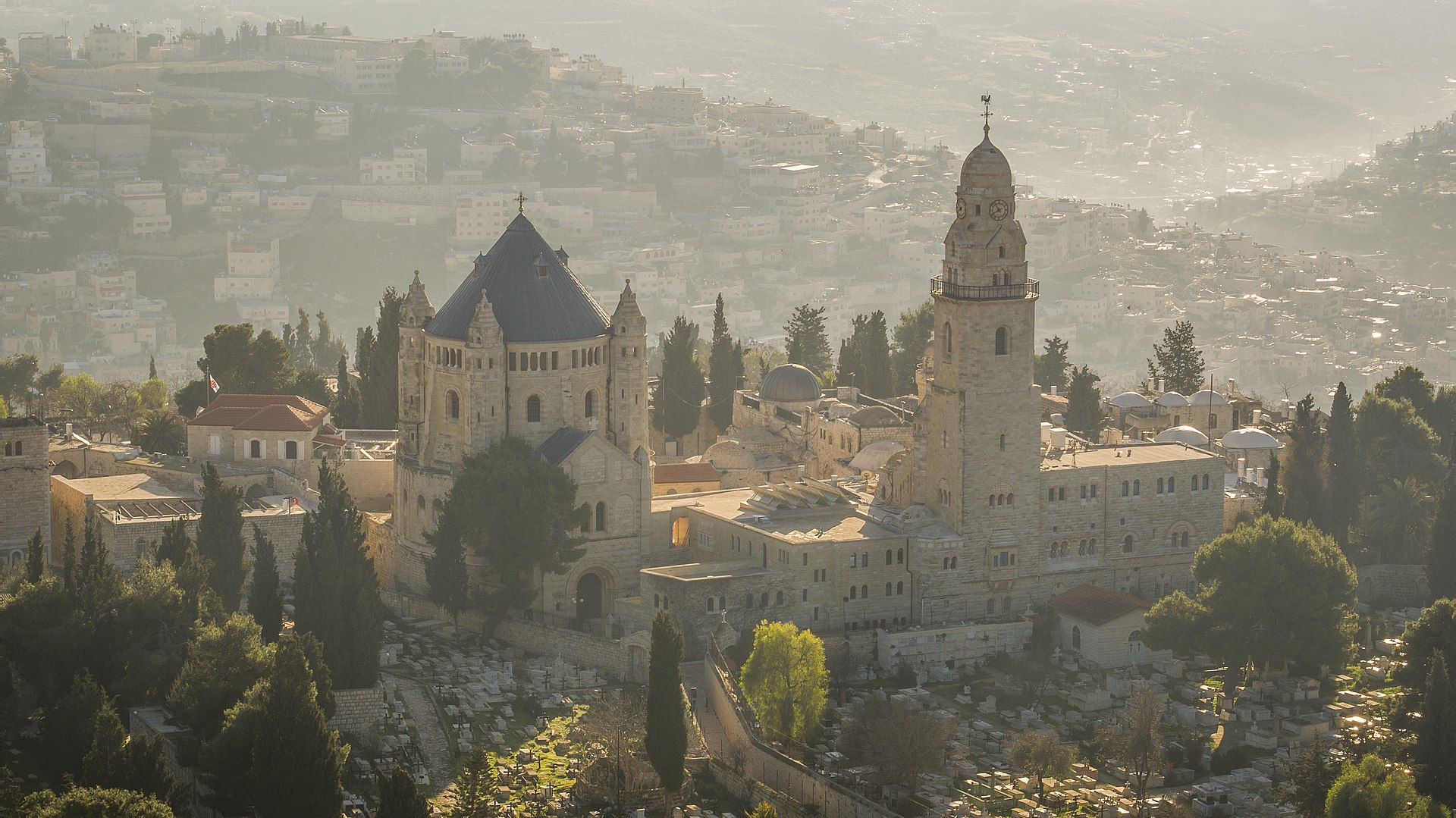 Dormition Abbey of Mary
Abbey built in 1910 over 6th-century Byzantine ruins.
This magnificent cross-shaped abbey was built at the end of the 19th century and inaugurated at the beginning of the 20th century by order of German Kaiser Wilhelm II, on land granted by Ottoman Sultan Abdul Hamid II. It was constructed over the ruins of an ancient Byzantine church called Agia Sion, one of the few depicted on the famous mosaic map of Madaba Church in Jordan. According to Christian tradition, this site marks the place where Mary, the mother of Jesus, fell into her eternal sleep — hence the name "Dormitio" (sleep).
-
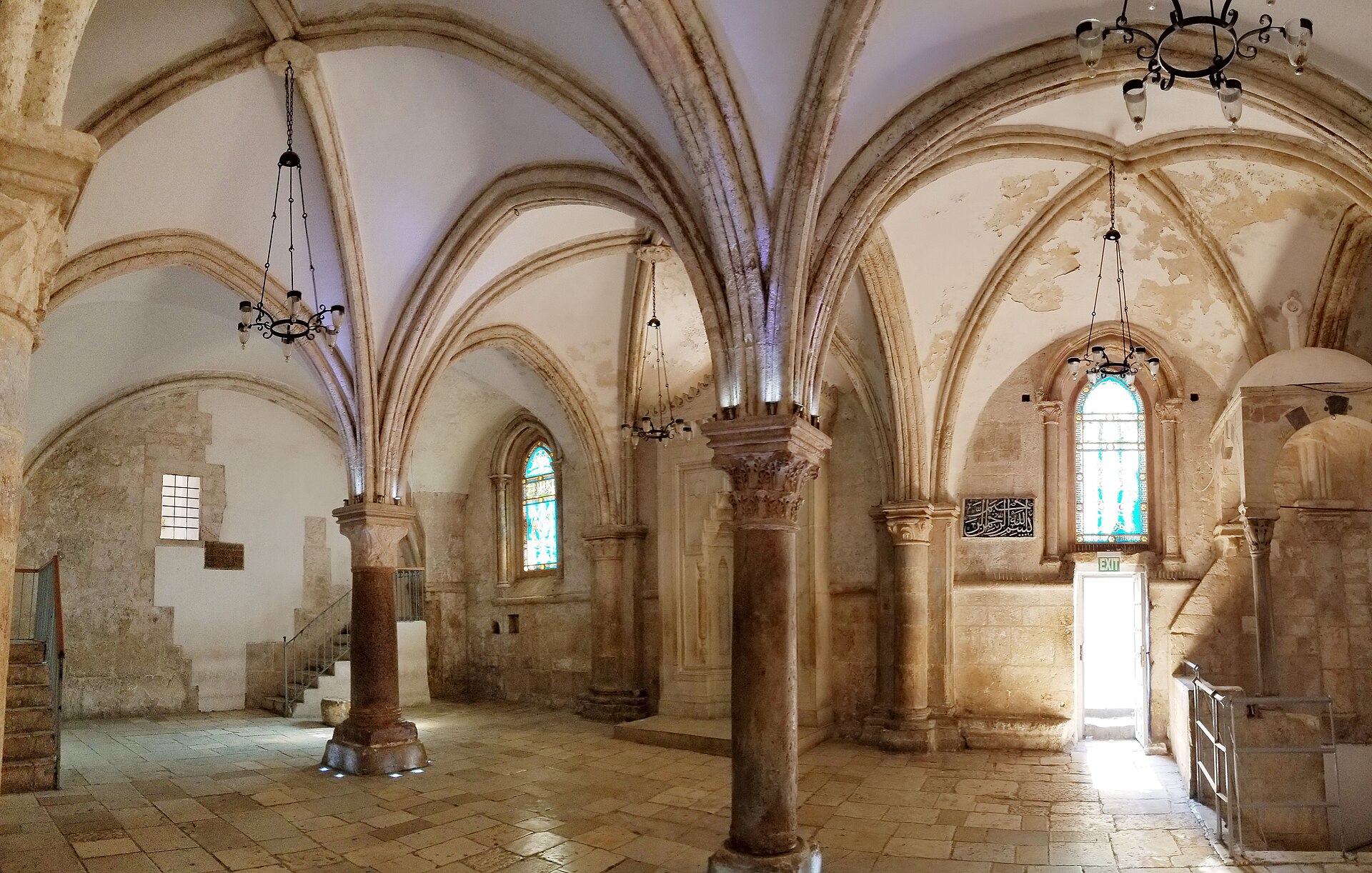 The Cenacle – The Last Supper
On the upper floor of the same complex as the Tomb of David is the room of the Last Supper (Cenaculum).
Leonardo da Vinci famously depicted this unique moment when Jesus, together with his apostles, celebrated what would be his final meal during Passover. Although this site was built by the Crusaders in the 12th century and later converted into a mosque in the 14th century (as seen in its walls), the building stands on the remains of the ancient Byzantine church Agia Sion — the same one beneath the Dormition Abbey.
According to tradition, this church protected the room where the Last Supper took place and also the space where the apostles received the Holy Spirit during Pentecost.Matthew 26:17–30, Mark 14:12–26, Luke 22:7–39, John 13:1–30, Acts 2:1–13
-
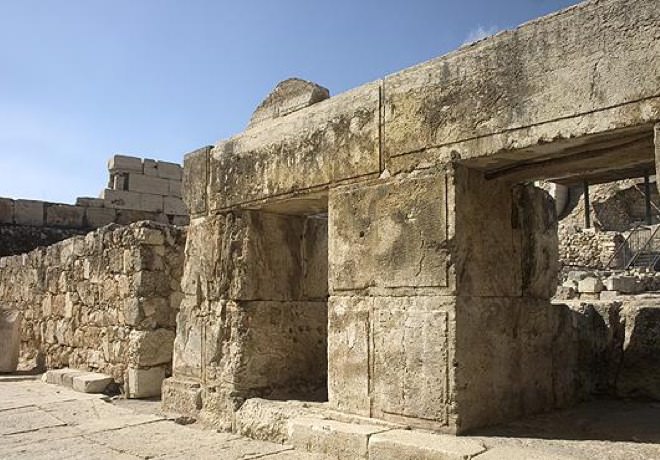 Cleansing of the Temple:
Jesus confronts the merchants in the Temple.
Jesus confronted the merchants in the Temple, driving them out for turning a sacred place into a marketplace.
Matthew 21:12, Mark 11:14, Luke 19:45, John 2:13
-
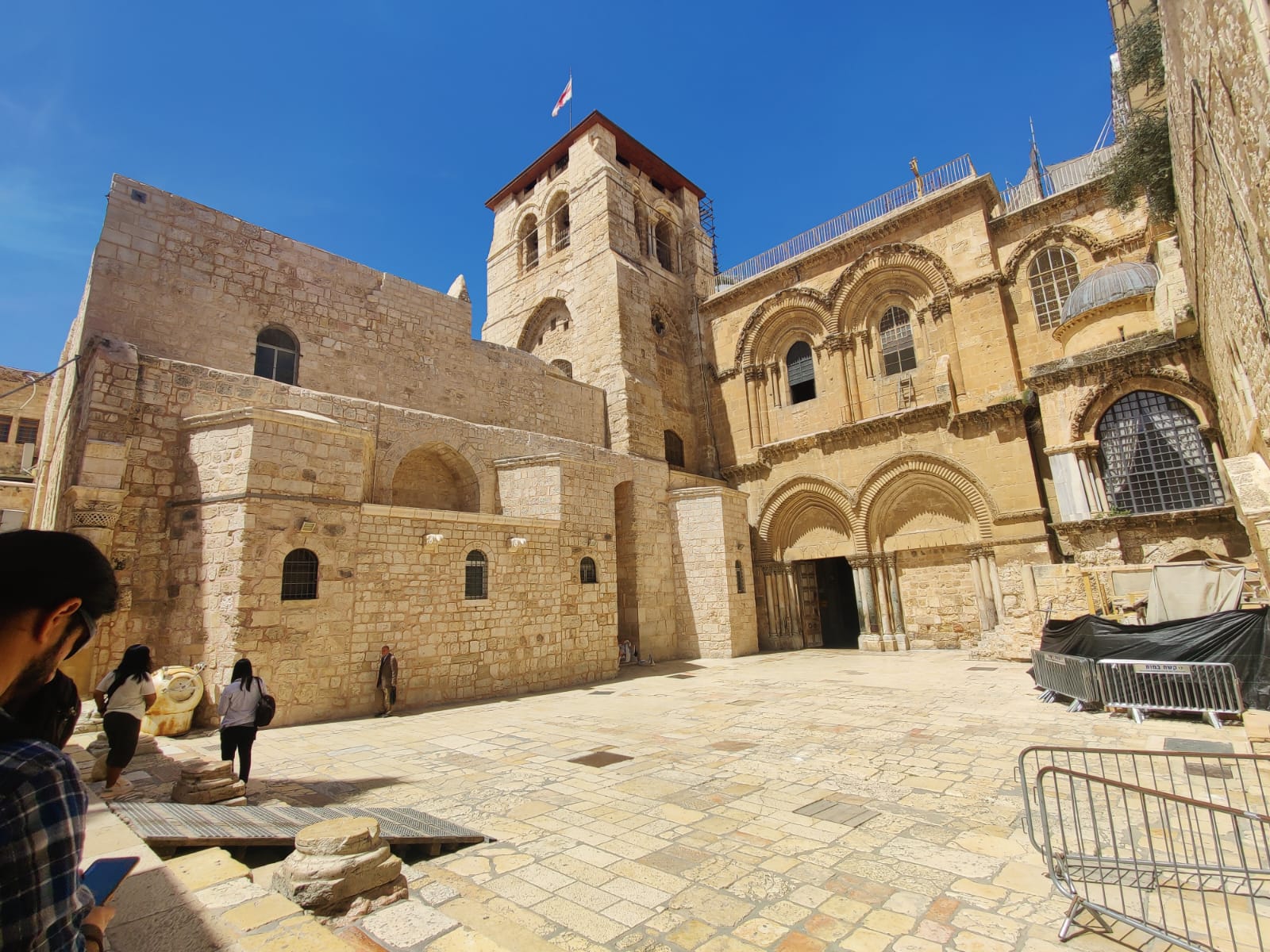 The Holy Sepulchre:
Church covering the site where Jesus was crucified, buried, and, according to Christian faith, resurrected.
What is now known as the Church of the Holy Sepulchre is the result of a series of restorations that began in the 4th century, when Emperor Constantine embraced Christianity in 313 through the Edict of Milan. In 324, he made it part of his empire’s religion, although he only converted shortly before his death. His mother, Helena, had embraced Christianity much earlier. During her pilgrimage to the Holy Land, seeking to trace the footsteps of Jesus, Helena discovered the three crosses beneath what is now known as Golgotha, believing one of them to be that of Jesus. Over this site, Constantine built a church. In 614, a massive incursion by the Sassanid Persians destroyed many churches in the Land of Israel, including this one. When Ibn al-Khattab arrived in 638, the church was rebuilt. In 1009, al-Hakim bi-Amr Allah of the Fatimid dynasty destroyed it, sparing only the sanctuary. In 1048, the Byzantines, though no longer ruling the region, rebuilt the church. Fifty years after the Crusaders arrived in 1099, Queen Melisende led another reconstruction, and what we see today is largely the result of her efforts.