-
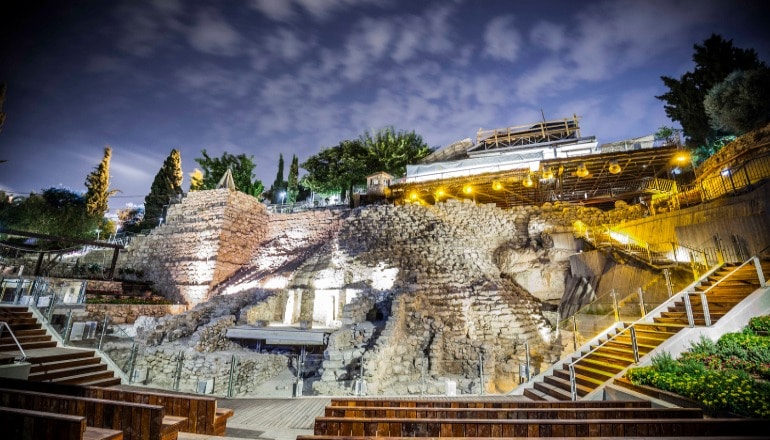 City of David
The birthplace of Jerusalem.
King David, after ruling in Hebron, came here and conquered the city from the Jebusites. It was here that he brought the Ark of the Covenant (ארון הברית – Aron HaBrit in Hebrew). David ruled from this city for 43 years until his death, and the City of David remained a central part of Jerusalem’s daily life until its fall in 70 CE.
2 Samuel 5:6–9
-
.jpg) King Hezekiah’s Wall
King Hezekiah’s WallThe wall built by King Hezekiah during the First Temple period.
During the Assyrian siege of the Kingdom of Israel, when it was separated from the Kingdom of Judah, King Hezekiah (חזקיהו – Hezkiahu) of Judah fortified Jerusalem to prevent an attack in the 8th century BCE. This section of the massive wall extended to the southern edge of the City of David.
2 Chronicles 32:5
-
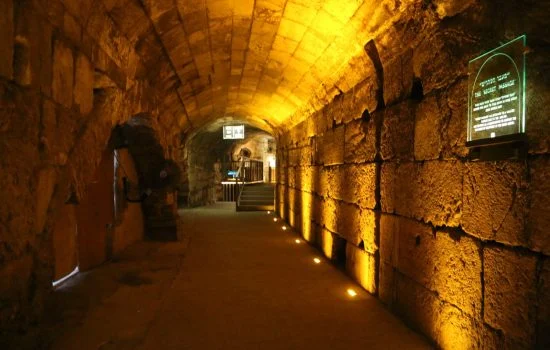 Temple Tunnels
Underground tour revealing hidden sections of the Western Wall.
A fascinating underground tour that allows visitors to explore hidden sections of the Western Wall, inaccessible from the main plaza. While the exposed part of the Wall is about 60 meters long, the tunnels stretch over 450 meters beneath the surface, revealing ancient structures, Roman streets, ritual baths, and original stones from the Second Temple—some weighing up to 600 tons! Walking through these passages is like stepping back in time. The guided tour includes interactive experiences, virtual reconstructions, and rooms dedicated to the Twelve Tribes of Israel, making it an educational, spiritual, and emotional experience for all ages.
-
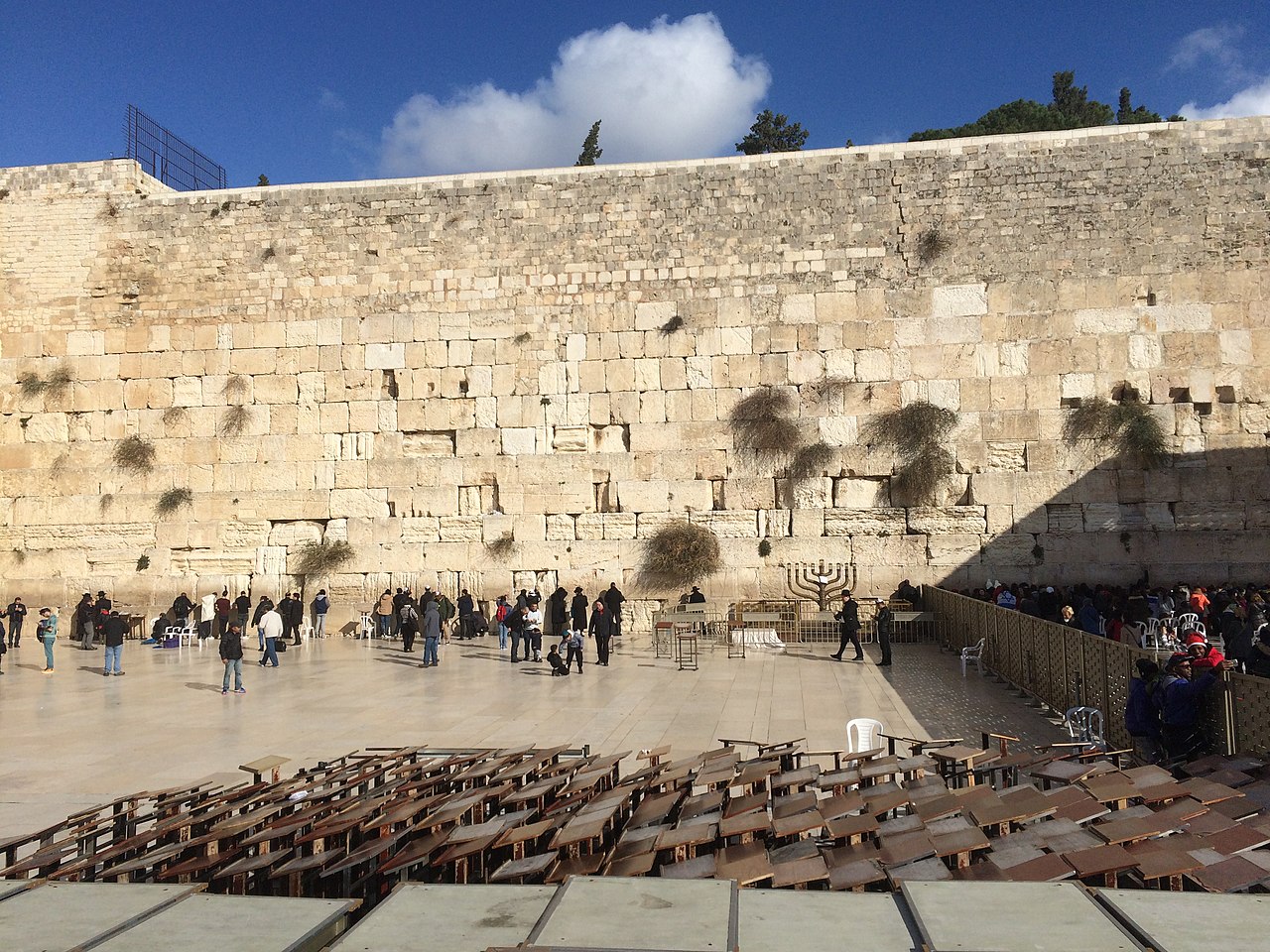 The Western Wall (Kotel)
Western wall of the Temple Mount.
The well-known Western Wall is actually a small exposed section of the western retaining wall surrounding the Second Temple of Jerusalem, built by King Herod in 19 BCE. The Romans destroyed the Temple and much of the wall in 70 CE. Over time, different stone-cutting styles reveal which parts are original and which were added later.
During the Mamluk period (1260 CE), residential buildings were constructed over the wall to prevent Jewish worship. Only a narrow alley remained for Jews to pray and mourn the loss of Jerusalem. After 2,000 years, descendants of those Jews returned. The Jewish people are the only ones who mourn annually on the 9th of Av (אב – the 11th month in the Hebrew calendar), commemorating the destruction of both Temples.
Today, the State of Israel cleared obstructive buildings to allow millions of visitors access to this sacred site.
Although archaeology confirmed the existence of tunnels extending beneath the Muslim Quarter, it wasn’t until 1996 that these tunnels were opened, allowing visitors to explore the full length of the Western Wall for the first time in 2,000 years. -
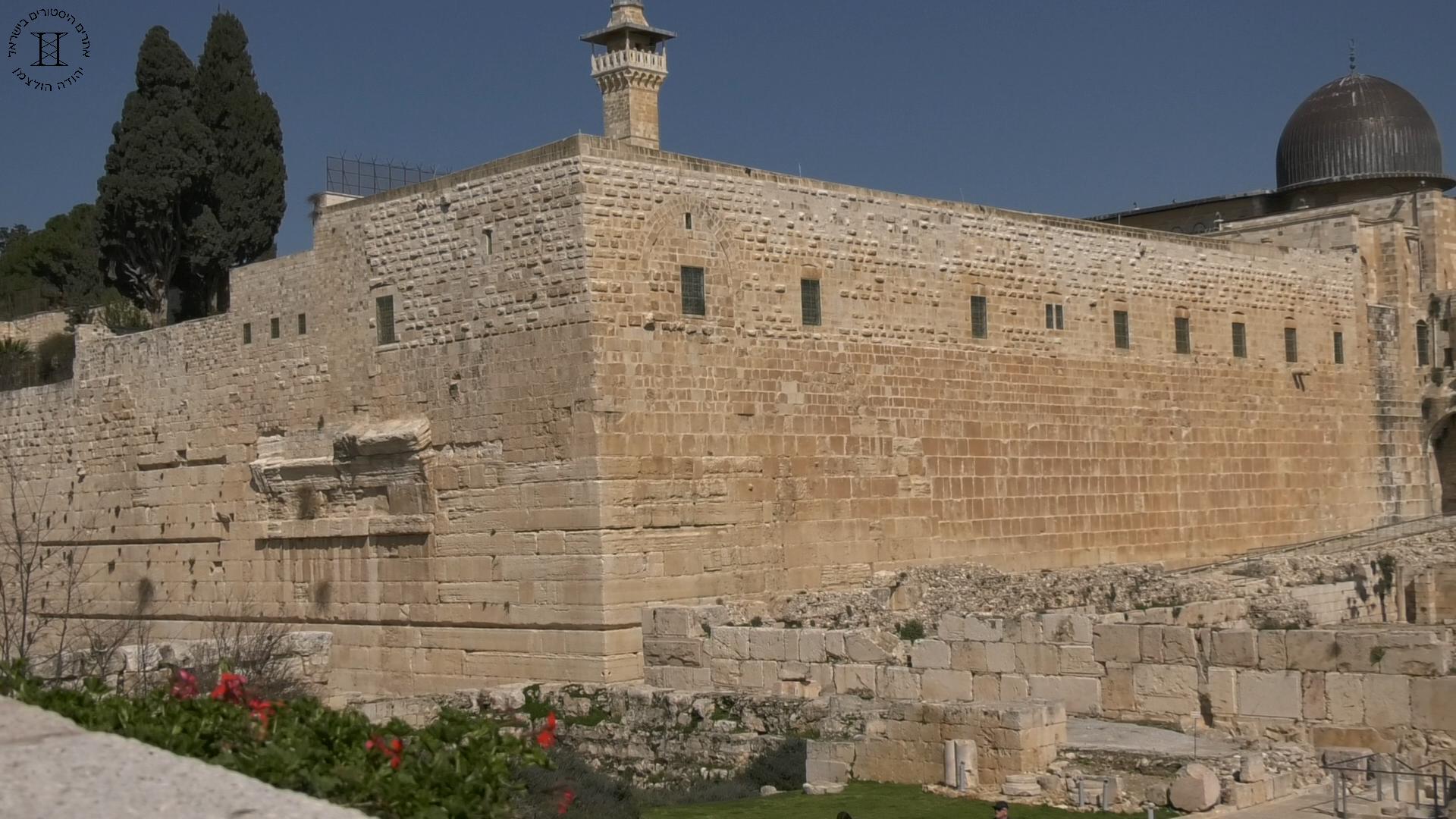 Archaeological Park – Davidson Center
Archaeological zone with Second Temple remains.
From this archaeological park, visitors can view the southern wall and the southwestern corner of the Temple Mount. It’s one of the few places where the scale of the destruction in 70 CE can be truly grasped. Piles of stones that fell during the Temple’s destruction remain untouched. Remnants of an arch and monumental staircases once led worshippers to the Royal Stoa. Continuing along the southern wall, one reaches the grand entrance stairs to the Temple—the Hulda Gates.
Mishnah: Sukkah 5:5