-
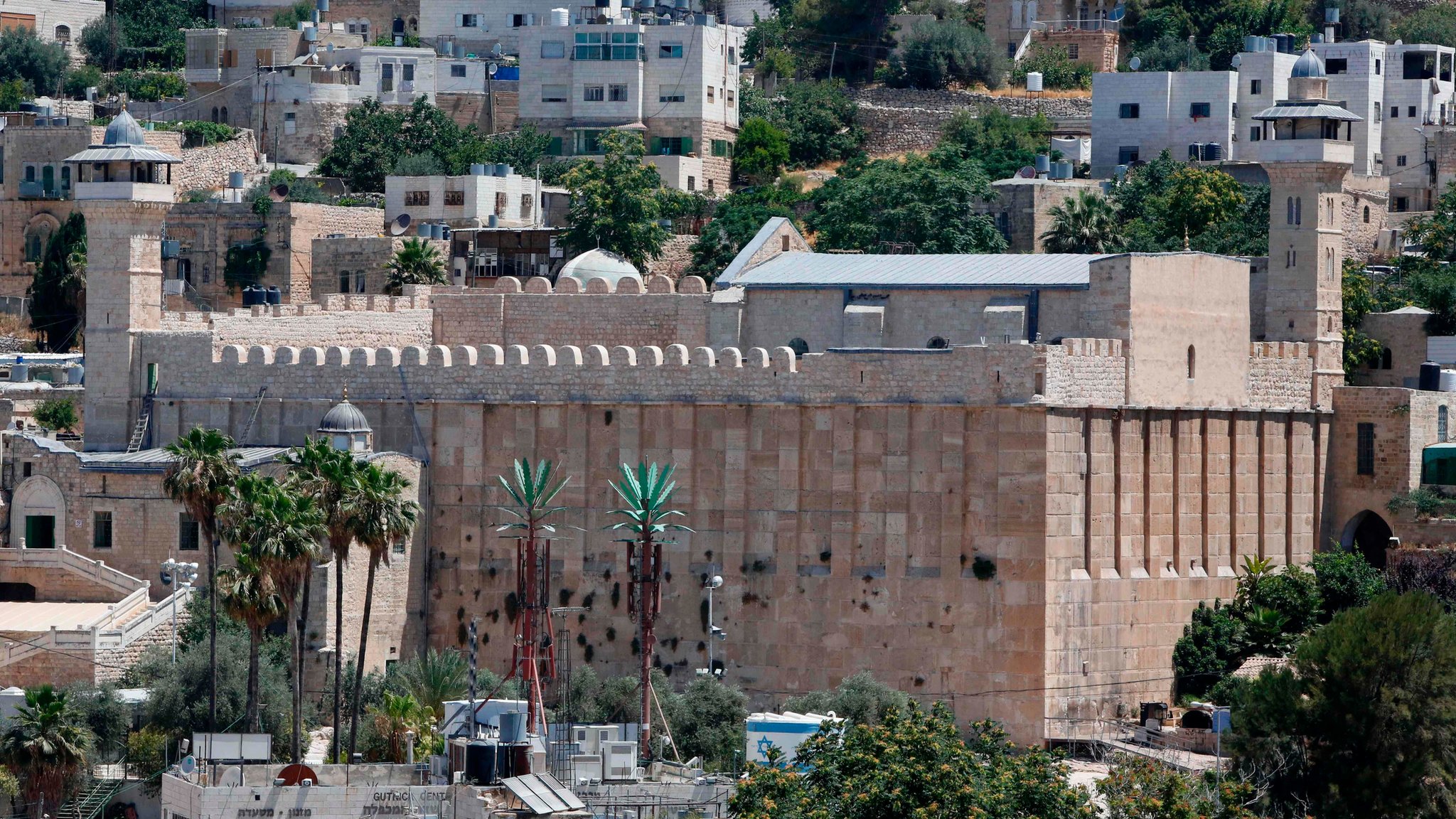 Hebron - Cave of Machpelah
Tomb of the Patriarchs.
Site purchased by the Hebrew Patriarch Abraham from Ephron the Hittite to bury his wife Sarah. The significant reason mentioned for Abraham buying this cave from Ephron, despite Ephron repeatedly offering it for free, was to ensure that no one could ever dispute the exclusive ownership of this land by the Hebrew Patriarch and his descendants. Later, Abraham himself, his son Isaac, Isaac’s son Jacob, and their wives Rebekah and Leah were also buried here — all of them fathers and mothers of the people of Israel. The monumental structure was built by King Herod and resembles the construction of the Second Temple.
Purchase and burial of Sarah: Genesis 23
Burial of Abraham: Genesis 25
Burial of Jacob: Genesis 50 -
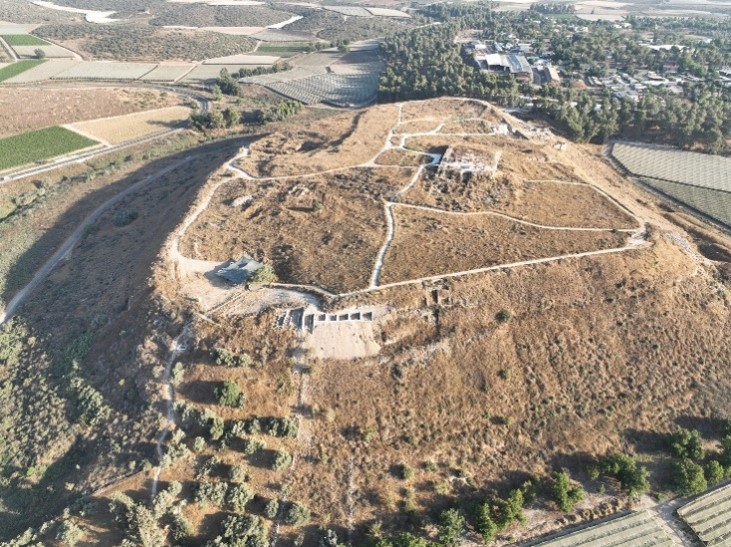 Tel Lachish National Park
Site of the battle against the Assyrian King Sennacherib.
Tel Lachish (תל לכיש = in Hebrew, Mount Lachish) was a fortified city conquered during Joshua’s (יהושע = in Hebrew, Yehoshua) campaign at the beginning of the Iron Age (12th century BCE). During the Assyrian occupation of the Kingdom of Israel, Lachish was attacked by the Assyrian king Sennacherib. Years later, in 586 BCE, Lachish was attacked again, this time by the Babylonians.
In ancient times, communication was mainly through fire or smoke signals. Opposite Mount Lachish lies Mount Azekah. At the entrance to Lachish, an ostracon (a pottery shard used for writing) was found, in which a guard wrote that Azekah could no longer be seen — a sign that Azekah had fallen and Lachish would soon follow.Joshua 15:39
-
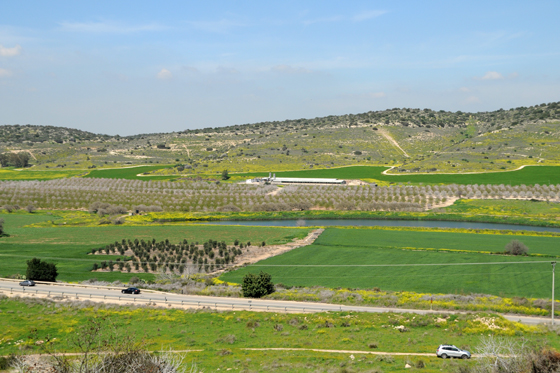 Tel Azekah National Park
Site of the battle between David and Goliath
Although the battle did not take place at Tel Azekah (תל עזקה = in Hebrew, Tel Azekah, Mount Azekah), it occurred in the Valley of Elah, which can be seen from the hill.
According to the verses of the Old Testament, the battle was between the troops of Israel, led by King Saul, and the Philistine forces coming from the coastal cities. From the Philistine army emerged a bold and heavily armed warrior named Goliath from the city of Gath, who faced a young man from Bethlehem (בית לחם = in Hebrew, Bet Lehem) of the tribe of Judah (יהודה = in Hebrew, Yehuda), carrying only a stone in his hand — his name was David. David hurled the stone and killed the mighty Goliath, ending a battle that seemed impossible for Israel to win. The geographical points mentioned in the Holy Scriptures are spread out at the foot of this hill — Tel Azekah.1 Samuel 17
-
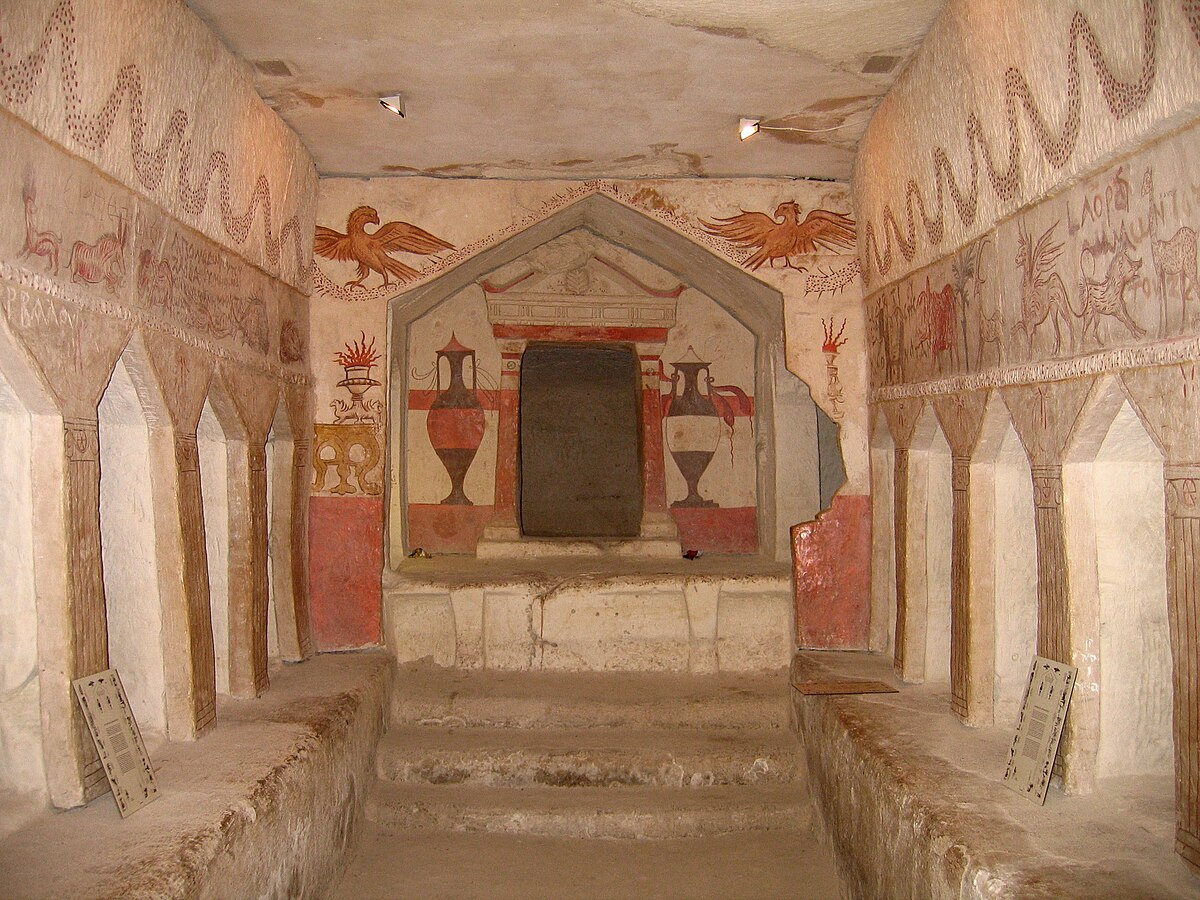 Beit Guvrin - Maresha National Park
From Joshua’s conquest (יהושע = in Hebrew, Yehoshua) to the Hellenistic period.
The Bible recounts that Yehoshua (יהושע = in Hebrew, Joshua) conquered Maresha as one of the cities of Judea.
Years later, after the division of the kingdoms into Judea and Israel, Maresha remained part of Judea under King Rehoboam (רחבעם = in Hebrew). Realizing that much of his kingdom had split, Rehoboam fortified his reign — not against the ten tribes that now formed the Kingdom of Israel, but against external enemies, primarily Egypt. Therefore, he fortified several cities, including Maresha.
Persian Period: After the fall of Judea in 586 BCE, the Jews abandoned Maresha, which was then occupied by Edomites and Phoenicians.
Greek Period: Alexander of Macedonia conquered the Land of Israel, and Maresha was renamed Marissa.
Hasmonean Period: After the Hasmonean revolt (חשמונאים = in Hebrew, Hashmonaim), John Hyrcanus (יוחנן הורקנוס = in Hebrew) converted the Edomite population to Judaism, and Maresha became Jewish again.
Roman Period: During Herod’s (הורדוס = in Hebrew, Hordus) attempt to conquer Israel, he fought against Antigonus II, who had declared himself king from the Hasmonean line. Antigonus sought help from Rome’s greatest enemy — the Parthian Empire. In the year 40 BCE, the Parthians destroyed Maresha. After this event, the Romans did not rebuild Maresha but instead founded a new city nearby, naming it Beit Guvrin (Eleutheropolis).Joshua’s conquest: Joshua 15:44
Rehoboam’s fortification: 2 Chronicles 11:8