-
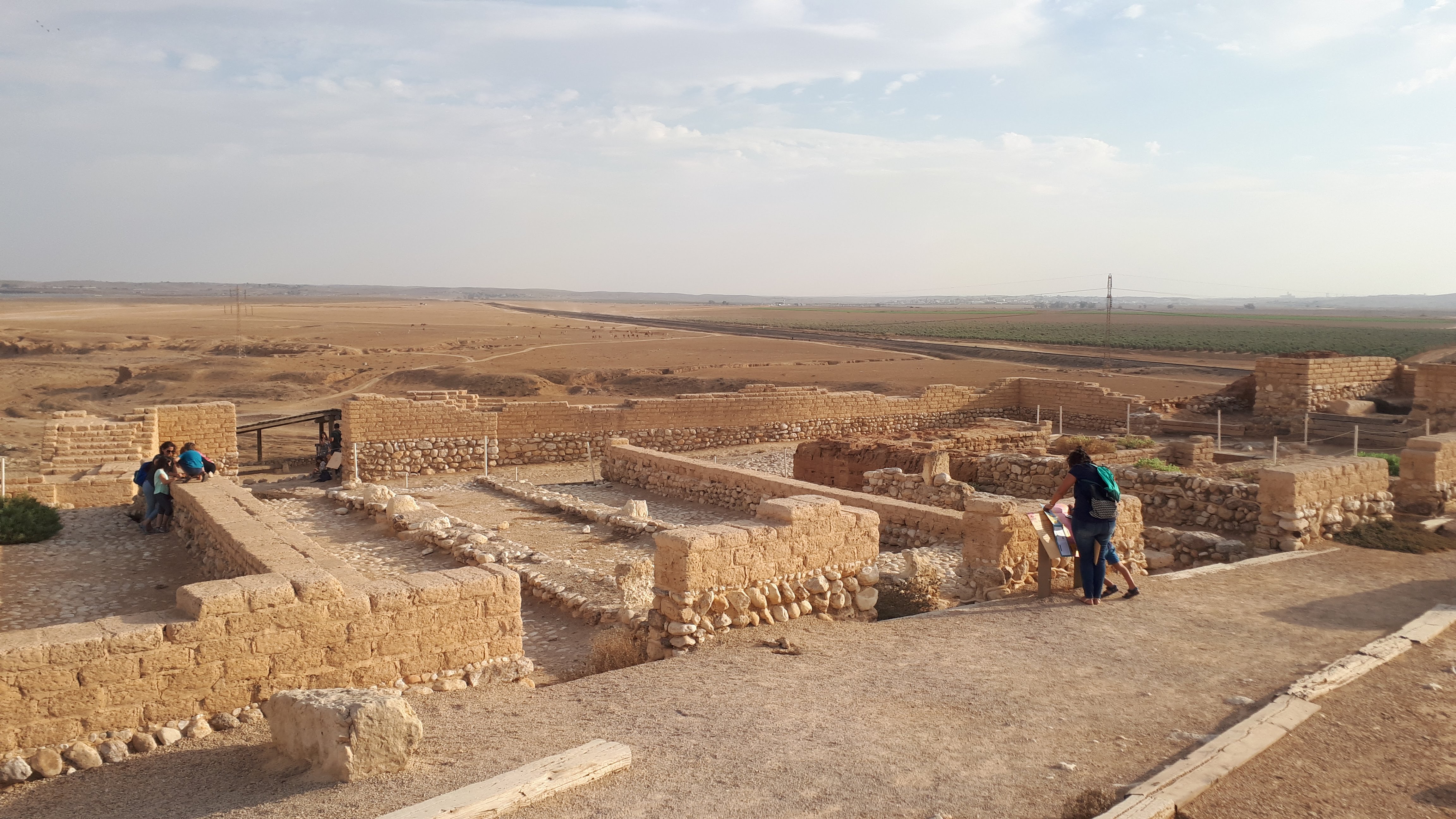 Tel Be’er Sheva National Park
Site recognized as the place where Patriarch Abraham lived and walked.
According to the Bible, the patriarch Abraham lived in the region of Be’er Sheva (באר שבע – Seven Wells or Seventh Well). Interestingly, this site welcomes visitors with a well at the entrance, and additional wells can be found inside. Considering this is a desert region, access to water is crucial for the survival of any settlement.
Don’t confuse this site with the modern city of Be’er Sheva, located just a short distance away.
Archaeological research dates this site back to the time of the patriarch Abraham.Genesis 21:22, Genesis 26:23
-
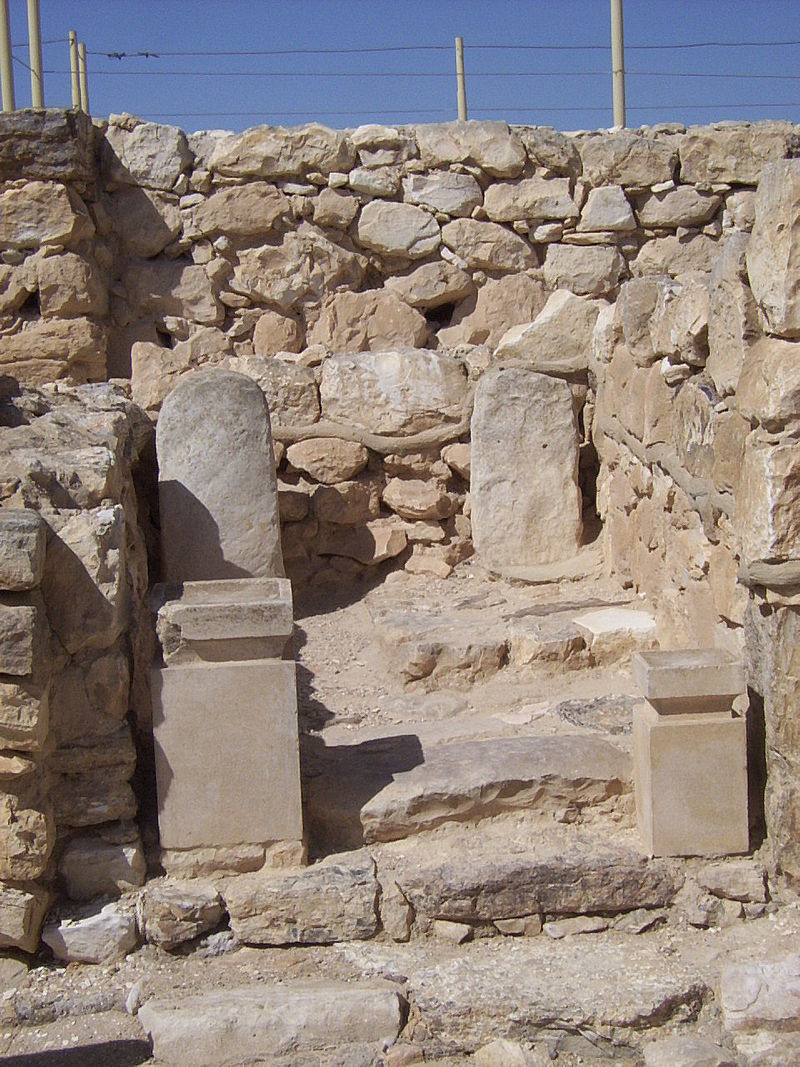 Temple of Arad
Holy of Holies of the Arad temple.
This remarkable archaeological find—whose original is housed in the Israel Museum—represents the sacred center of a Hebrew temple built during the Israelite period (Iron Age, 11th to 6th centuries BCE) in Arad. It shows that before King Hezekiah’s reform (חזקיהו – Hezkiahu in Hebrew) in the 8th century BCE, which banned the use of monuments to honor God and abolished the belief that the Hebrew God had a female consort, such practices existed. At the entrance, two incense altars were found, one containing traces of cannabis—possibly one for the Hebrew God and a smaller one for his consort. The entire temple was carefully buried in sand, suggesting it was intentionally sealed to prevent further use.
-
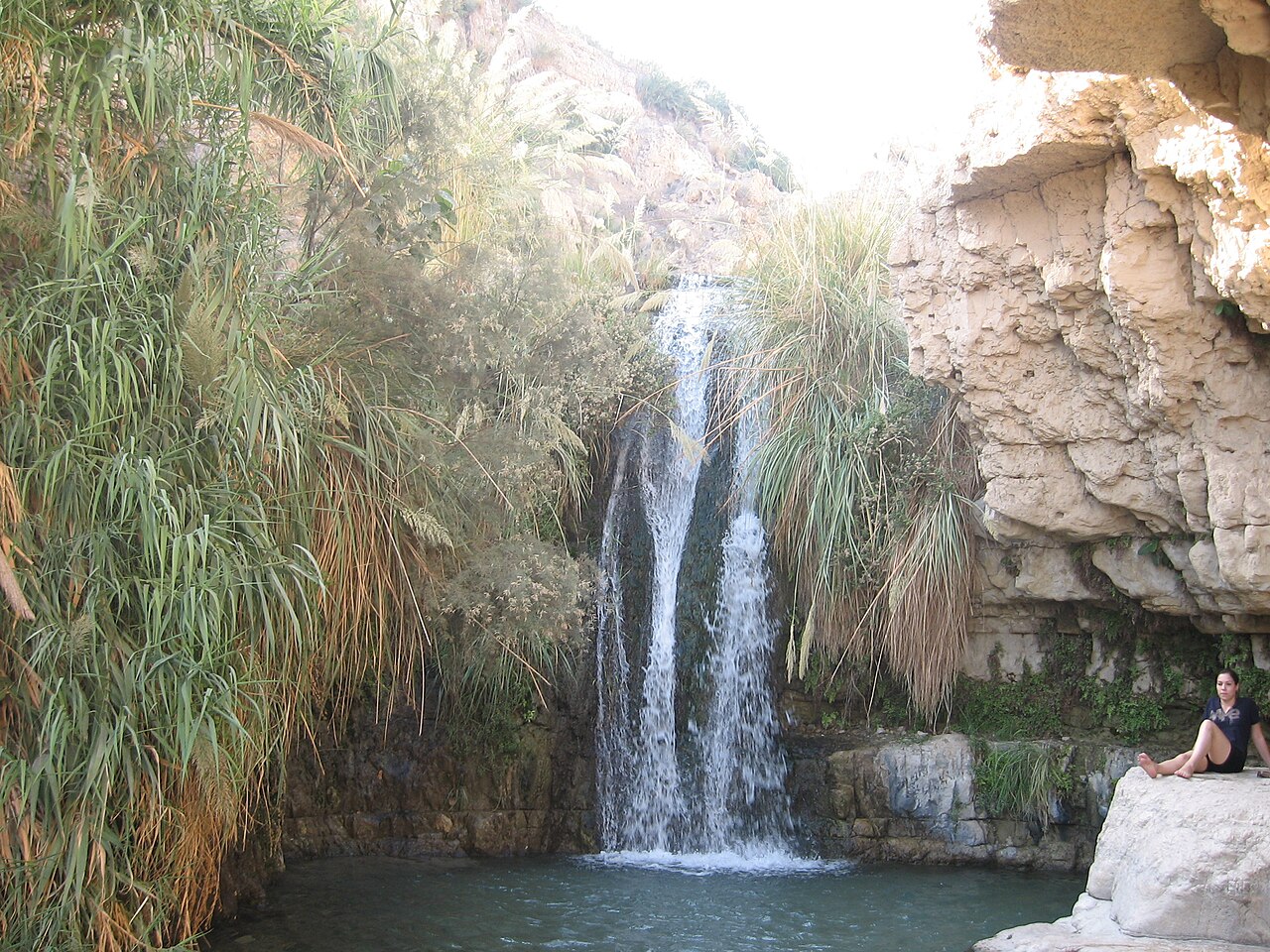 Ein Gedi (Nature Reserve)
Oasis in the Judean Desert.
Ein Gedi (עין גדי in Hebrew) is an oasis located near the Dead Sea and is considered an ecological wonder in the Judean Desert. According to the Old Testament, David, while fleeing from King Saul, hid in the caves of Ein Gedi. Though he had the chance to defeat Saul, David chose to deliver a message of peace. This site is also mentioned in the Song of Songs attributed to King Solomon.
Ein Gedi assigned to Judah during Joshua’s conquest (יהושע – Yehoshua in Hebrew): Joshua 15:62
David hides from King Saul: 1 Samuel 23:29, 1 Samuel 24:1–2
Song of Solomon (שלמה – Shlomo in Hebrew): Song of Songs 1:14 -
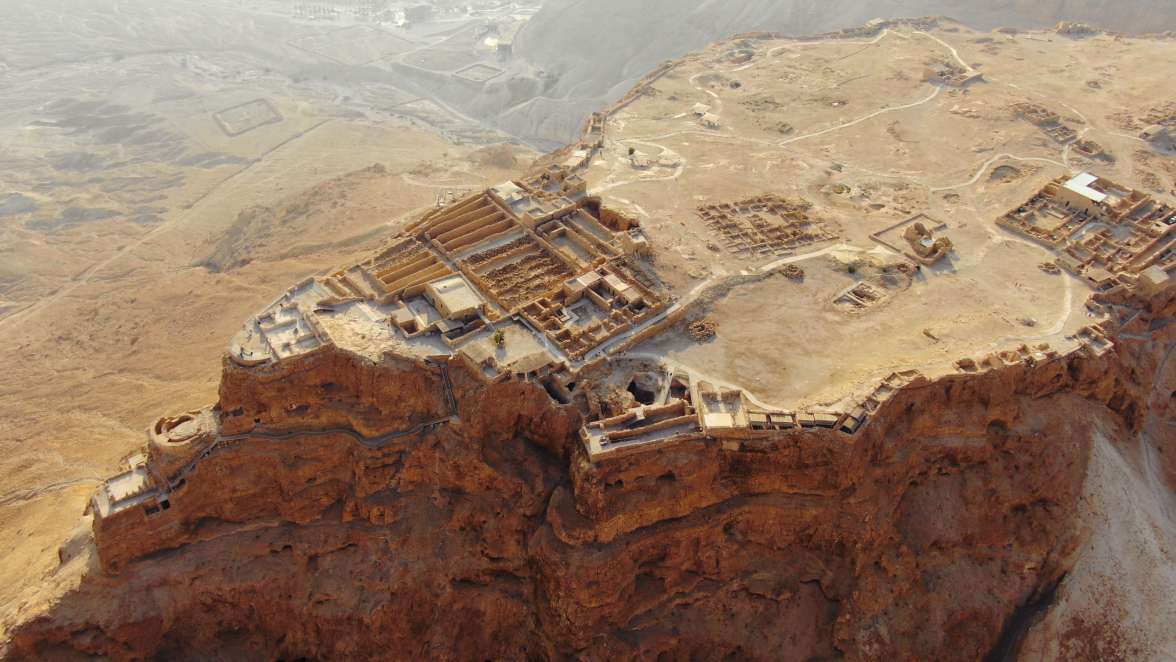 Masada
Herod’s desert fortress.
In the heart of the Judean Desert, Herod built a palace/fortress to defend against the Parthian Empire, which was allied with the Hasmoneans. This site later served as the final stronghold of the Jewish people during the fall of Judea in 73 CE.
This archaeological site is recognized as a UNESCO World Heritage Site. -
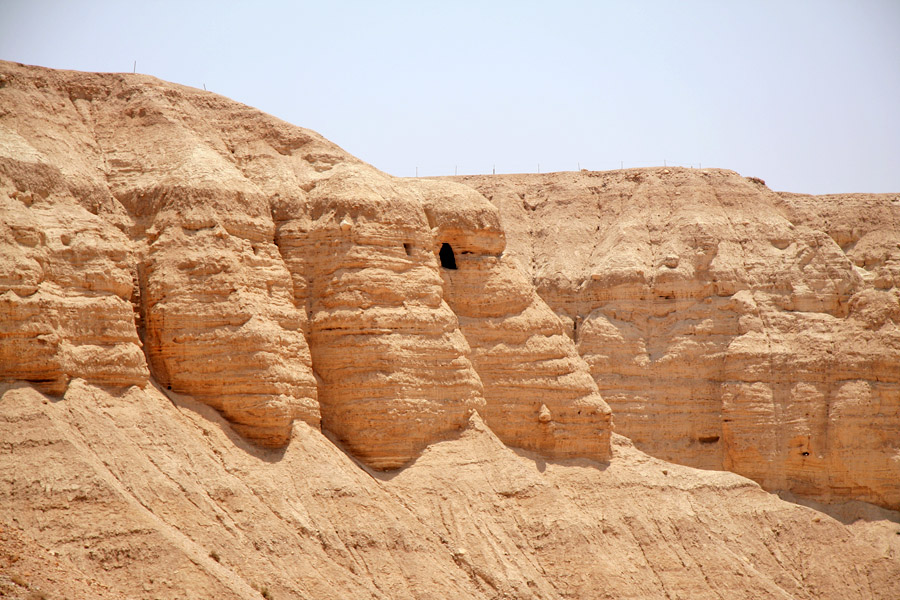 Qumran Caves
Site of the Essene sect, where the Dead Sea Scrolls were found.
In 1946, a Bedouin goat herder searching for a lost goat in the Judean Desert stumbled upon a cave. Too afraid to enter, he threw a stone inside to scare the goat out—and heard the sound of breaking pottery.
Inside, he found his goat and also ceramic jars containing leather scrolls. Thinking they were useful for repairing sandals or kindling fires, he brought them to a local cobbler, who happened to be an amateur archaeologist. He quickly realized the significance of the find. After a long journey, the scrolls reached the Israel Museum. Nearly 1,000 unique manuscripts were discovered—some of the oldest known copies of the Bible, along with apocryphal texts and sectarian writings from the Sons of Light.