-
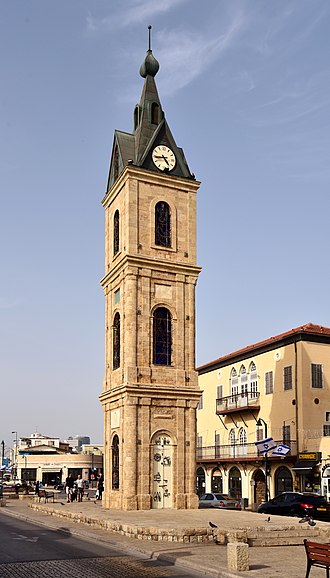 Clock Tower Square
Clock tower gifted to Sultan Abdul Hamid II.
Similar towers can be found in other cities in the Land of Israel, such as Acre and Haifa, each topped with a clock. These towers were gifted to Sultan Abdul Hamid II in honor of his 25 years of rule. In 1901, 100 clock towers were installed across the Ottoman Empire, with only 7 in the Land of Israel.
From Jaffa, the train to Jerusalem began operating just a few years earlier. Imagine the travelers, pilgrims, businessmen, and tourists arriving by ship after a long journey from Europe, waiting to board the train to Jerusalem. This train reduced the travel time from 14 hours by horse-drawn carriage to just 4 hours. It ran once daily, so missing it meant staying overnight in Jaffa. At a time when only the wealthy carried pocket watches, this public clock was a major advancement, helping travelers avoid missing the train. -
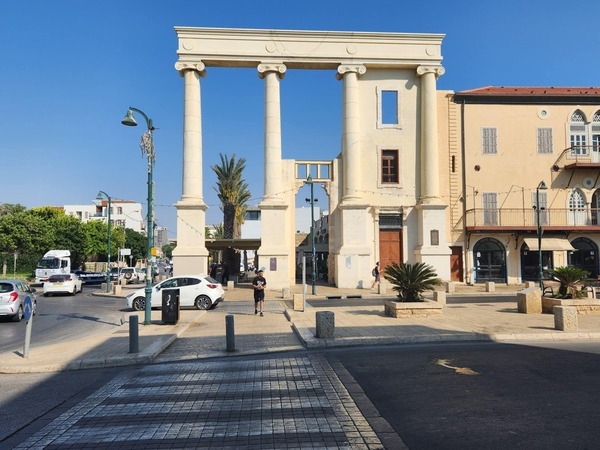 New Sarayah – Government House
Remains of the new Turkish government building in Jaffa.
These columns belonged to the new Turkish government building (سرای – Saraya in Arabic, meaning government). It was called "new" because there was an older one inside Jaffa’s walls. This was the residence of Jaffa’s governor. When the British Mandate took control in 1917, the building—designed by Jewish architect Baruch Papiermeister—became the headquarters of the Arab Commission, from which violent attacks were launched against the Jewish community. On January 4, 1948, the Jewish underground defense group Lehi bombed the building, leaving only these columns standing.
-
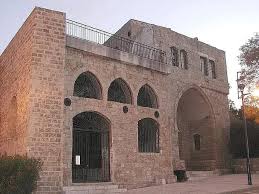 Old Sarayah – Government House
Former government building, later a soap factory.
This site housed the Turkish government building (سرای – Saraya in Arabic) until the late 19th century. After the city walls were demolished, the government moved to the new Saraya. This building also served as the prison (Kishle). It was later purchased by the Demiani family, a prominent Christian family in Jaffa who also served as consuls for various European countries in the Holy Land. They converted the building into a soap factory.
-
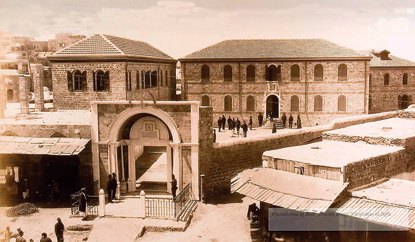 Kishle – Prison
Detention center of the Ottoman Empire Kishle.
In the 19th century, this site served as the Ottoman detention center known as Kishle.
British Mandate (1917): It became the prison of the British Mandate.
State of Israel: It served as the police headquarters of the State of Israel. This is where Nazi war criminal Adolf Eichmann was held after being brought to Israel for trial in 1962.
Today: The site is now a luxury hotel. -
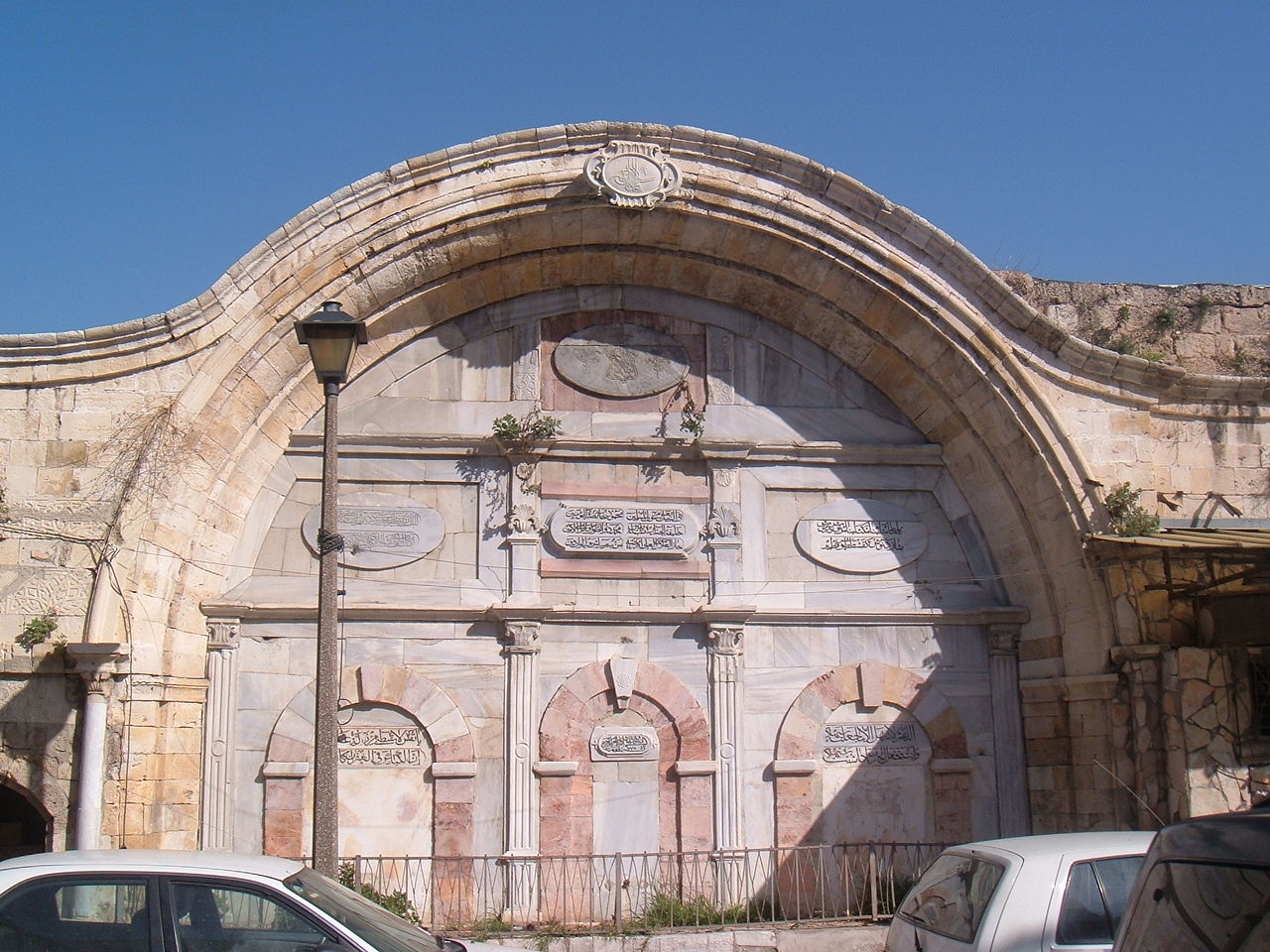 Sabil Souliman
Water dispenser named after Souliman Pasha.
In 1809, Souliman Pasha, governor of Acre, sent his right-hand man Muhammad Abu Nabbut (محمد أبو نبوت) to reclaim Jaffa from local rulers. Abu Nabbut, originally named Muhammad Aga A-Shami, earned the nickname Nabbut (نبوت = club) for walking around with a club and punishing those who disobeyed. He became governor of Jaffa and restored the city after Napoleon’s 1799 invasion. He built a protective wall and this Sabil (سَبِيل in Arabic – water dispenser) at the city’s entrance, where roads to Jerusalem and Gaza began. It was a gift from Souliman Pasha to provide water for travelers.
-
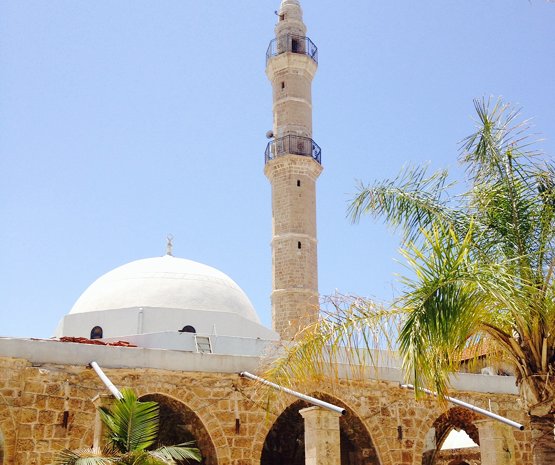 Mahmoudiya Mosque
Mosque rebuilt by Muhammad Abu Nabbut.
After the destruction caused by Napoleon’s 1799 attack, Muhammad Abu Nabbut (محمد أبو نبوت) led a major reconstruction of Jaffa. He is recognized as one of the great builders of the modern Ottoman era. Among his projects was the rebuilding of this mosque, named after the governor’s son Mahmud, who died at the end of the reconstruction. Stones from Caesarea and Ashkelon were used in its construction.