-
Historia
From the East, a new force emerged that would change the course of history: the Ayyubid dynasty. Having already taken control of Egypt, they advanced toward the Land of Israel. In 1187, at the Battle of Karnei Hittin, Sultan Salah ad-Din (Saladin) defeated the Crusader king Guy de Lusignan, establishing Ayyubid rule in the region. Europe did not remain indifferent and soon organized new crusades. During the Third Crusade, the Crusaders managed to reclaim the coast of Israel, but not Jerusalem. In subsequent expeditions, they gradually conquered much of the territory, though they never succeeded in capturing the Temple Mount, which remained under Muslim control. In 1244, part of the Ayyubids expelled the Crusaders from Jerusalem, and later the Mamluks drove them out of the entire Land of Israel. The term mamluk comes from the Arabic mamlūk (مملوك), meaning “military slave.” The Mamluks became such a powerful force that they no longer required external oversight. Baibars, one of their most prominent leaders, left a lasting mark on the region. His emblem, two lions, can still be seen in various places throughout the country.
-
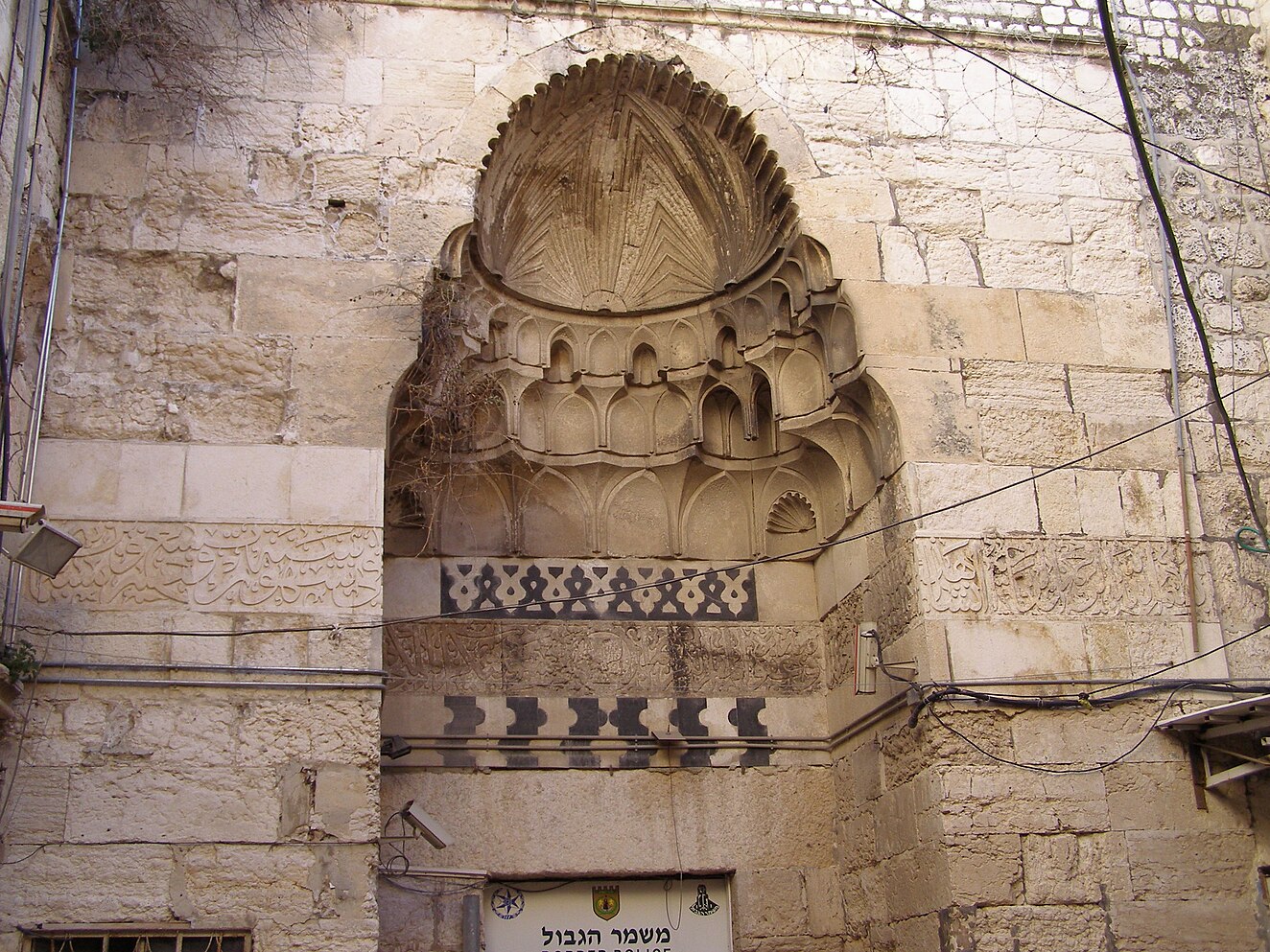 Al-Madrasa Al-Tankiziyya:
Islamic school and court built by Mamluk governor Tankiz.
Tankiz, the Mamluk governor of Batal assigned to Jerusalem, built several structures throughout the city. This madrasa, erected in the 14th century, was designed as an Islamic school and also served as a court. Today, it houses a Jerusalem police station.
-
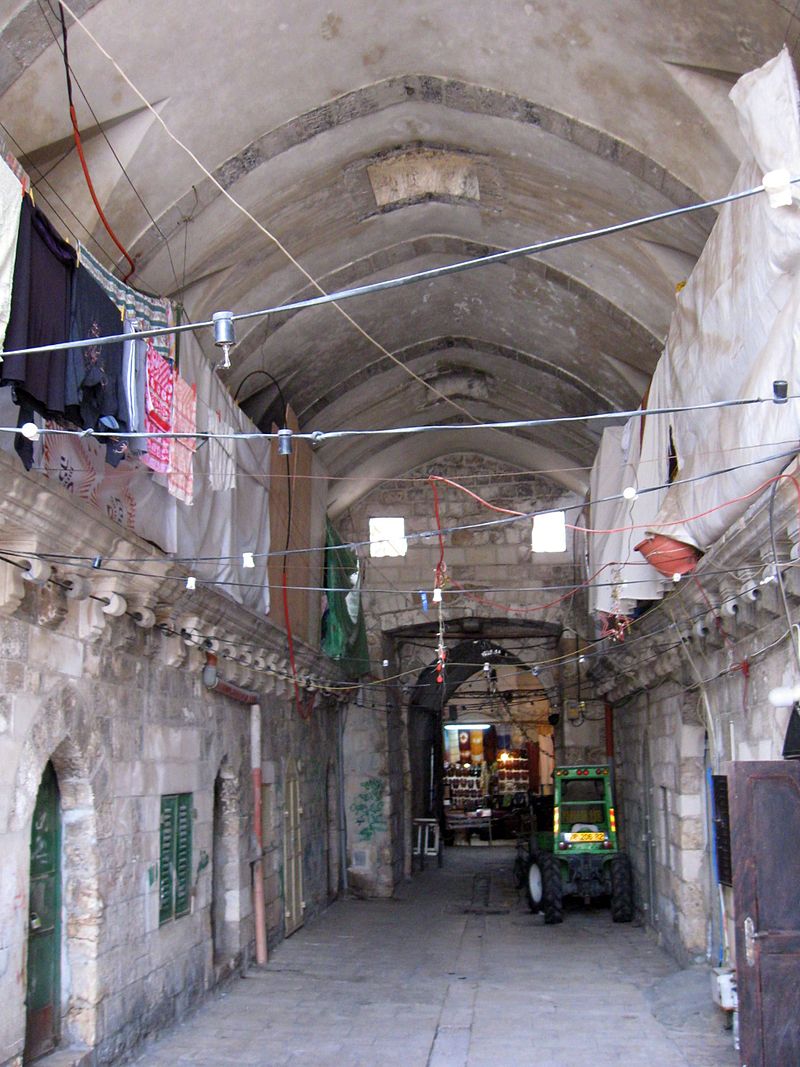 Han Al-Sultan:
Merchant passage built by Mamluk Sultan Barkuk.
This passage is known in Arabic as a Han (خان), a space used for storing goods and lodging merchants. It was built by Mamluk Sultan Barkuk in the 14th century. The upper floors still show the rooms that served as accommodations.
-
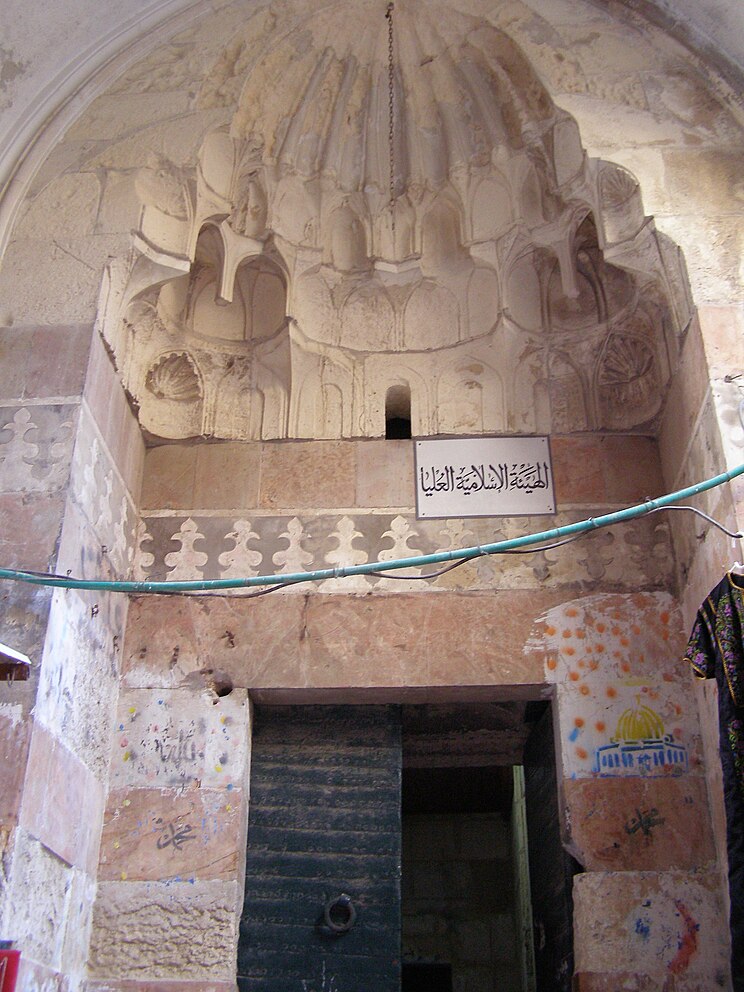 Tatshmuriya Madrasa:
Islamic school built by Emir Tatshmur in the 14th century.
It’s clear that each of these institutions bears the name of its founder. In this case, it’s another Islamic school (madrasa - مدرسة), built by Emir Tatshmur in the 14th century. The emir not only established this place but was also buried here, in his own tomb.
-
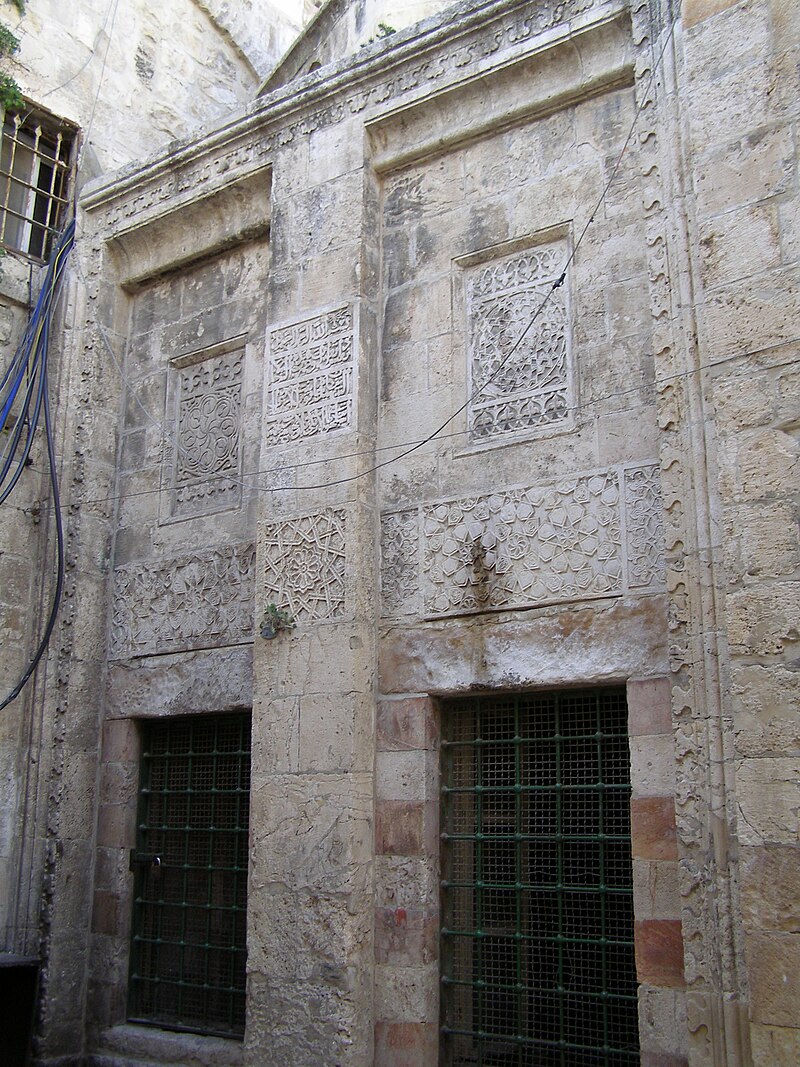 The Mausoleum of Turkan Hatun:
Mausoleum built in 1352 dedicated to Turkan Hatun.
This mysterious structure, built in 1352, is a mausoleum, known in Arabic as a Turba (تربة), dedicated to a figure named Turkan Hatun. Today, the mausoleum stands empty.