-
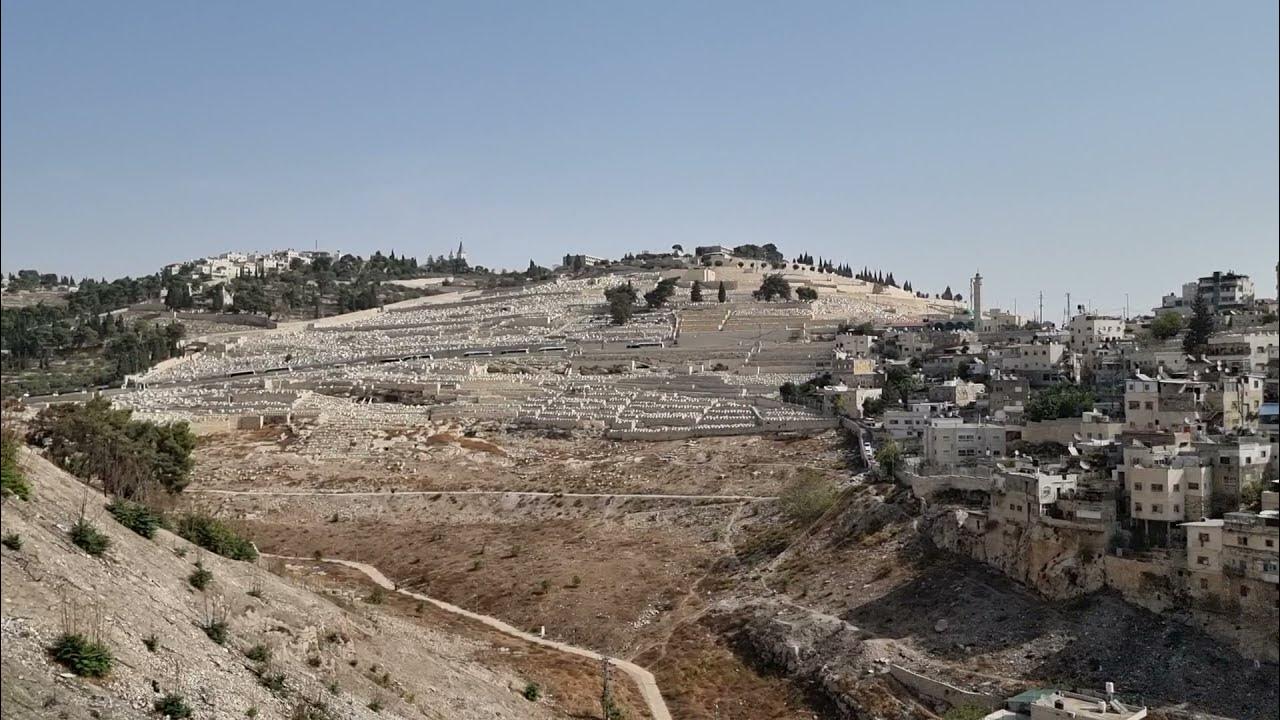 The Lookout (בית הצופה = Beit HaTzofé):
A unique panoramic view of the Kidron Valley.
From here, one can grasp the strategic and spiritual significance of the site, and understand why King David chose this location to establish his city.
-
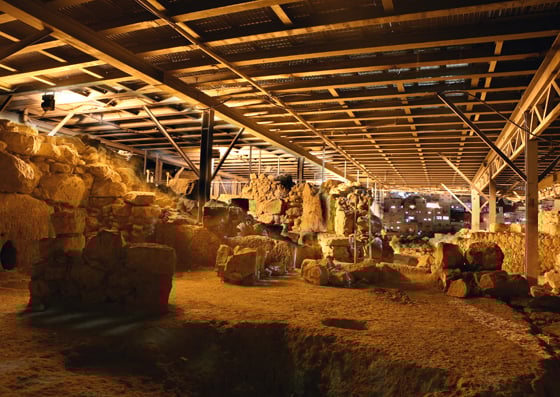 King David’s Palace:
Identified as the palace where King David lived upon arriving in Jerusalem.
"And Hiram king of Tyre sent messengers to David, and cedar trees, and carpenters, and masons; and they built David a house." This structure may be the palace mentioned in the biblical account, as it is the only one worthy of such recognition. Among other findings, a proto-Aeolic capital was discovered, which might belong to this palace. However, it’s important to note that such capitals are typically dated to a slightly later period, suggesting that after serving as King David’s palace, it may have been used by a succeeding king of Judah.
2 Samuel 5:11
-
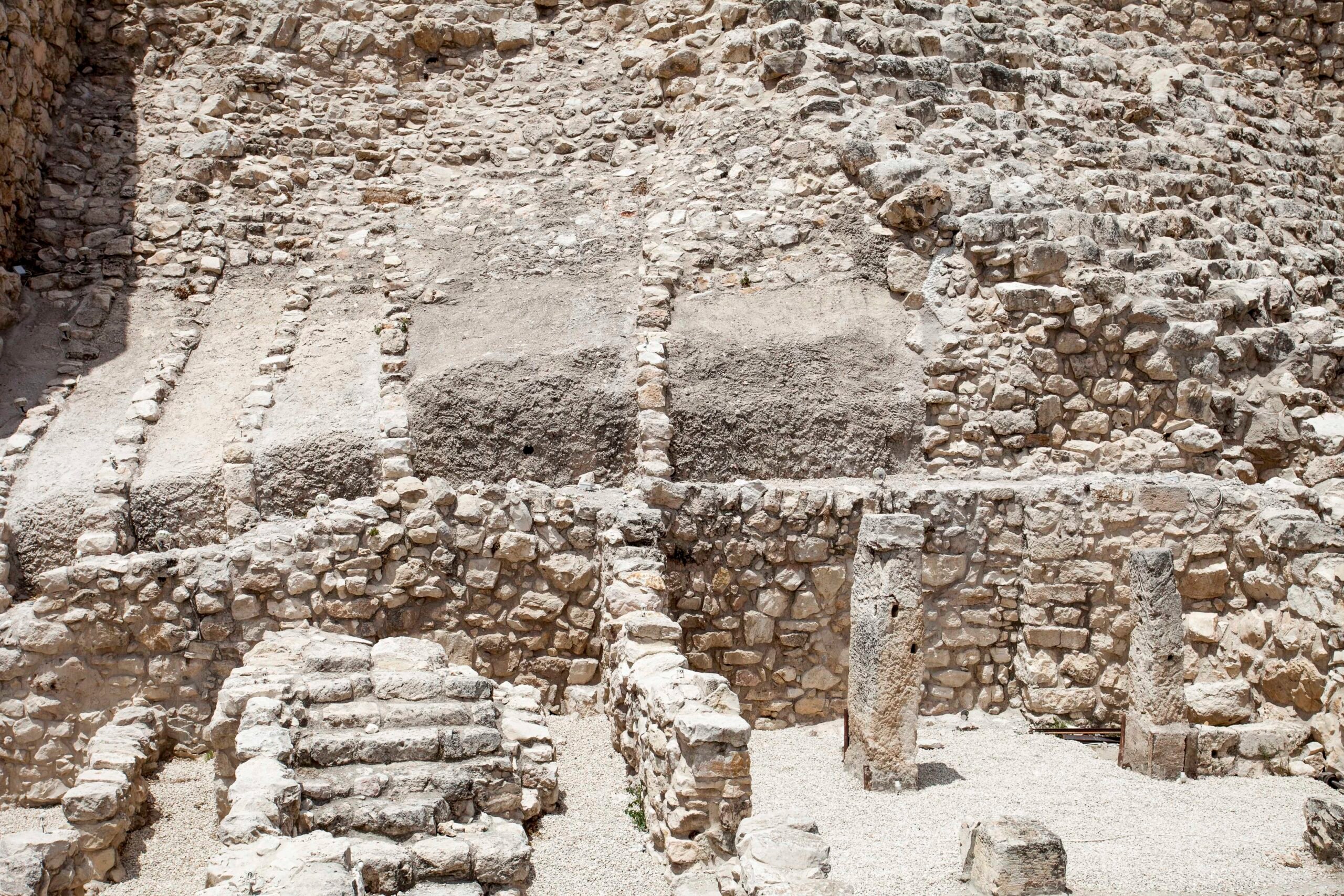 Achiel’s House (בית אחיאל):
A well-preserved house showing the tragic moments of Jerusalem’s fall in 586 BCE during the Babylonian conquest.
An impressive testimony to life and the fall of Jerusalem in 586 BCE. The house clearly reveals its original layout, with defined rooms and even a preserved toilet!
The name "Achiel’s House" comes from ceramic fragments found in good condition within the house, bearing the name inscribed. -
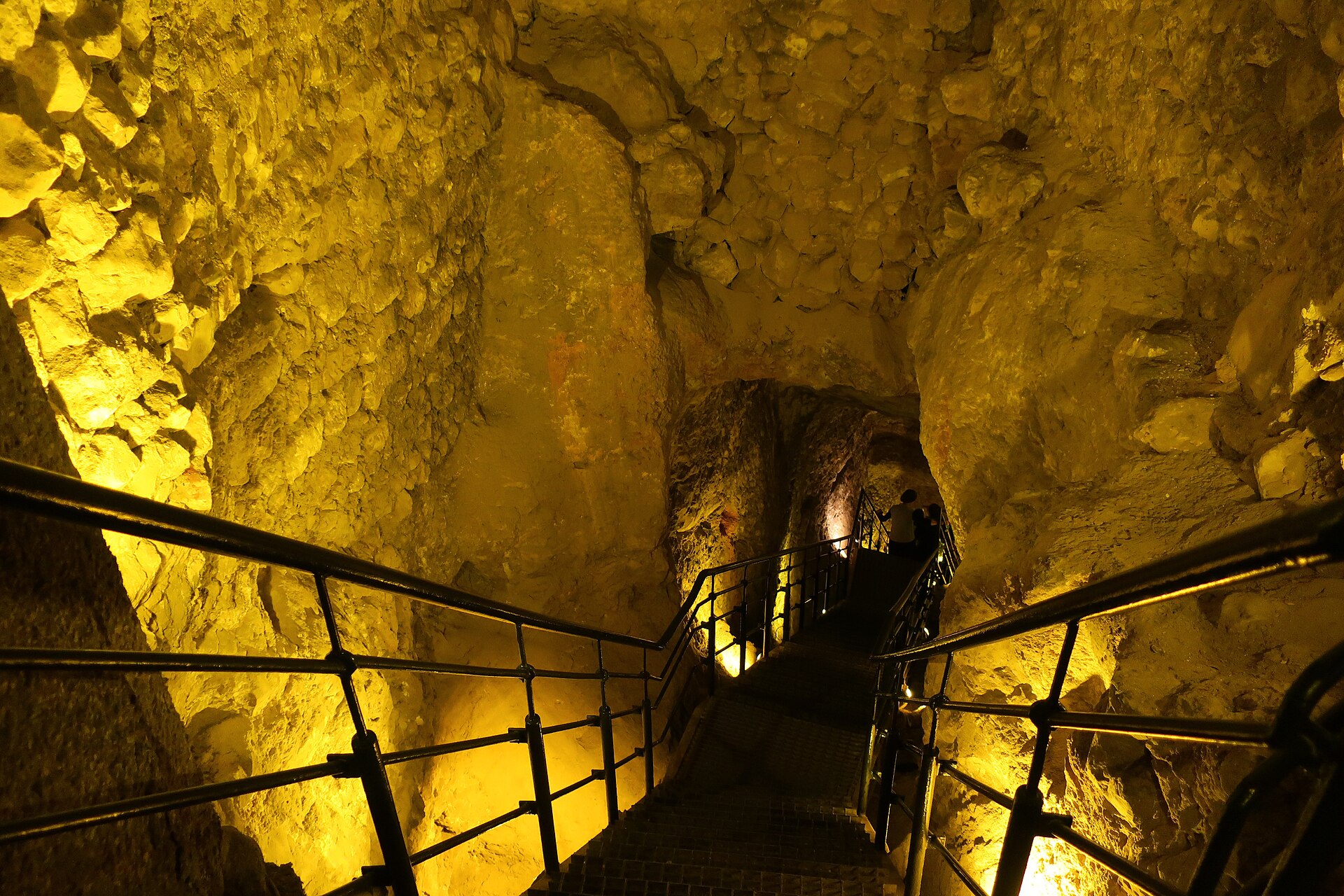 Water Sources – Warren’s Shaft:
A water shaft likely used during the Jebusite period.
A city cannot survive without water! Before becoming the City of David, this was a Jebusite city. In the 11th century BCE, it was surrounded by a wall, whose remains show it was located on the upper part of the city. Water sources, however, are usually found lower down. At the foot of this hill runs the Kidron River, and on its slope lies the Gihon Spring. Residents had to leave the city walls to fetch water, which posed a threat. To solve this, a tower was built over the spring and a tunnel was dug to reach it.
Later, in the 8th century BCE, inhabitants dug further into the tunnel and discovered a natural shaft reaching the water source feeding the spring. This shaft was named after its discoverer, Charles Warren, who found it in the mid-19th century. -
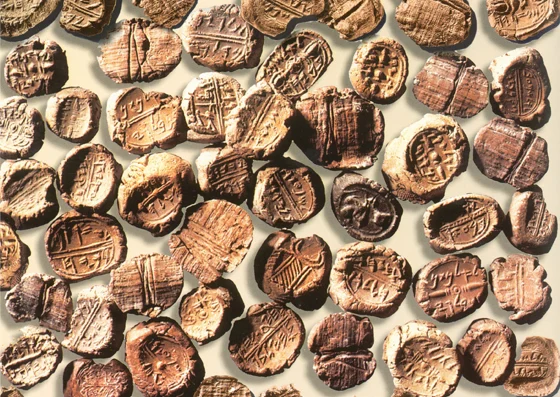 The House of Seals (Bullae) – The Scribe’s House:
A site where seals (bullae) from the Second Temple period were found.
Writing was a skill reserved for a select few, making this site a unique and remarkable place in the city.
What is a bulla?
In biblical times, communication was done via scrolls sent by kings or governors. These scrolls were sealed to ensure authenticity. The seal wasn’t inked rubber, but a ceramic piece the size of a button that sealed the scroll. Only the recipient could break the seal to read it. The seal, called a bulla, was pressed with the king’s ring bearing his name or emblem. This verified the document’s authenticity.
Here, bullae signed by Gemariah son of Shaphan (גְּמַרְיָהוּ בֶן שָׁפָן), a biblical figure mentioned in Jeremiah 36 as scribe of King Jehoiakim (יהויקים = Yehoyakim), were found. This not only confirms biblical accounts but also establishes this site as a central link between the People of Israel and these Holy Lands.Jeremiah 36:10
-
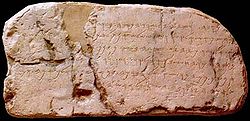 The Pool of Siloam and Hezekiah’s Tunnel:
An incredible engineering feat by King Hezekiah to secure water supply during wartime.
During wartime, specific during the Assyrina seige circa 701 bce, King Hezekiah (חזקיהו = Hezkyahu in Hebrew) undertook an extraordinary project to connect the city to the water source at its southern end, ensuring vital water supply for its inhabitants.
Hezekiah, extended the city walls as well and built an aqueduct through the rock to link the Gihon Spring to a newly constructed pool in the city’s south – The Pool of Siloam (ברכת השילוח = Birkat HaShiloach).
See Hezekiah's wall built during the First Temple