-
Historia
France, an ally of the Ottoman Empire and fully supported by the Turkish government, maintained a well-known rivalry with Italy over the protectorate of Catholic interests in the Holy Land. Italy, through the Custodia de Terrae Sanctae (Custody of the Holy Land) led by Franciscan monks, held rights over most Christian properties, allowing it to establish hospitals, schools, and hostels for its pilgrims.
With the arrival of Protestant groups from England and Germany in the mid-19th century, the Catholic Church felt threatened by their rapid expansion in the Holy Land. In response, it supported the establishment of a French consulate in Jerusalem.
During the Crimean War in 1854, France and England helped the Ottoman Empire defeat Russia. As a result, the Turks were compelled to grant land to France. On these lands, some of the most iconic buildings representing the French presence in the region were constructed toward the end of the 19th century. -
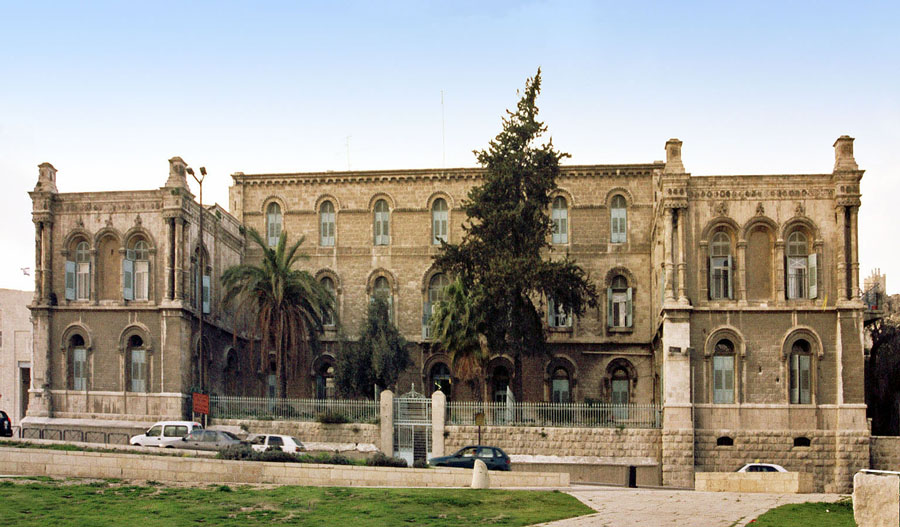 St. Louis Hospital:
French hospital.
St. Louis refers to Louis IX, King of France during the Seventh and Eighth Crusades. He died during his second journey and was later canonized as a saint.
Baron de Piellat arrived from France as a pilgrim and, frustrated by the disparity in services offered to Orthodox versus Catholic pilgrims, purchased this land to establish St. Louis Hospital.
World War I: The Turkish government seized the building and converted it into a military hospital for its troops.
British Mandate: The baron regained ownership and restored much of the building until his death in 1924. The hospital continued operating until 1948.
Today: Since 1948, with the establishment of the State of Israel, the hospital has served as a hospice for terminally ill patients of all religions. -
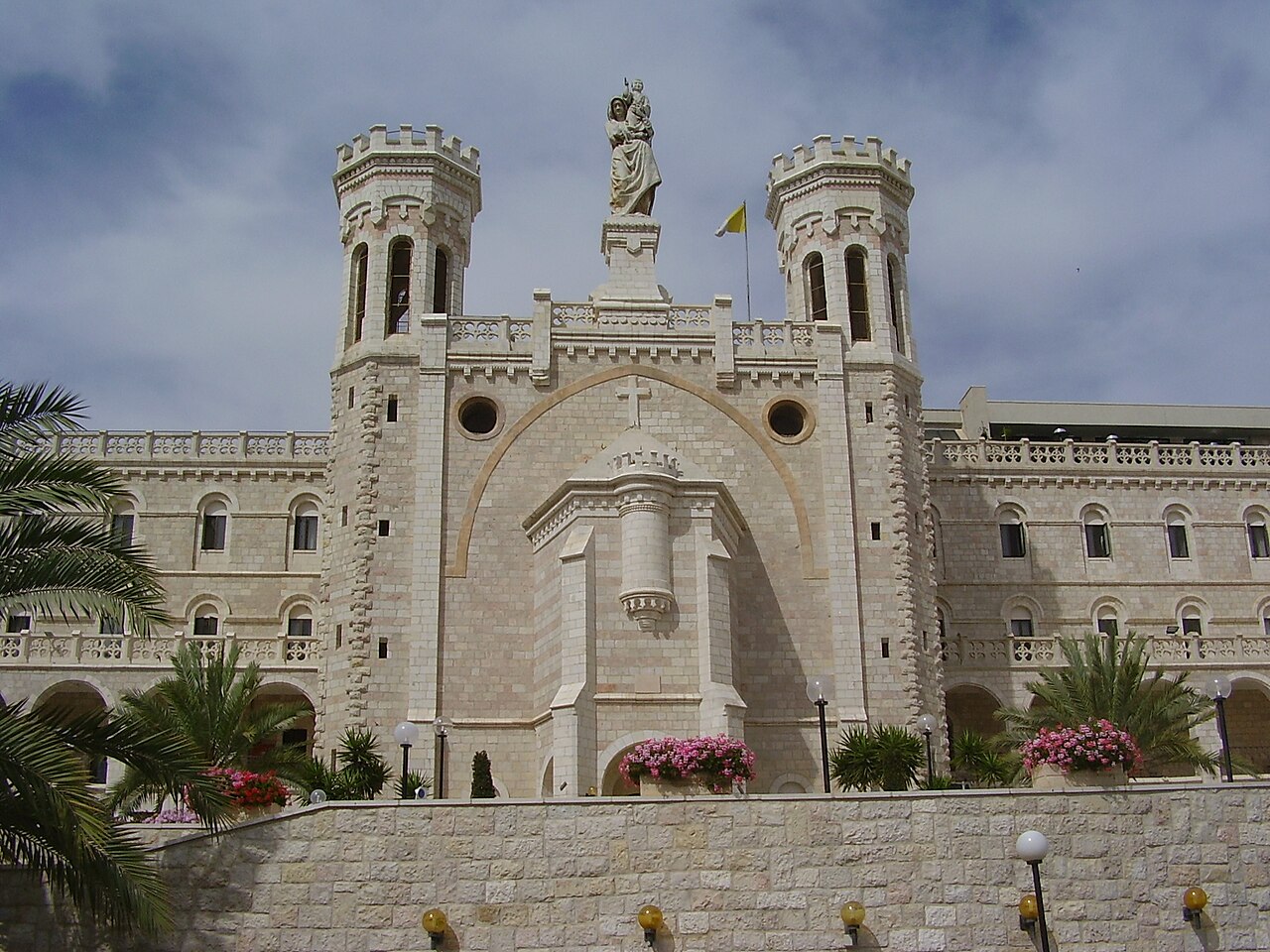 Notre Dame Hostel Jerusalem:
Historic Catholic hostel near the Old City.
Baron De Piellat’s frustration extended beyond poor medical services for Catholic pilgrims, he also noted the lack of proper lodging. He convinced a group of 1,000 pilgrims in France to travel to the Holy Land, where they were housed in tents on this site. Their indignation at the contrast between their accommodations and those of nearby Orthodox pilgrims helped the baron secure a donation of 80,000 francs, enough to purchase the land and build the hostel. Each room bears the name of its donor.
World War I: Monks of the Assumptionist Order, who managed the site, were expelled for being nationals of an enemy country.
British Mandate: In 1917, the British allowed the Assumptionists to return, though pilgrim visits had ceased.
Israeli War of Independence: Due to its strategic location on the dividing line between Jordan and Israel until 1967, the building witnessed fierce battles between Israeli and Jordanian forces.
University Hostel: In 1970, the Assumptionists sold the building to the State of Israel, angering the Vatican. The Hebrew University established a student hostel here. After negotiations between Israel and Rome, the building was returned to the Catholic Church in exchange for a substantial sum, which was used to build a new student hostel called "The Hostel of 1000," in memory of the original 1,000 pilgrims brought by Baron De Piellat.
Today: The building now operates as a hotel named Notre Dame of Jerusalem.