-
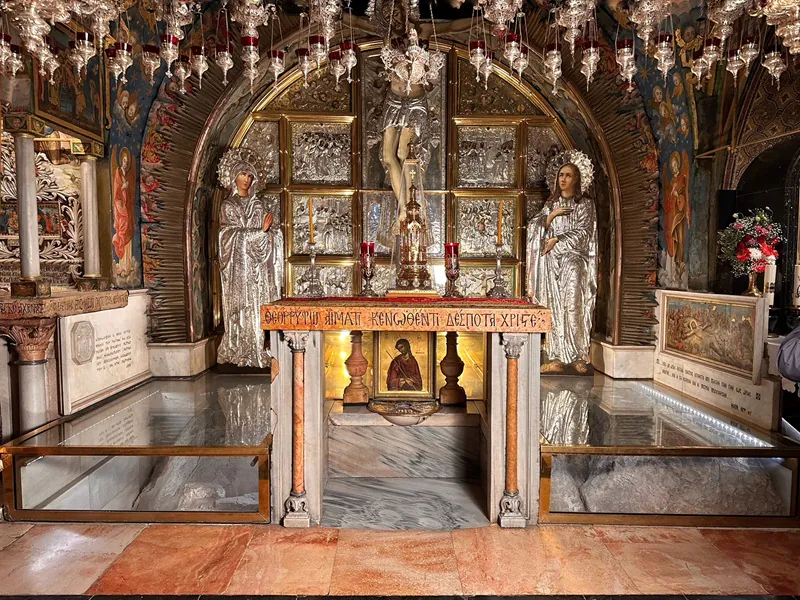 Golgotha:
On this rock, known as Golgotha (גולגולת = skull), and hence Calvary, it is believed that Jesus was crucified.
On this rock, known as Golgotha (גולגולת = skull), and hence Calvary, it is believed that Jesus was crucified. Helena, mother of Emperor Constantine the Great, who embraced Christianity from an early age, arrived in Jerusalem in the 4th century in search of traces of Jesus. Helena found the three crosses: that of Jesus and those of the two thieves. For this reason, Constantine ordered the construction of a church at this site.
Matthew 27:33, Mark 15:22, Luke 23:33, John 19:17
-
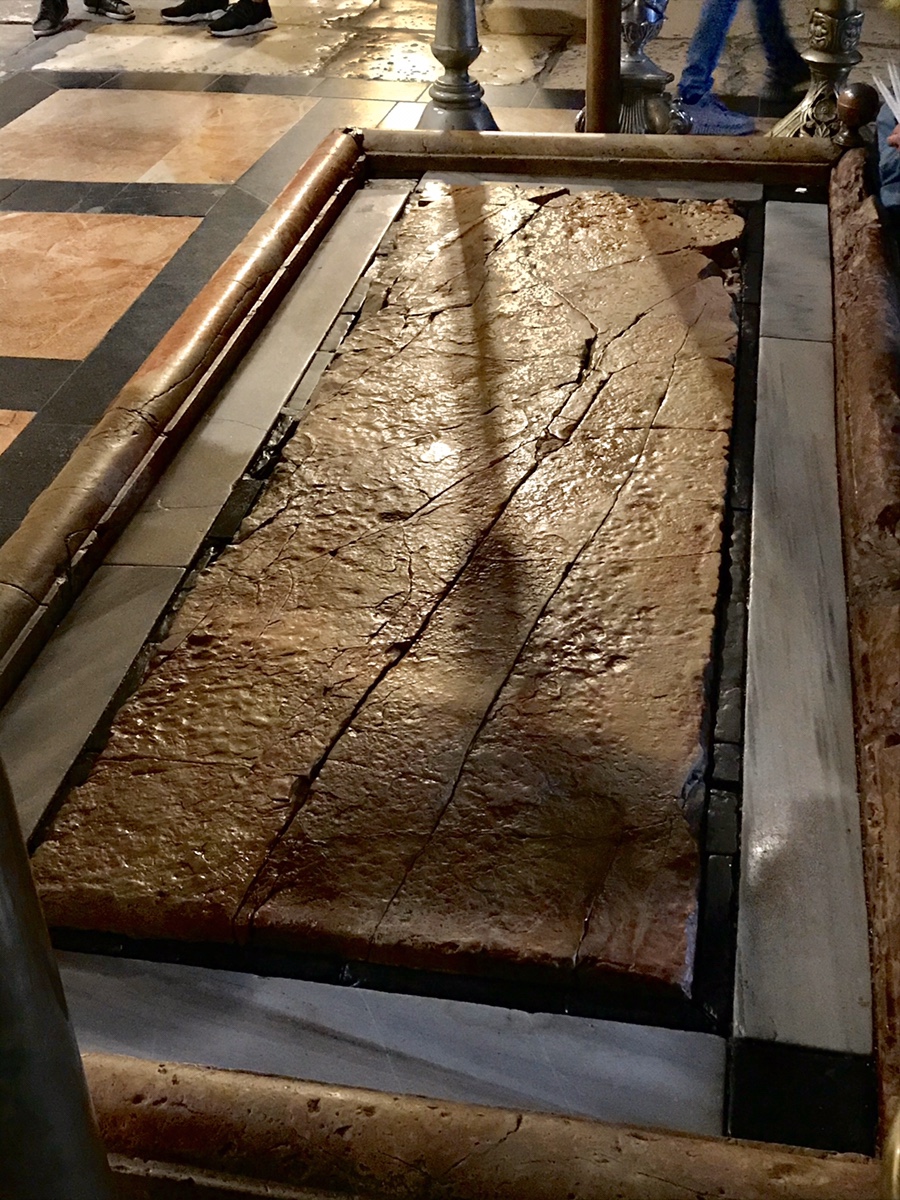 The Stone of Anointing:
After being taken down from the cross, Jesus was laid on this stone with the help of Joseph of Arimathea.
After being taken down from the cross, Jesus was laid on this stone with the help of Joseph of Arimathea, to perform the Jewish ritual washing before burial.
Matthew 27:59, Mark 15:46, Luke 23:53, John 19:38
-
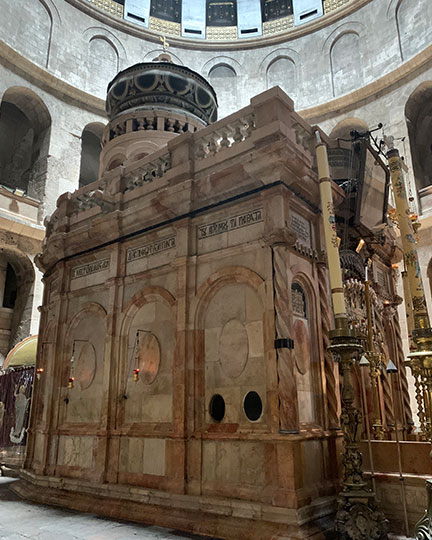 The Aedicule
This is the place where Jesus was buried, in a new tomb donated by Joseph of Arimathea.
This is the place where Jesus was buried, in a new tomb donated by Joseph of Arimathea. Three days later, Mary Magdalene found the tomb open and empty, marking the central moment of the Christian faith: the resurrection.
Burial: Matthew 27:57, Mark 15:42, Luke 23:50, John 19:38
Resurrection: Matthew 28:1, Mark 16:1, Luke 24:1, John 20:1 -
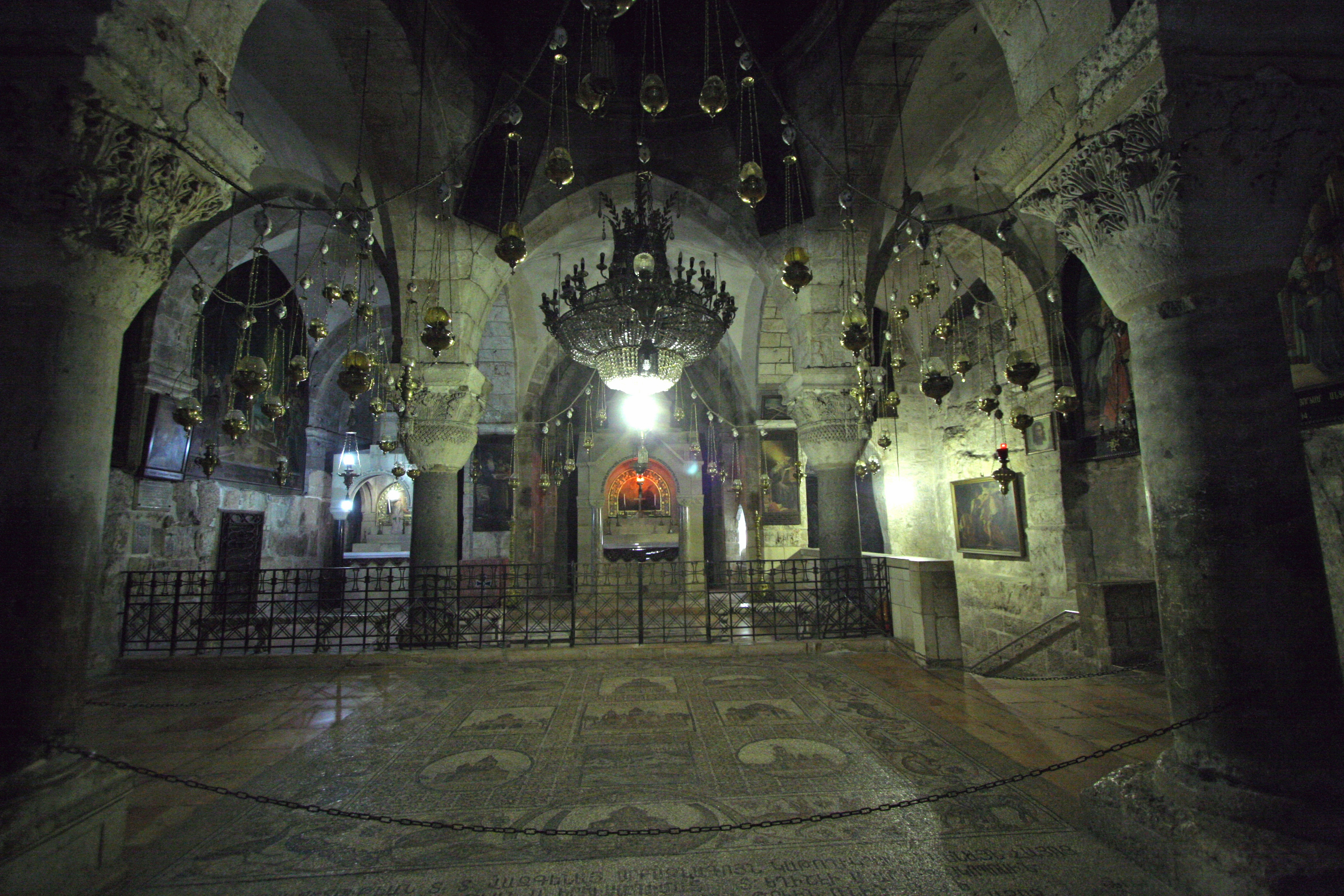 Chapel of Saint Helena:
This chapel, belonging to the Armenian Church, is dedicated to Saint Helena.
This chapel, belonging to the Armenian Church, is dedicated to Saint Helena, mother of Emperor Constantine, who according to Christian tradition discovered the cross of Christ.
-
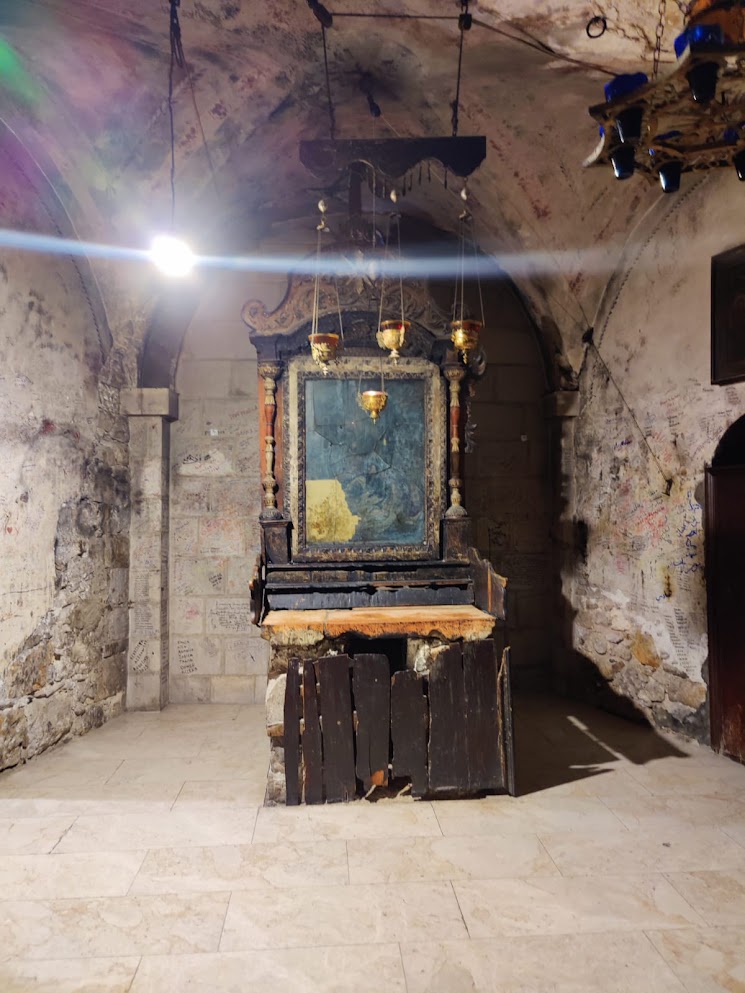 Tomb of Joseph of Arimathea:
This tomb is recognized as the burial place of Joseph of Arimathea.
This tomb, dated by researchers to the early 1st century CE and consistent with burial styles of that time, is recognized as the tomb of Joseph of Arimathea. This disciple of Jesus offered his own tomb for Jesus’s burial, and later reclaimed it for himself.