-
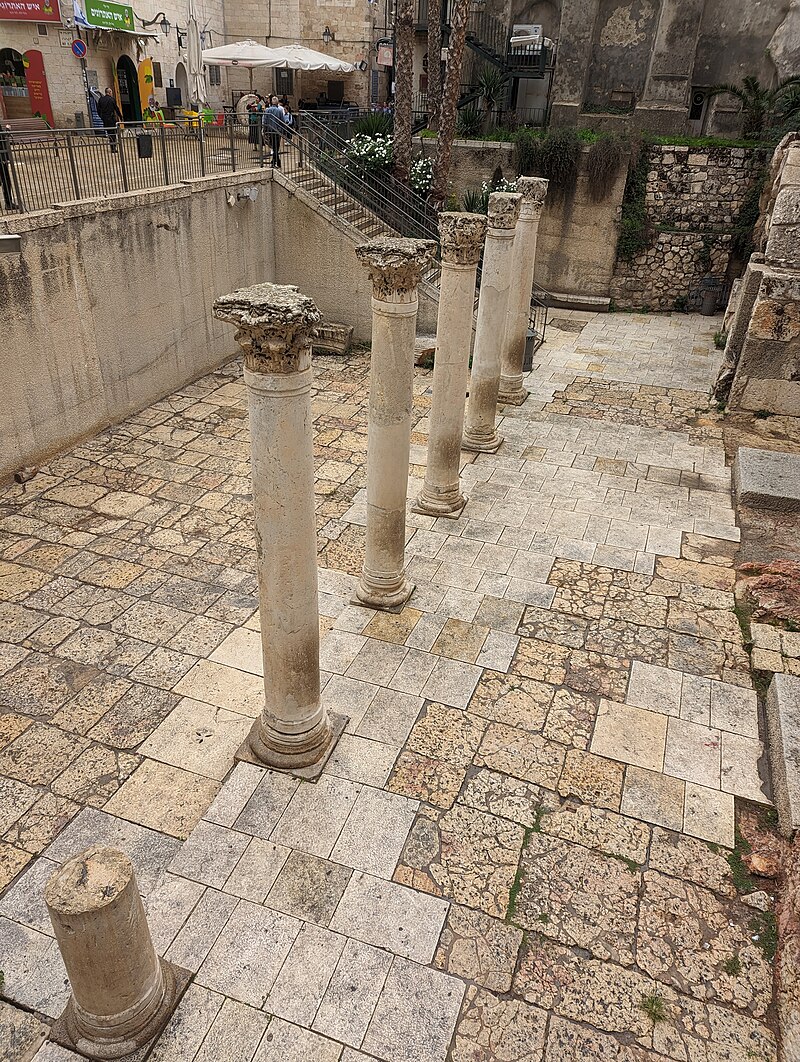 Roman Cardo:
Ancient Roman main street that, as a Roman city it was, once ran through Jerusalem from north to south.
Every Roman city across the empire followed a similar urban layout, inspired by the grid plan of the Greek architect Hippodamus of Miletus (Ἱππόδαμος ὁ Μιλήσιος). This design included two main streets: the Cardo (north-south) and the Decumanus (east-west).
In 132 CE, after, or before the failed Bar Kokhba revolt, Emperor Hadrian transformed Jerusalem into a Roman city named "Aelia Capitolina". It featured two main cardines (cardo in plural): Cardo Maximus and Cardo Minimus. During the Roman period, the Cardo Maximus extended to the Church of the Holy Sepulchre. Later, Byzantine Emperor Justinian extended the Cardo further south to reach the Aegia Nea Church (The new Church) he built. The photo shows a section of the Byzantine extension of the Cardo. -
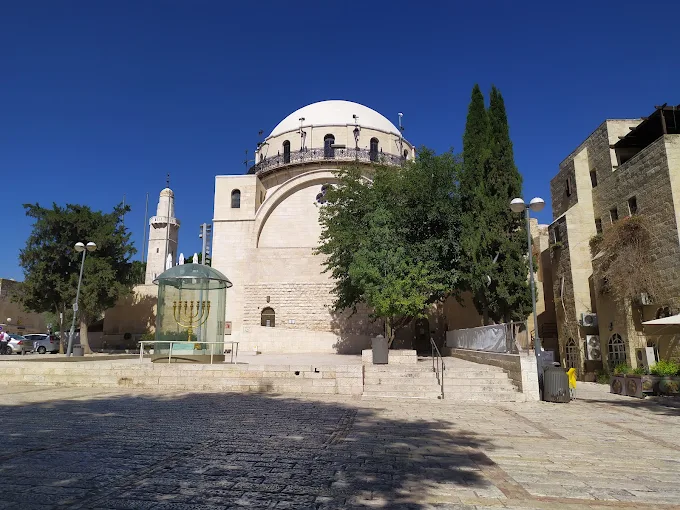 Hurva Synagogue
Rebuilt in 2010, this synagogue is a powerful symbol of Jewish history in Jerusalem.
Built in the 18th century by followers of Rabbi Yehuda HaHasid who arrived from Poland to establish an Ashkenazi community in Jerusalem. With loans from local Arab residents, they built the synagogue known as Yehuda HaHasid Synagogue. When the Jewish settlers couldn’t repay the loans, they were expelled and the synagogue was destroyed.
A century later, in the mid-19th century, followers of the Gaon of Vilna (הגאון מוילנה = HaGaon MiVilna, title given to certain rabbis as a title of Teacher, the Title Gaon is translated as "Genius" ) arrived and, with support from the Rothschild and Montefiore families, rebuilt the synagogue.
In 1948, the newly established State of Israel lost control of Jerusalem to Jordan, and the Jordanian Legion destroyed the synagogue again. In 2010, the State of Israel rebuilt the monumental synagogue now known as HaHurva (חורבה = The Ruins).
The dome’s lookout offers a unique panoramic view of Jerusalem. -
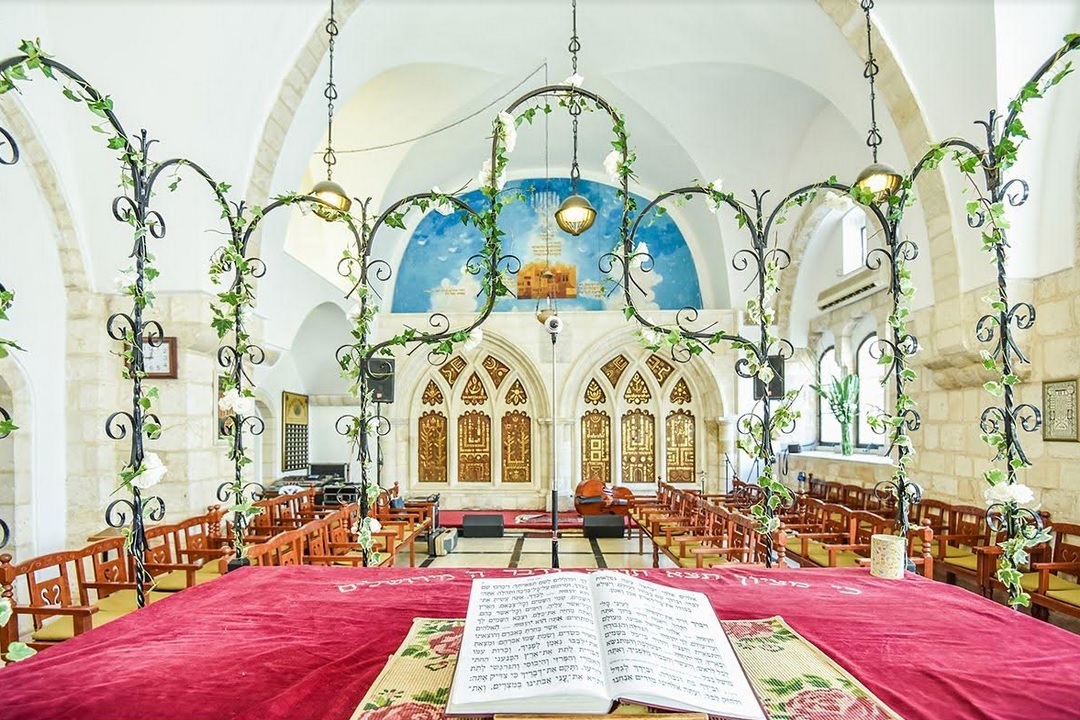 The Four Sephardic Synagogues
Four interconnected synagogues built by Jews expelled from Spain in 1492.
This complex consists of four interconnected synagogues, each with its own character and liturgical tradition. They were built to serve the diverse Sephardic communities that arrived in Jerusalem after the expulsion from Spain and other countries. Over the centuries, they have been destroyed, restored, and preserved as symbols of Jewish faith and resilience. Today, the complex remains active and offers visitors a unique experience: traditional architecture, living history, and a spiritual atmosphere that connects past and present.
Eliahu Ha-Naví Synagogue (16th century)
Yohanan Ben-Zakai Synagogue (1610)
Istanbul Synagogue (1764)
Kahal Tzion (Emtsaí) Synagogue (late 18th century) -
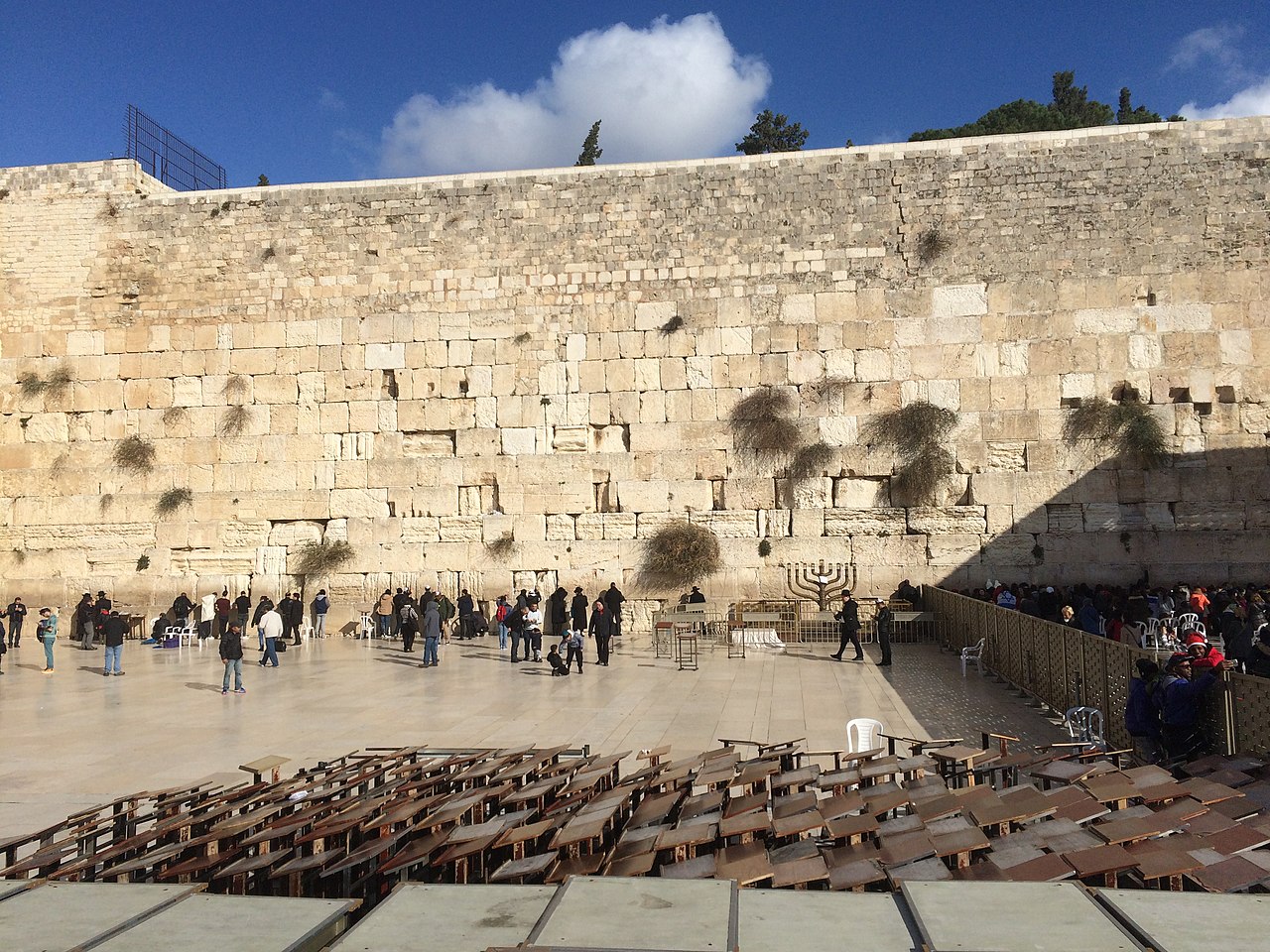 The Western Wall (Kotel)
A sacred remnant of the Second Temple, revered as a place of prayer and reflection.
The well-known Wailing Wall is actually a small exposed section of the western wall that once surrounded the Second Temple of Jerusalem. Built by King Herod in 19 BCE, the Temple was part of a monumental construction that included four massive retaining walls around the Temple Mount. In 70 CE, Roman forces destroyed the Temple and much of the walls. The different stone styles visible today reflect various historical periods, including Herodian stones and later additions.
During the Mamluk period (1260 CE), residential buildings were constructed over the western wall to prevent Jewish worship. Only a narrow alley remained, where Jews continued to pray and mourn the loss of Jerusalem. After 2,000 years, descendants of those exiled Jews have returned. The Jewish people uniquely commemorate the destruction of both Temples on the 9th of Av (אב), praying with their hearts and eyes turned toward these ancient stones.
Today, the State of Israel has cleared surrounding satellites structures to allow millions of visitors, of all faiths, to access this sacred site. In 1996, archaeological tunnels beneath the Muslim Quarter were opened, revealing the full length of the Western Wall for the first time in two millennia, allowing pilgrims and tourists to walk alongside its ancient stones. -
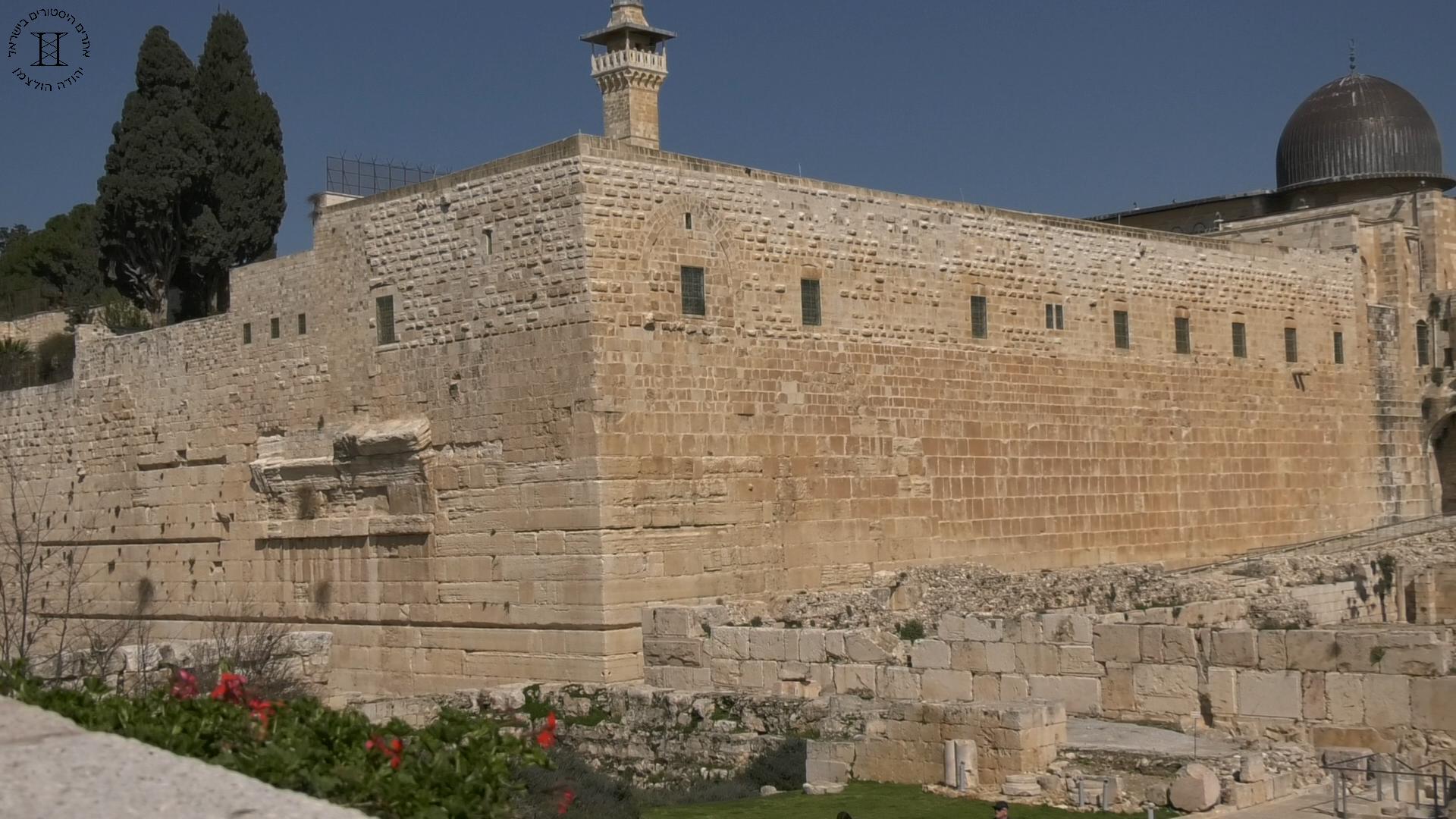 Archaeological Park – Davidson Center
Archaeological zone with findings from the Second Temple and Umayyad dynasty palaces.
From the archaeological park, visitors can uniquely view the southern wall and the southwestern corner of the wall that once surrounded the Temple. It’s one of the few places where the magnitude of the tragedy of 70 CE can be truly felt. As if stepping back 2,000 years, hundreds of stones lie scattered where they fell during the Temple’s destruction. Remnants of the arch and monumental staircases that led worshippers to the Royal Stoa are still visible. Continuing along the southern wall, one reaches the grand Hulda Gates, the main entrance to the Temple.
In 632 CE, Muhammad died without a male heir, prompting his followers to appoint a successor, known as a Caliph (خليفة). After the first four Caliphs (ٱلْخِلَافَةُ ٱلرَّاشِدَةُ – the Rashidun Caliphate), the Umayyad dynasty seized power, leading to the Shiite split (شيعة). The Umayyads ruled the Muslim world until 750 CE, when they were overthrown by the Abbasids. In this Davidson Park, visitors can see the remains of three Umayyad palaces.Mishnah: Sukkah 5:5
-
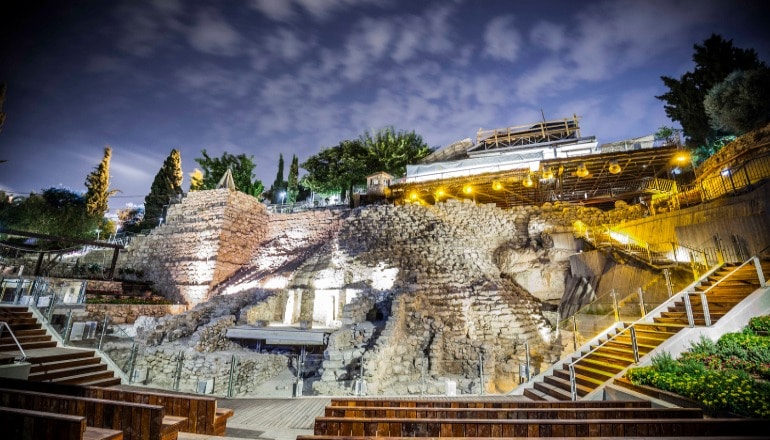 The City of David
The place where Jerusalem’s history began with King David.
Where it all began. This tour guides visitors through the earliest chapters of Jerusalem’s history, when it was still under Jebusite control. With the arrival of King David and the transfer of the Ark of the Covenant, a new era was born. Visitors walk alongside the Bible, seeing its stories reflected in every stone, leading up to the tragic destruction of Jerusalem by the Babylonians in 586 BCE.
Read more -
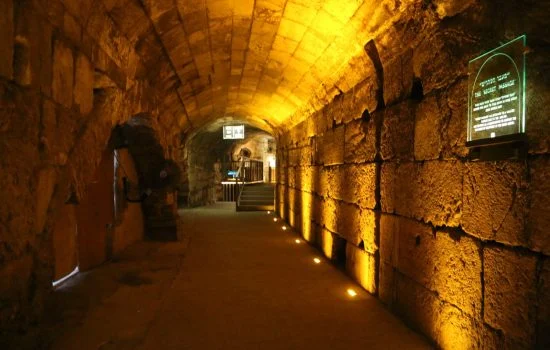 Temple Tunnels
Underground tour revealing hidden sections of the Western Wall.
A fascinating underground tour that allows visitors to explore hidden sections of the Western Wall, inaccessible from the main plaza. While the exposed part of the Wall measures about 60 meters, the tunnels stretch over 450 meters beneath the surface, revealing ancient structures, Roman streets, ritual baths, and original stones from the Second Temple, some weighing up to 600 tons! Walking through these passages is like stepping back in time and touching the millennia-old history of the Jewish people. The guided tour includes interactive experiences, virtual reconstructions, and rooms dedicated to the Twelve Tribes of Israel, making it an educational, spiritual, and exciting experience for all ages.