-
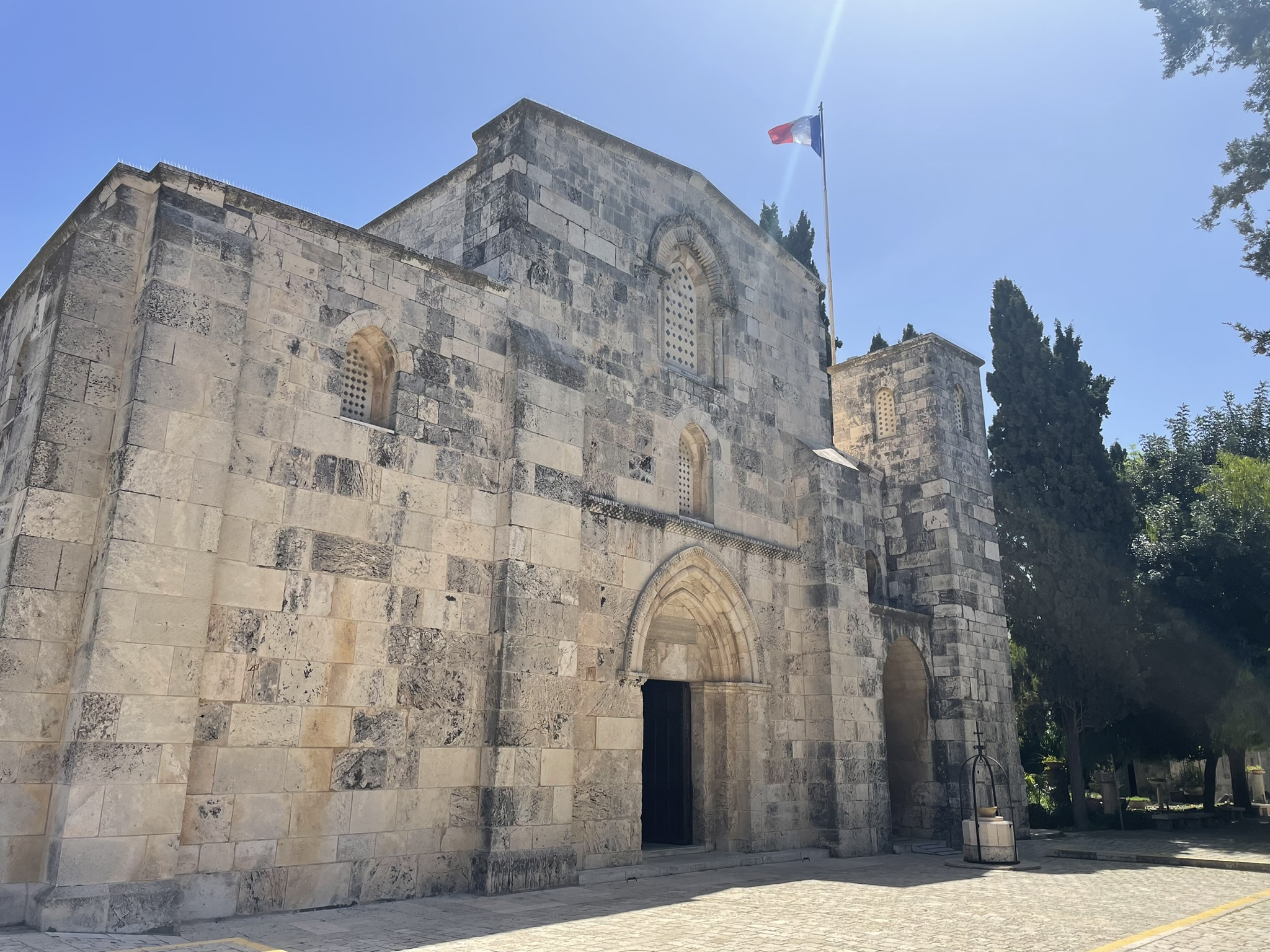 Church of Saint Anne:
Believed to be the birthplace of Mary, in the home of her parents Joachim and Anne.
This church, built by the Crusaders, stands atop Byzantine remains, which themselves were constructed over what is believed to be the house of Anne and Joachim, parents of Mary, mother of Jesus. According to Christian tradition, Mary was born here.
With the arrival of the Sasanian Persians in 614, the Byzantine church was demolished. It may have been partially rebuilt, but in 1009, Sultan Al-Hakim Bi-Amr Allah destroyed it completely. Only with the arrival of the Crusaders was the current church rebuilt.
In 1260, when the Mamluks took control of the area, the church was converted into a madrasa (Islamic school). A plaque in Arabic still commemorates the actions of the Mamluk Sultan Baibars.
During the Ottoman capitulations, the site was granted to France, which maintains it to this day. The religious order in charge is the Order of the White Fathers. -
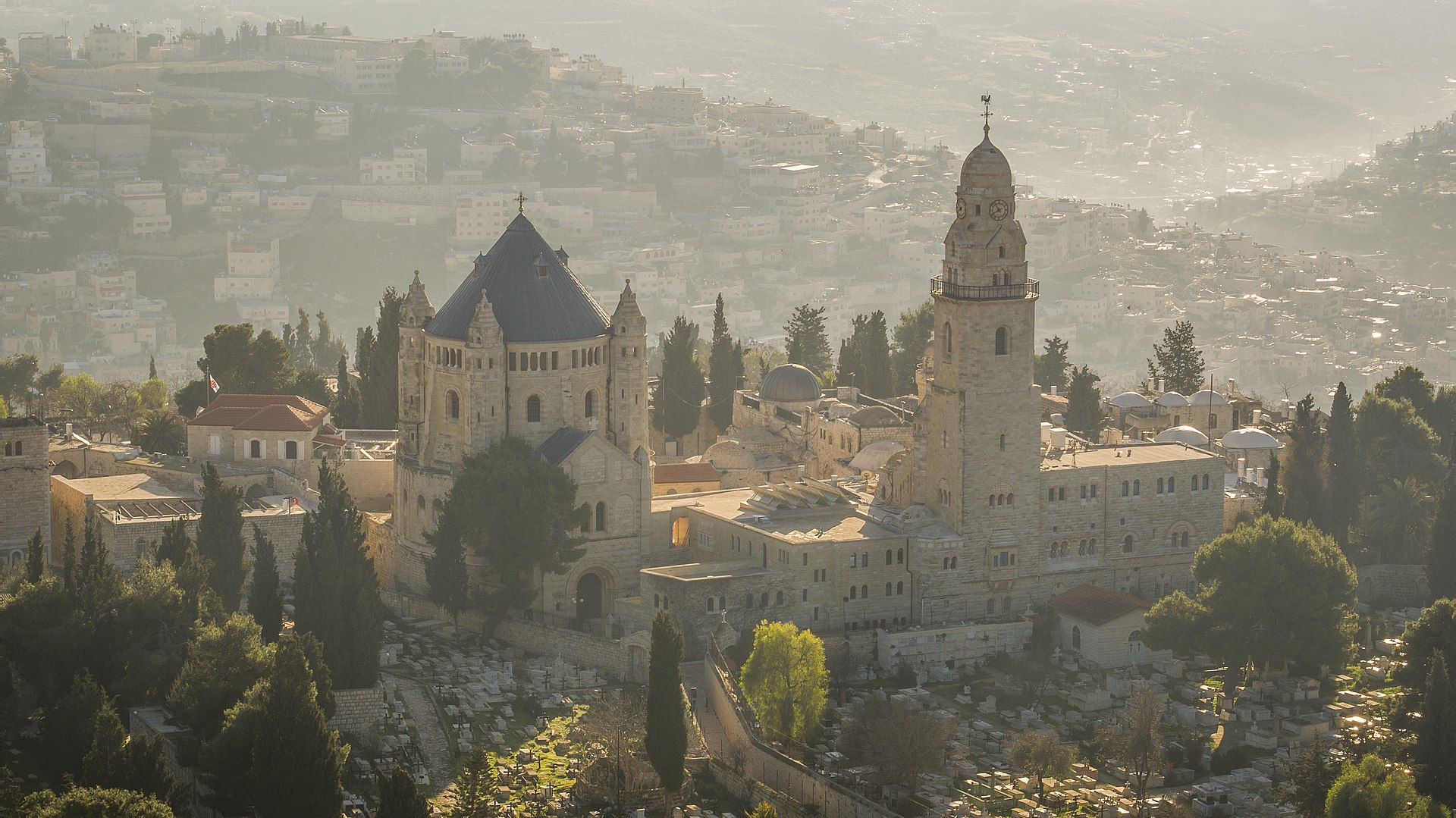 Abbey of the Dormition of Mary
Abbey built in 1910 over Byzantine remains from the 6th century.
This magnificent abbey, designed in the shape of a cross, was built at the end of the 19th century and inaugurated in the early 20th century by order of German Kaiser Wilhelm II, on land granted by Ottoman Sultan Abdul Hamid II. It is built over the ruins of an ancient Byzantine church called Agia Sion, one of the few depicted on the mosaic map of the Church of Madaba in Jordan. According to Christian tradition, this site marks the place where Mary, mother of Jesus, entered her eternal sleep, hence the name "Dormitio" (sleep).
-
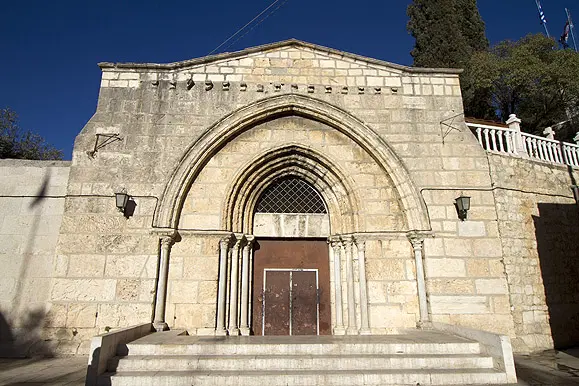 Tomb of the Virgin Mary:
According to Eastern Orthodox tradition, this is the burial site of Mary.
A center of devotion and pilgrimage for Christians worldwide. As in many other cases, this church was built by the Franciscans in the 14th century over the remains of a church built by the Crusaders in the 12th century. The Franciscans later entrusted the church to the Greek Orthodox Church, which maintains it to this day. The Crusader church was destroyed in 1187 by Salah ad-Din. The Crusaders had built it over the remains of a Byzantine church, which was also destroyed with the arrival of Muslims in 614. Inside the church lies the tomb of Queen Melisende of the Crusaders, located in a subterranean level that survived the Muslim destruction.