-
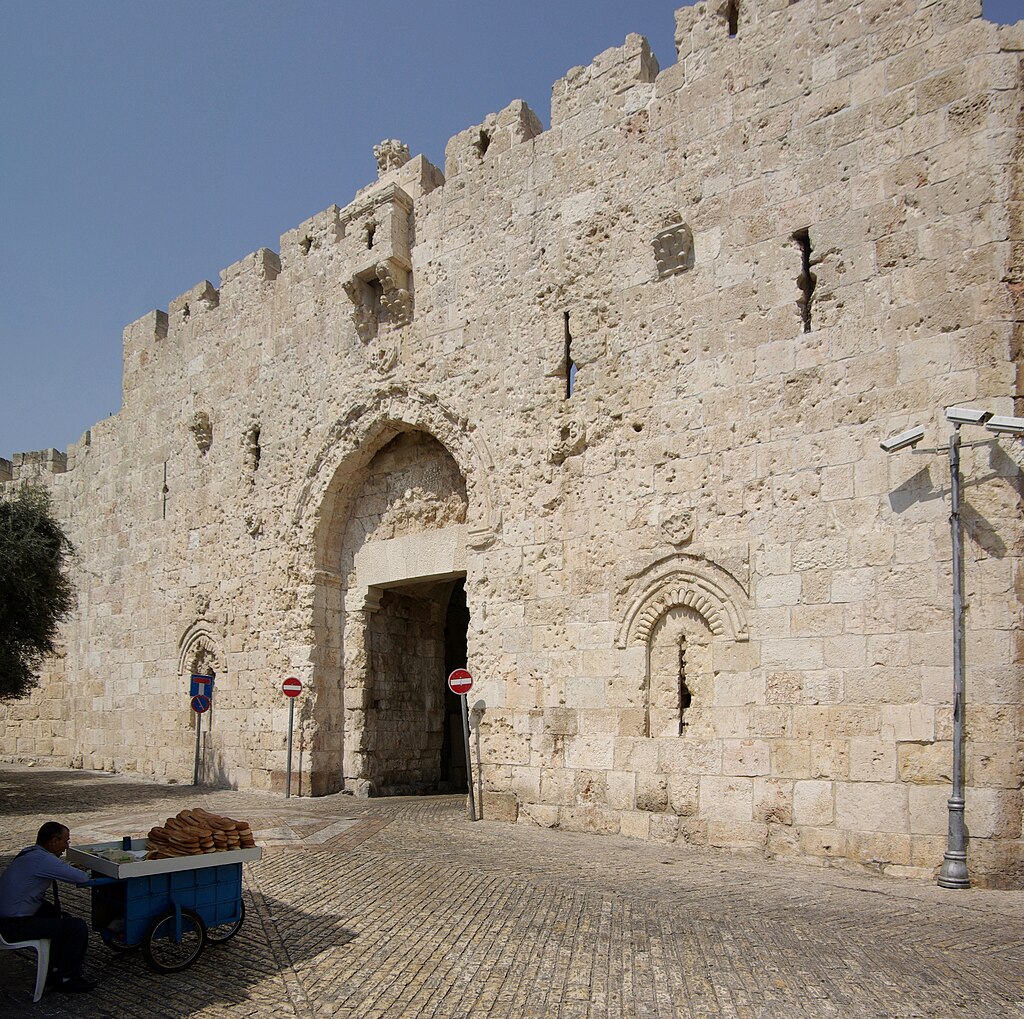 Zion Gate
Southwestern gate of Suleiman’s wall.
Sultan Suleiman the Magnificent built these walls in the 16th century. The area we see here, located outside the walls of Jerusalem, was meant to be included within the city limits as ordered by the Ottoman sultan. However, due to a miscalculation by the engineers, this area remained outside the city boundaries.
Legend has it that the sultan ordered the execution of the engineers responsible for the mistake, and that their tombs are located at the Jaffa Gate as a warning to visitors about the seriousness of disobeying the sultan’s commands.
The mysterious events surrounding this gate, also known as the Gate of the Jews or David’s Gate, reveal the historical traces left along this path. This gate, along with the wall built in the 16th century by Suleiman the Magnificent, connects Mount Zion, left outside the city limits, with the Roman Cardo that runs through it.
Today, The condition of this old city entrance, stands as a testimony to the battle during the War of Independence in 1948, between the newly established State of Israel and the Jordanian Legion -
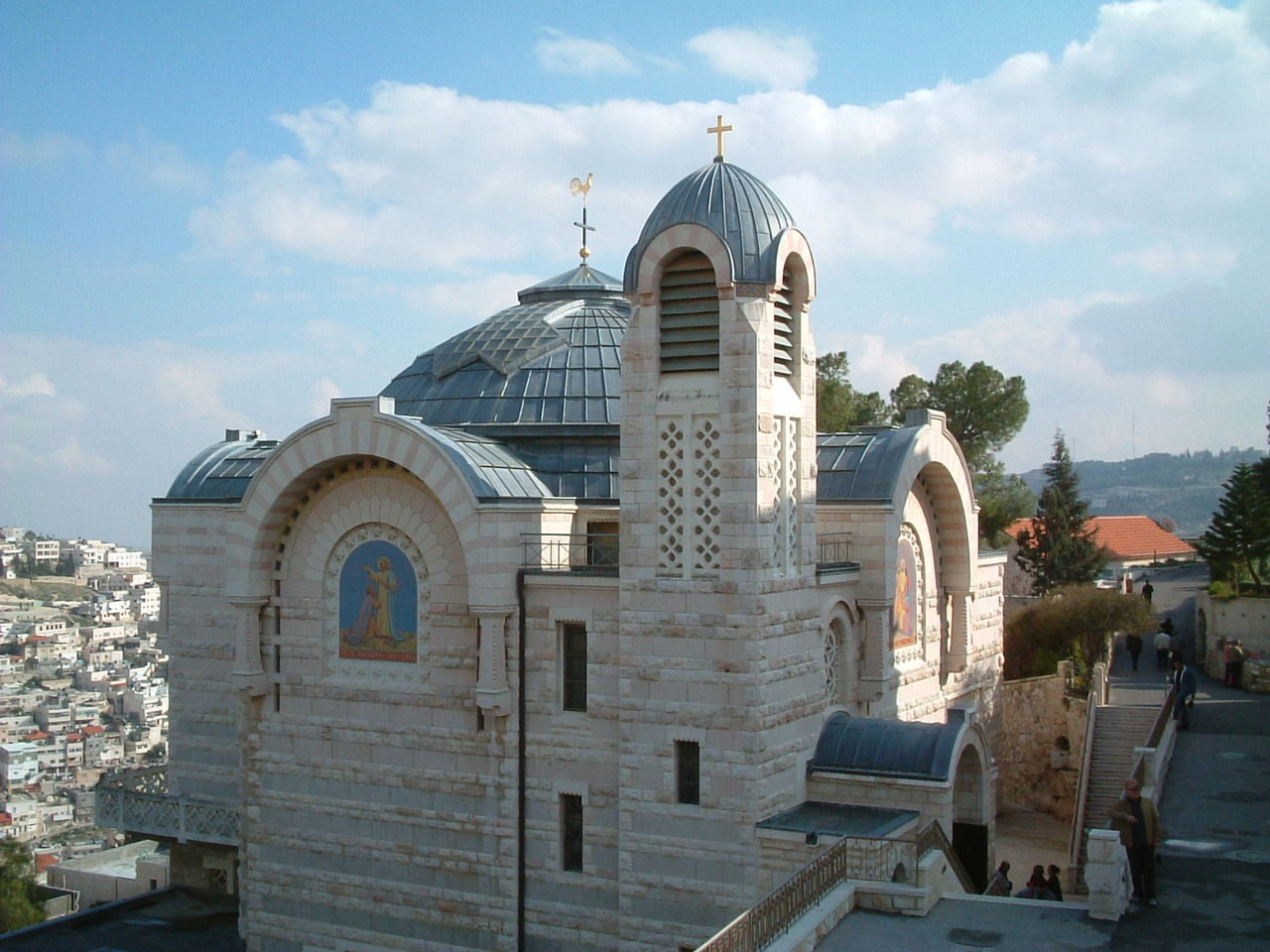 Church of Saint Peter in Gallicantu
Likely the house of High Priest Caiaphas, where Jesus was held before being taken to Pontius Pilate.
This cross-shaped church was built over the ruins of a Byzantine church destroyed during the Muslim conquest in the 7th century. It is believed to be the site of Caiaphas’s house, where Jesus and Peter were imprisoned before being brought before Pontius Pilate.
The church’s name comes from the New Testament account where Jesus tells Peter he will deny him three times before the rooster crows. And so it happened: when Jesus was arrested in Gethsemane and taken to Caiaphas’s house, Peter denied knowing him three times until the rooster crowed.Matthew 26:69–75, Mark 14:66–72, Luke 22:54–62, John 18:15–27
-
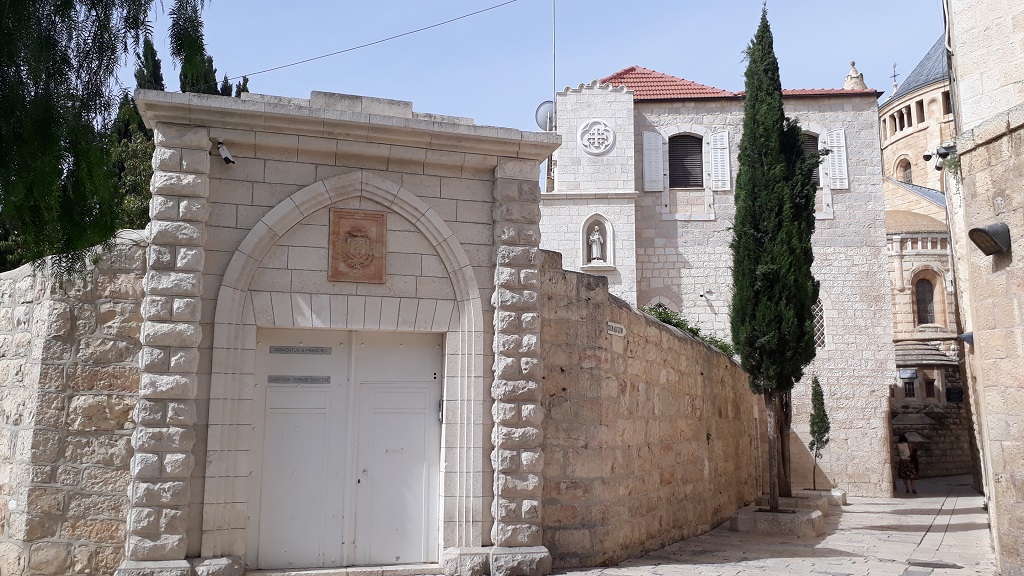 Franciscan Monastery
14th-century Franciscan monastery.
This monastery, built as a complex stretching from David’s Tomb to the Cenacle, was established by the Franciscans in the 13th century. After the Crusaders were expelled from Jerusalem by the Mamluks, the Franciscans were granted a special mandate to guard the holy sites under the authority of the (Custodia de Terrae Sanctae = “Custody of the Holy Land.”)
-
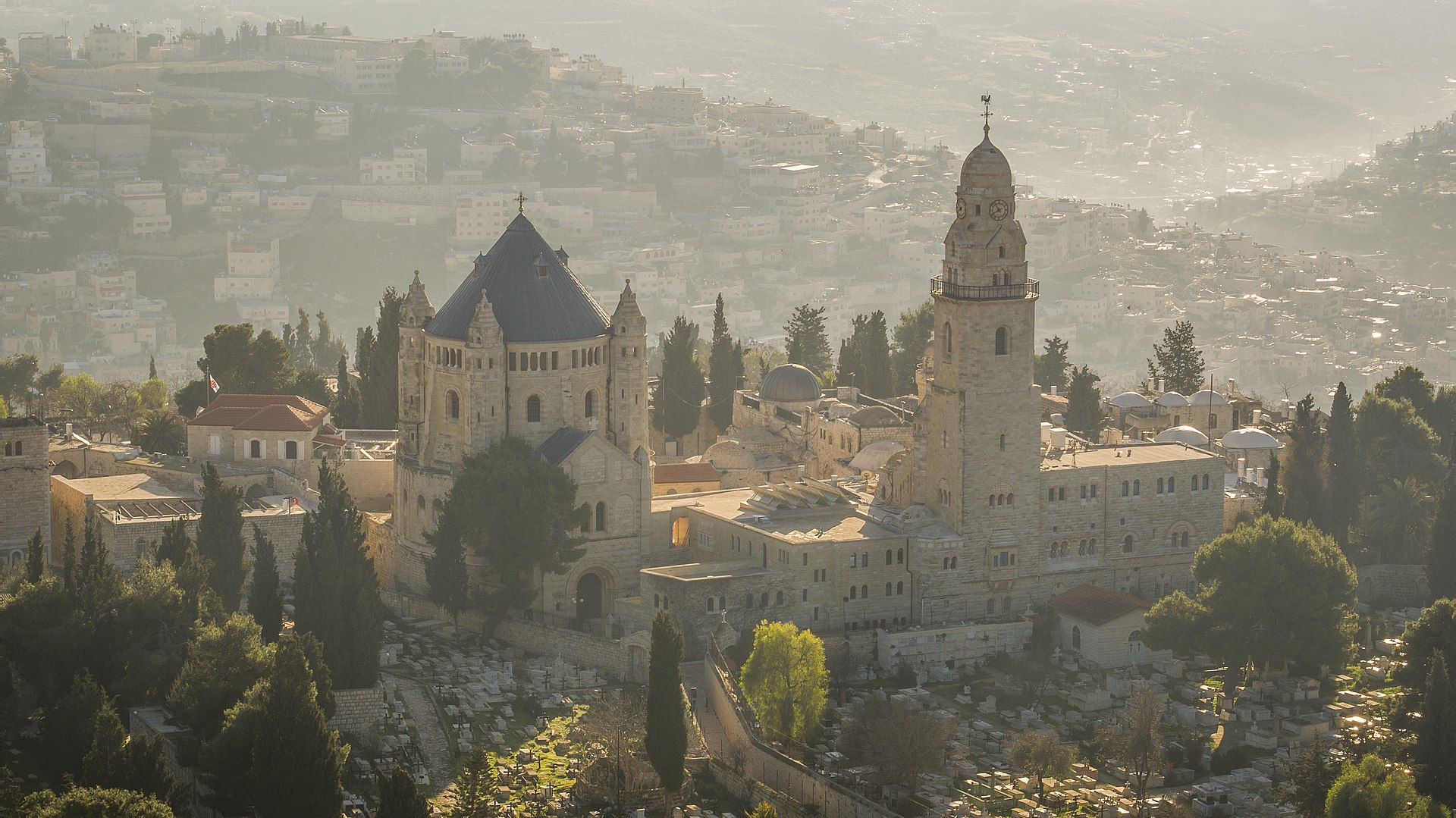 Abbey of the Dormition of Mary
Abbey built in 1910 over 6th-century Byzantine remains.
This magnificent cross-shaped abbey was built at the end of the 19th century and inaugurated in the early 20th century by order of German Kaiser Wilhelm II, on land granted by Ottoman Sultan Abdul Hamid II. It stands on the ruins of a Byzantine church called Agia Sion, one of the few depicted on the mosaic map of the Church of Madaba in Jordan. According to Christian tradition, this site marks the place where Mary, mother of Jesus, fell into eternal sleep, hence the name “Dormitio” (sleep).
-
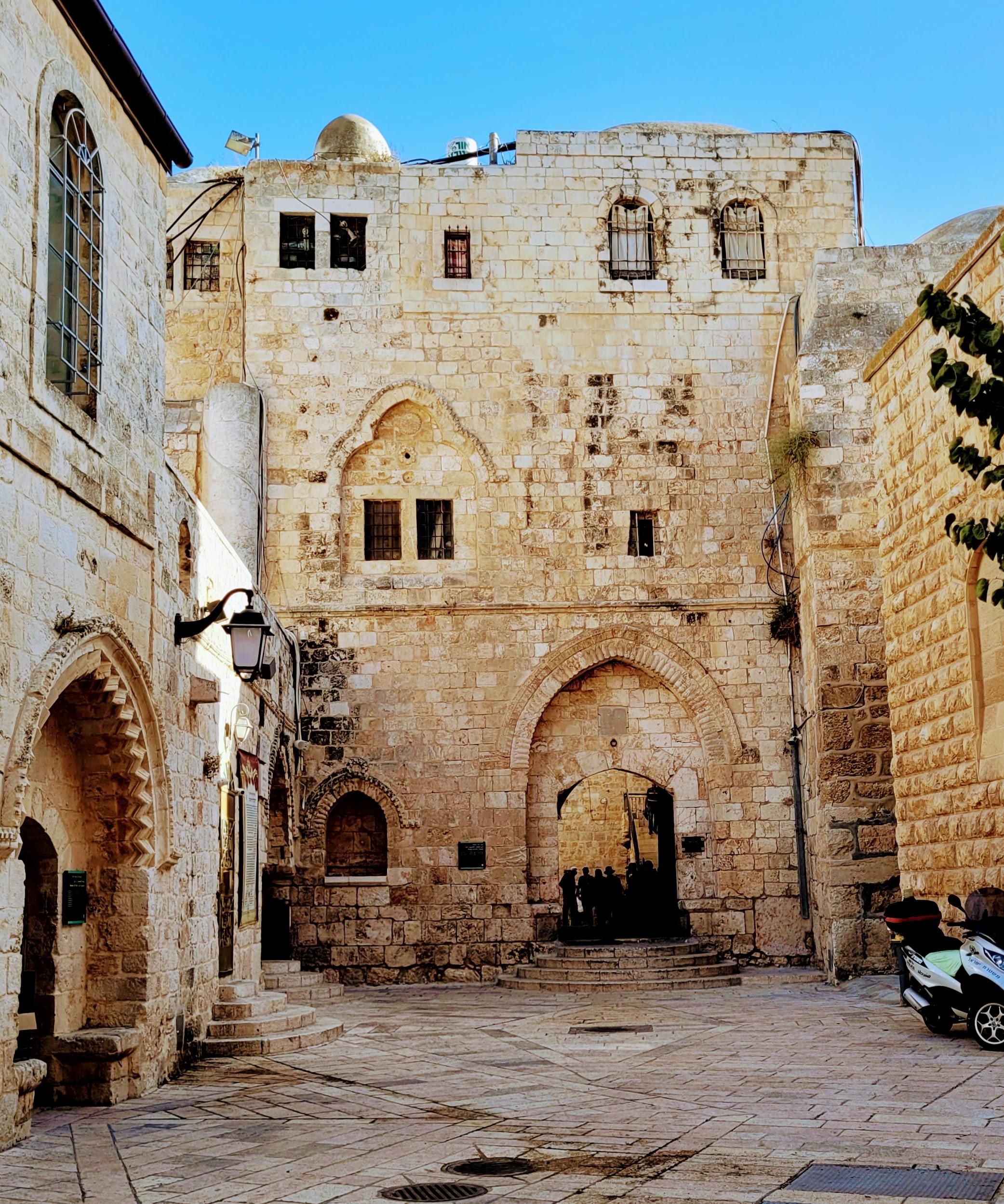 David’s Tomb
Crusader-era complex where three religions converge in one building.
Although the Old Testament places David’s Tomb in the City of David, few sources suggest it is located here, and no archaeological evidence supports this claim. Nevertheless, based on ancient traditions, this is believed to be the resting place of King David himself.
During the Muslim period under Mamluk rule, the entire complex was converted into a mosque known as the Mosque of David. Likewise, Zion Gate was renamed David’s Gate.1 Kings 2:10
-
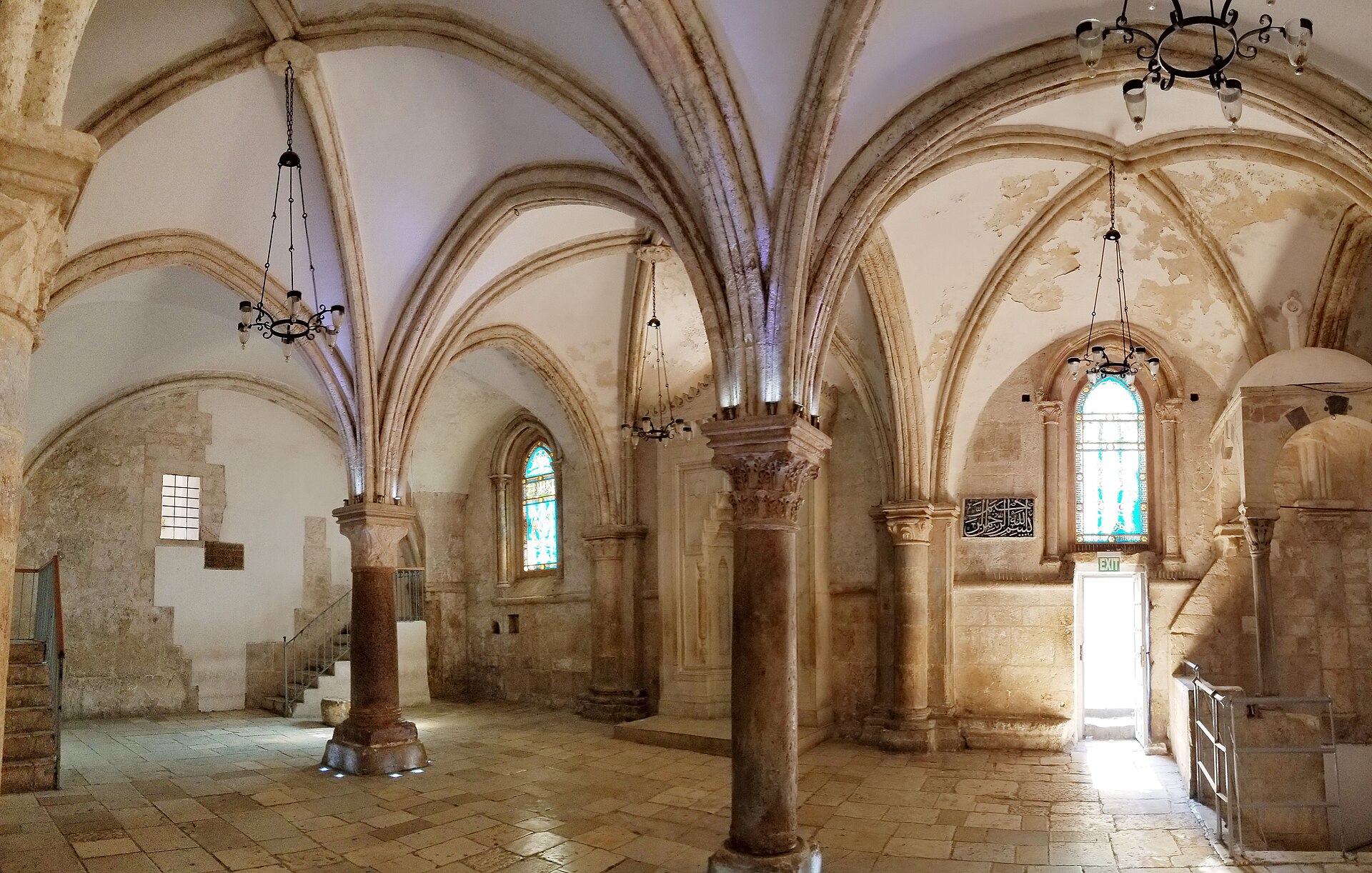 The Cenacle – The Last Supper
On the upper floor of the same complex as David’s Tomb lies the room of the Last Supper (Cenacle).
Leonardo da Vinci famously depicted this unique moment when Jesus, together with his apostles, celebrated what would be his final Passover meal. Although this site was built by the Crusaders in the 12th century and converted into a mosque in the 14th century (as seen in its walls), the building stands atop the ruins of the Byzantine church Agia Sion, the same one beneath the Abbey of the Dormition.
It is precisely here that the church protected the room where the Last Supper took place and the space where the apostles received the Holy Spirit on Pentecost.Matthew 26:17–30, Mark 14:12–26, Luke 22:7–39, John 13:1–30, Acts 2:1–13