-
History
In the late 6th and early 7th centuries, major changes occurred across the world, especially from the southern Levant, what we now know as Saudi Arabia. There, Muhammad led a spiritual and historical revolution that gave birth to Islam.
Muhammad died in 632 CE without leaving blood heirs, but he did leave disciples: the four caliphs (خليفة, meaning "substitors" in Arabic). These four caliphs of the Righteous Path or the very first caliphs (ٱلْخِلَافَةُ ٱلرَّاشِدَةُ) followed in Muhammad’s footsteps until the last, Ali, when a sectarian division emerged known as Shiism (شيعة, in Arabic Shi'a, meaning "faction").
In 638 CE, the second caliph, Omar ibn al-Khattab, conquered the Land of Israel from the Byzantines, marking the beginning of a new era: the first Muslim period. From that moment, Christianity, already established across much of Europe, sought to reclaim its rights over the Church of the Holy Sepulchre. The split between the Catholic and Orthodox Churches (the Great Schism) in 1054 only accelerated the race to the Holy Land to recover Jerusalem.
In 1096, an expedition to Jerusalem began, triggering a bloody pogrom against Jewish communities in Europe. Only in 1099, on July 15, did Godfrey of Bouillon enter Jerusalem, initiating the Christian Crusader period.
As we explore Jerusalem in search of Muslim-era traces, we encounter remnants from these three historical periods. -
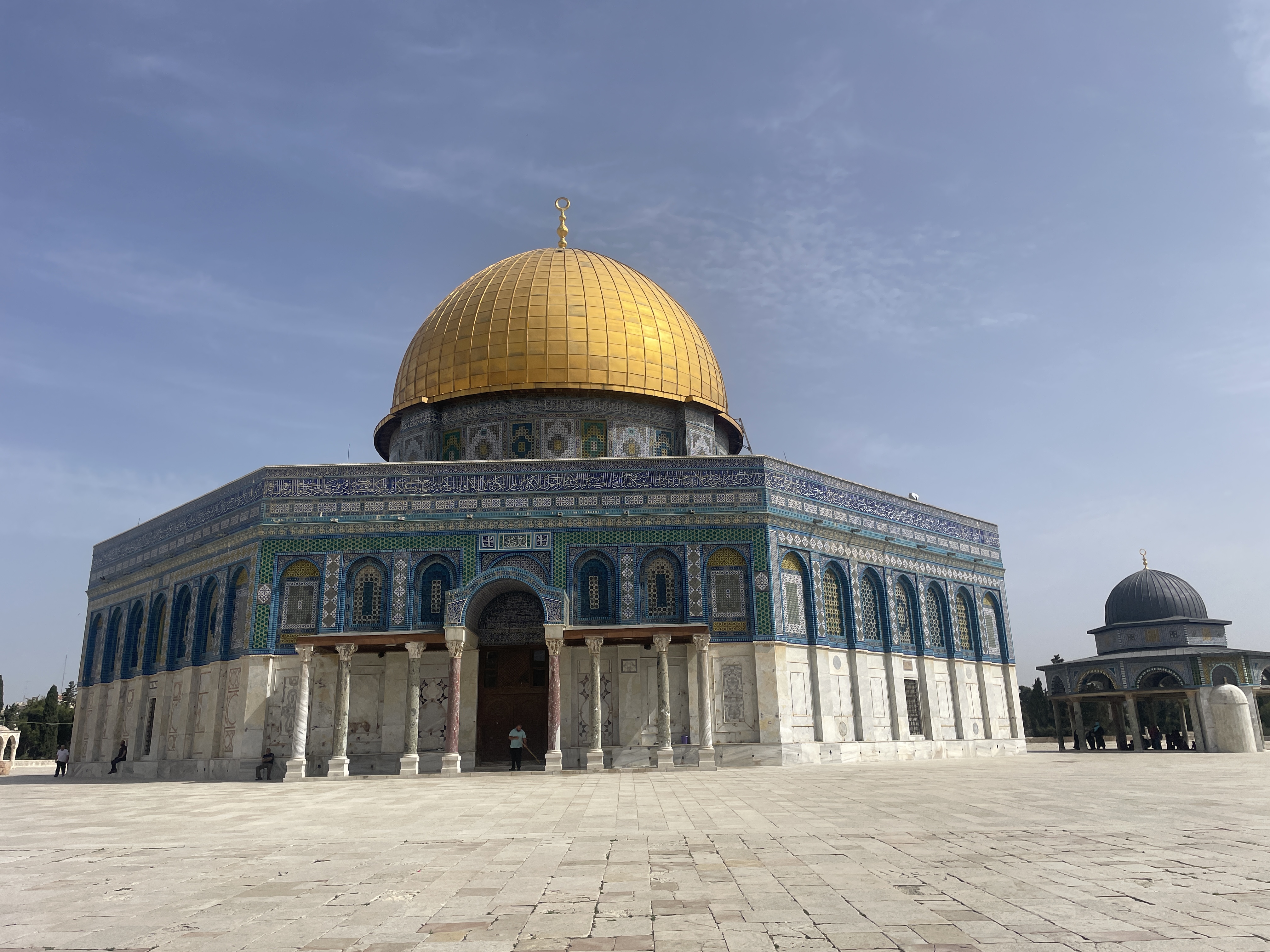 The Temple Mount:
From King David to the construction of the Al-Aqsa Mosque by the Umayyad dynasty.
This esplanade, the heart of Jerusalem, is where King David purchased the field of Araunah and Solomon built the First Temple, which was destroyed in 586 BCE by the Babylonians. In 516 BCE, the Second Temple was built, and in the late 1st century BCE, Herod expanded it until the Romans destroyed it in 70 CE. In 132 CE, Hadrian built the Temple of Jupiter here, sparking the Bar Kokhba revolt. In 691 CE, Abd al-Malik of the Umayyad dynasty built the Dome of the Rock (Haram al-Sharif – the Most Holy) on the ruins of the Temple. Later, his son al-Walid built the Al-Aqsa Mosque over the structure erected by Ibn al-Khattab. This construction was inspired by the Quran, Surah 17 "Al-Isra wal-Mi'raj", which recounts Muhammad’s night journey on a winged creature, Al-Buraq, to the "farthest mosque." It was interpreted to refer to Jerusalem even though, there is no mention whatsoever of Jerusalem or any reference to a holy city out of Mecca along the pages of the Quran, and thus Ibn al-Khattab, upon conquering the Land of Israel in 638 CE, established his mosque at the "farthest" point of this esplanade.
-
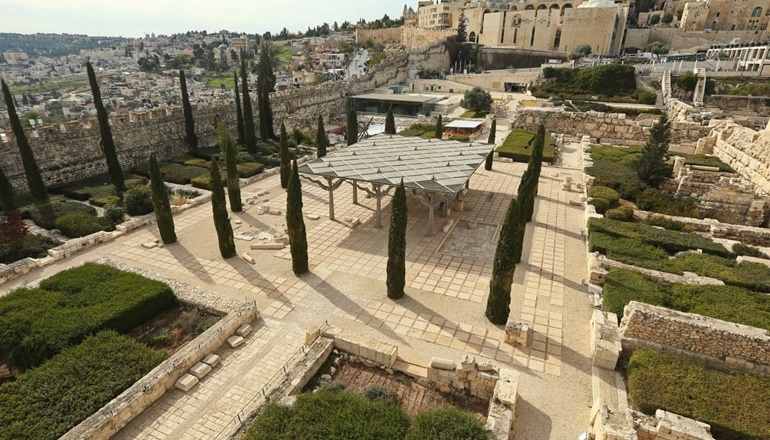 Palaces of the Umayyad Dynasty:
Palaces built by the Umayyads south of the Temple Mount.
After the last caliph successor of Muhammad, considered part of the Al-Rashidun (الراشدون, "the Righteous Path"), Ali, and following the bloody Battle of Karbala, the Umayyad dynasty took control of these lands. They remained until 749 CE, when a powerful earthquake destroyed their palaces. Excavations in this area have uncovered four palaces built by the Umayyads south of the Temple Mount. Interestingly, no everyday items or ceramic vessels, common in archaeological digs, have been found, suggesting these palaces may never have been used. In 750 CE, the Umayyads left the region, which then came under Abbasid control until 970 CE, when the Fatimid dynasty, based in Egypt, took over.
-
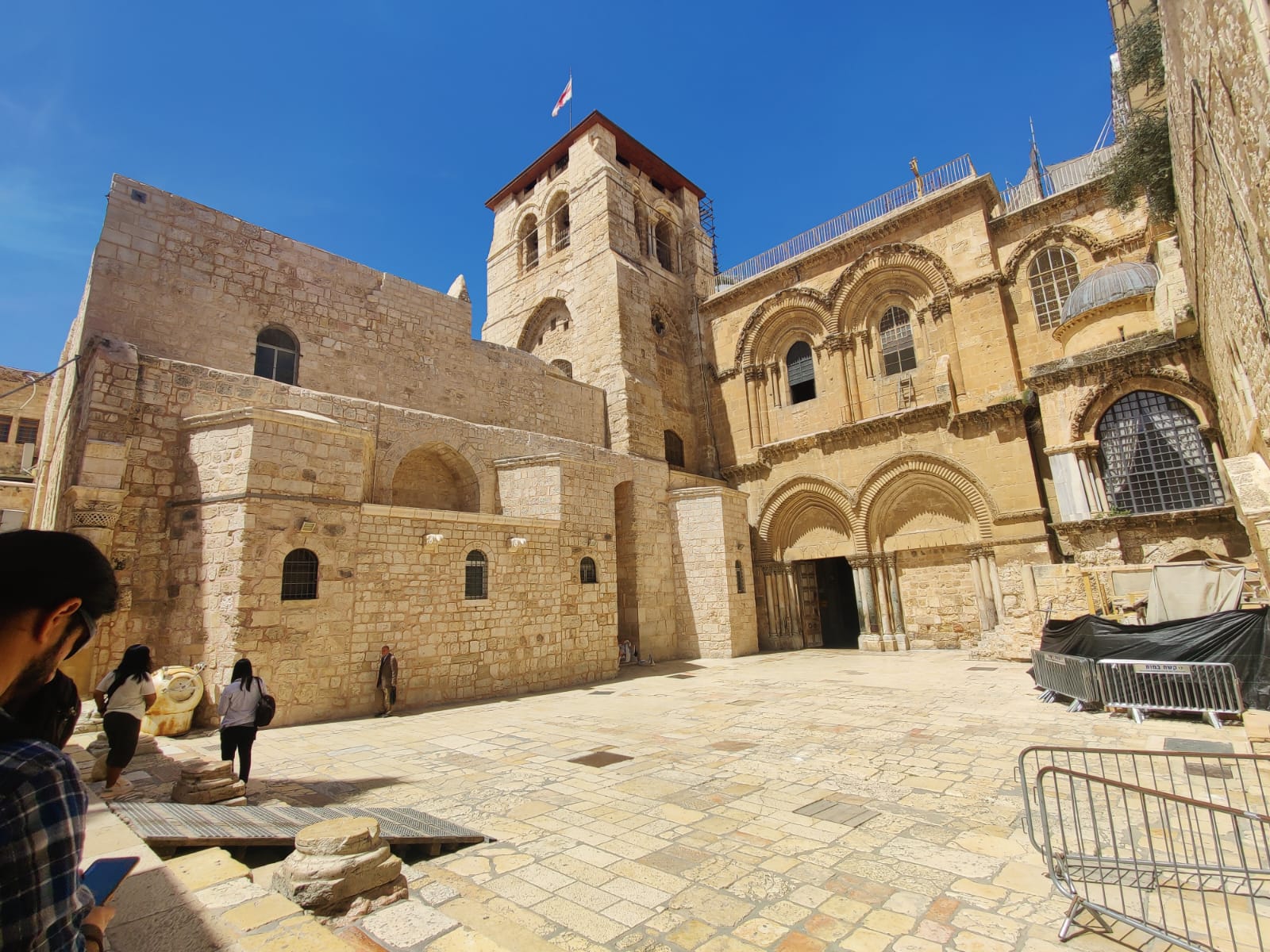 Church of the Holy Sepulchre:
From Constantine to the Crusaders, reconstructions of the Holy Sepulchre.
What we know today as the Church of the Holy Sepulchre is the result of a series of restorations that began in the 4th century, when Emperor Constantine accepted Christianity in 313 CE through the Edict of Milan. In 324 CE, he adopted it as the religion of the empire, though he converted only shortly before his death. His mother, Helena, embraced Christianity much earlier. During her pilgrimage to the Holy Land, seeking to trace Jesus’ footsteps, Helena found three crosses beneath what is now Golgotha, believing one belonged to Jesus. Constantine built a church on that site. In 614 CE, a massive Sassanid Persian invasion destroyed many churches in the Land of Israel, including this one. When Ibn al-Khattab arrived in 638 CE, the church was rebuilt. In 1009 CE, al-Hakim bi-Amr Allah of the Fatimid dynasty destroyed it, sparing only the sanctuary. In 1048, the Byzantines, though no longer ruling the region, rebuilt the church. Fifty years later, in 1099, Queen Melisende led another reconstruction, and what we see today is largely her contribution.
-
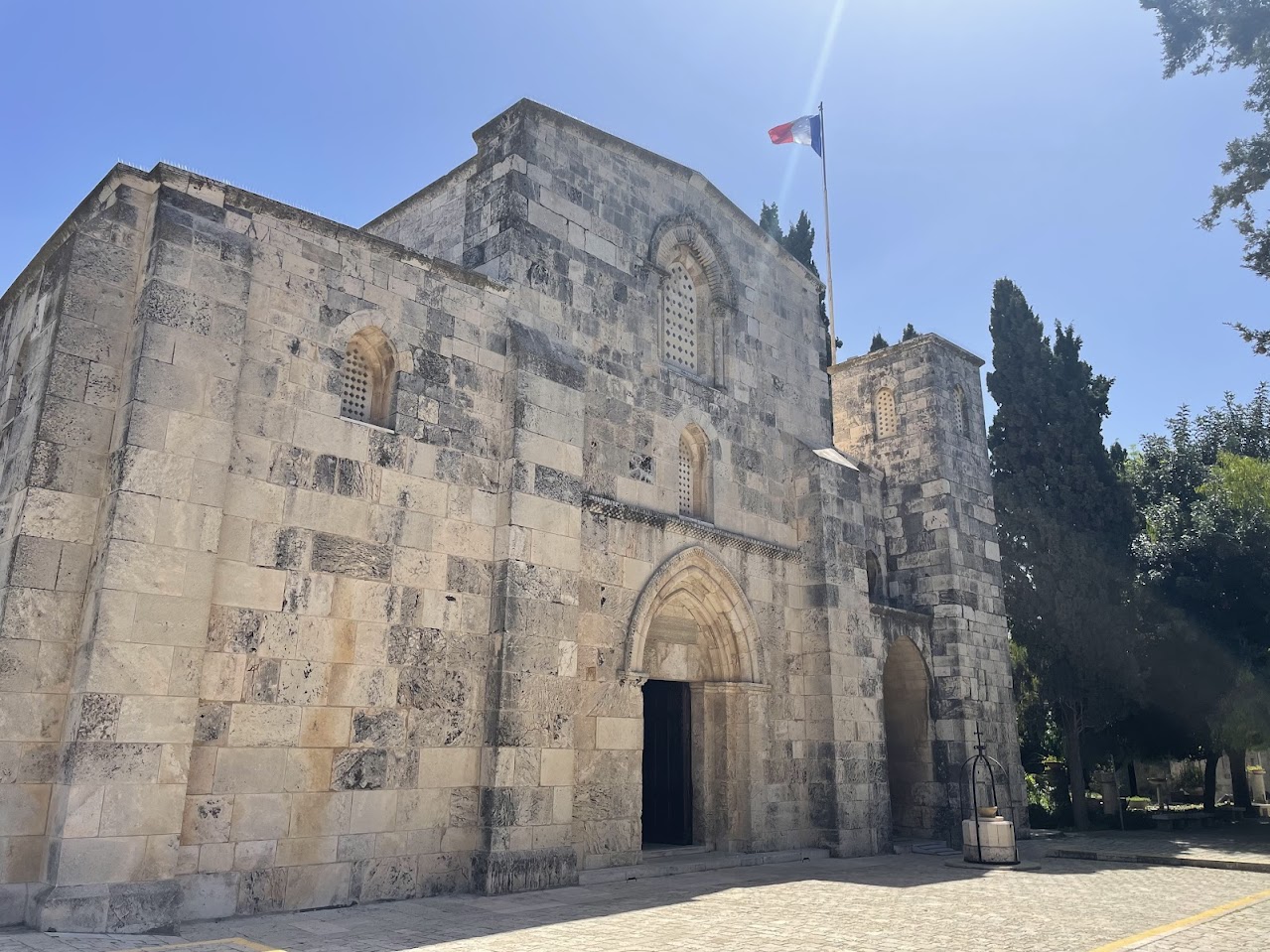 Church of Saint Anne:
Built by the Crusaders over Byzantine ruins, believed to be Mary’s birthplace.
This church, built by the Crusaders, stands atop Byzantine ruins that were themselves built over what is believed to be the home of Anne and Joachim, parents of Mary, mother of Jesus. According to Christian tradition, Mary was born here. When the Sassanids arrived in 614 CE, the Byzantine church was demolished. It may have been partially rebuilt, but in 1009 CE, Sultan al-Hakim bi-Amr Allah destroyed it completely. Only with the arrival of the Crusaders was the current church rebuilt. In 1260, when the Mamluks took control of the region, the church was converted into a madrasa (Islamic school). A plaque in Arabic still commemorates the deeds of Mamluk Sultan Baibars. During the Ottoman capitulations, the site was handed over to France, which maintains it to this day. The religious order in charge is the Order of the White Fathers.
-
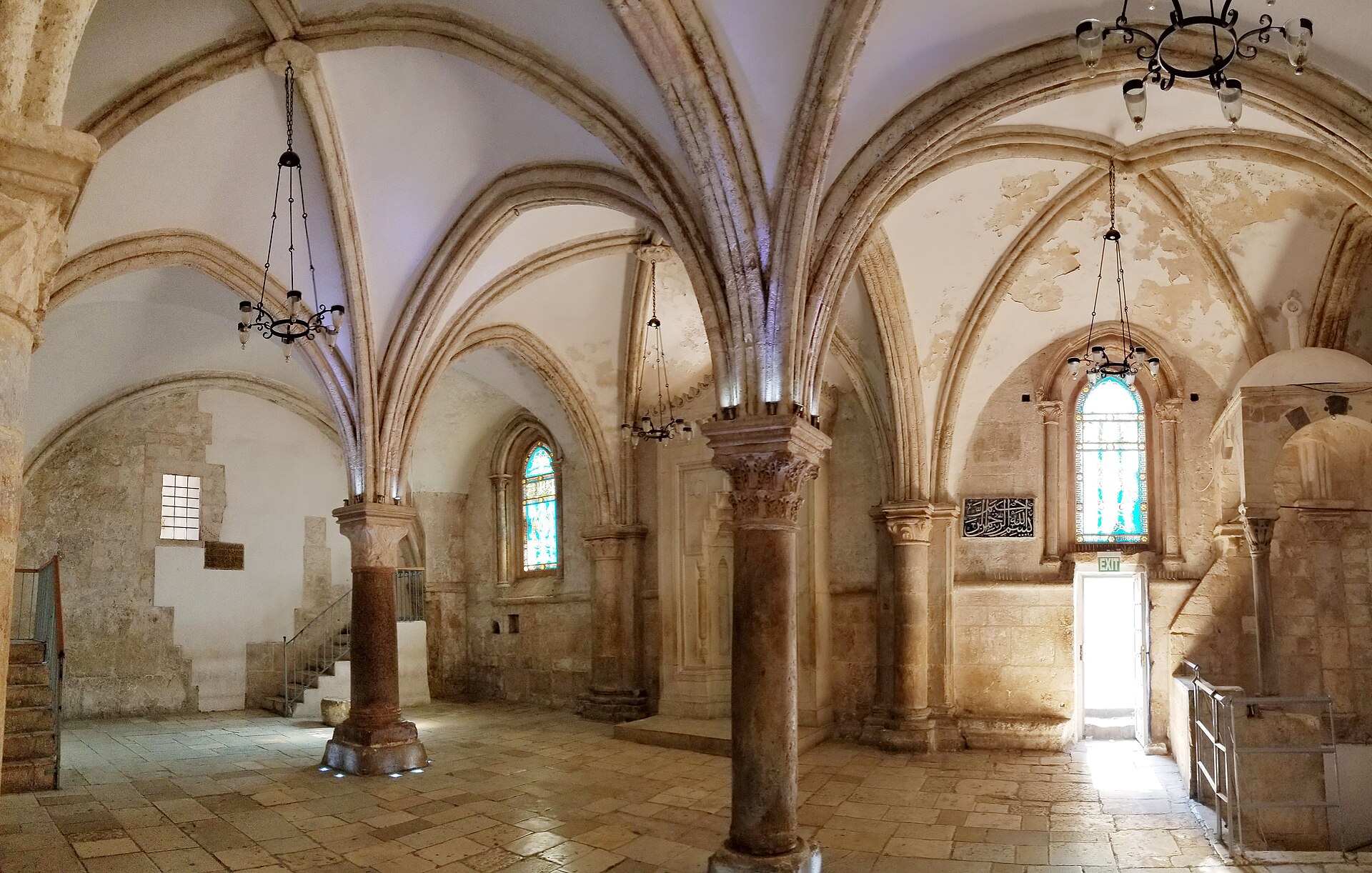 The Last Supper:
Location of the Cenaculum: the Last Supper, Pentecost, and King David’s Tomb.
This site, known as the Cenaculum, is where two significant events took place. The first was when Jesus sought a place to celebrate the Passover meal. He sent his disciples to find someone who could offer a space, knowing it would be his final supper. After the meal, Jesus descended into the Kidron Valley, where he prayed before being arrested and taken to the cross.
The second event occurred fifty days after Passover, ten days after his ascension from the Mount of Olives. The apostles were gathered in the upper room , now closed, celebrating the Jewish festival of Shavuot, known in Greek as Pentecost (πεντηκοστή, meaning "fifty"). Although the current room is not the original, it stands atop the ruins of a 6th-century Byzantine church called Hagia Sion, believed to preserve the location of these events. Like many Byzantine structures, it was destroyed in 614 during the Sassanid invasion. The Crusaders rebuilt the site in the 11th century.
When the Ayyubids and later the Mamluks took control of Jerusalem, they expelled the Crusaders. Mamluk Sultan Baibars granted the Catholic Franciscans special permission to protect Christian holy sites. Thus, the Custodia de Terrae Sanctae (Custody of the Holy Land) was born, with the mission of sending monks to safeguard religious sites. Later, in the 13th century, another Mamluk sultan, Ibn Qalawun, granted the Franciscans rights over the room of the Last Supper.
Interestingly, or perhaps not, this room is built directly above what is believed to be King David’s Tomb. Throughout history, Jesus’ life has been closely linked to David’s, from his birth in Bethlehem to his death. It is therefore not surprising that this room is located above David’s tomb. This overlap led to tensions between Jews, who sought rights over David’s tomb, and Franciscans, who wanted control over the entire building. As a result, the Mamluks expelled both Jews and Christians, converting the building into a mosque: the Mosque of the Prophet David (مسجد النبي داود).The Last Supper: Matthew 26:17, Mark 14:12, Luke 22:7
Foot Washing: John 13:1
Pentecost: Acts 2:1 -
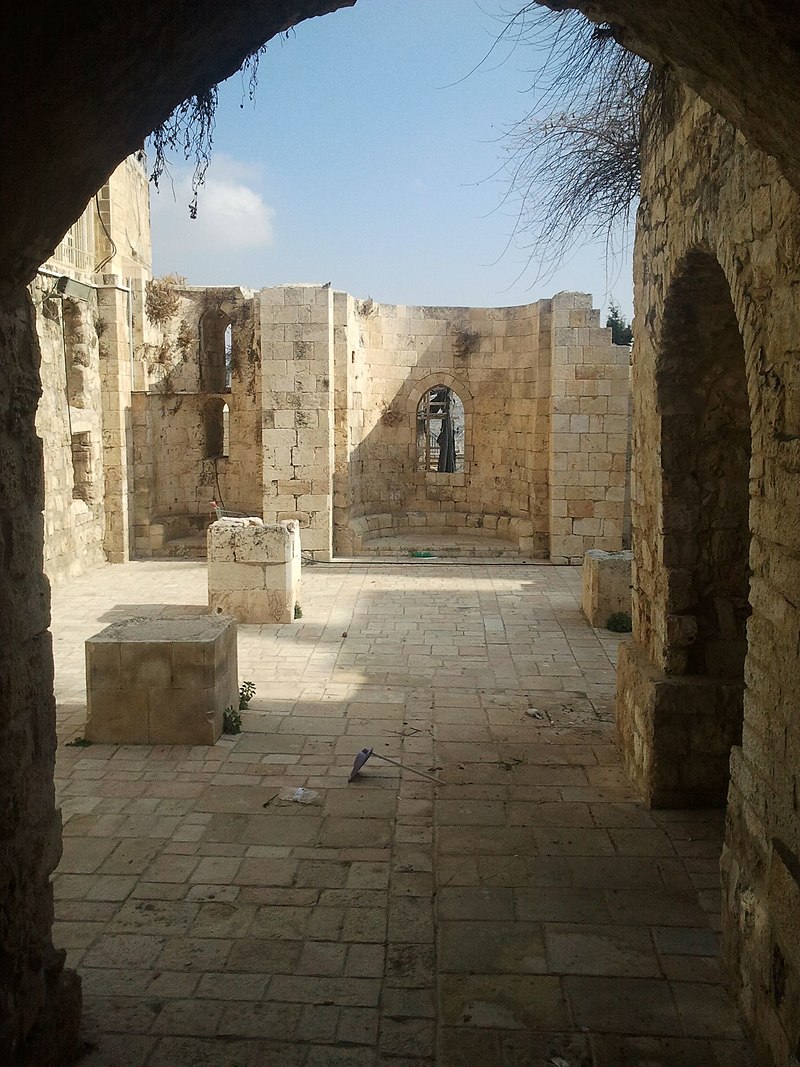 St. Mary of the Germans Hospital:
Crusader complex of the Teutonic Order with hospital, chapel, and fortress.
This complex belonged to the Crusaders of the Teutonic Order, originating from Germany. The order was founded in the Holy Land during the Third Crusade, led by three kings representing three nations: Richard the Lionheart for England, Philip Augustus for France, and Frederick Barbarossa for Germany. Although Barbarossa died en route to the Holy Land, his German army arrived and founded this order.
Unlike the Templars and Hospitallers, also Crusader orders, the Teutonic Knights sought to distinguish themselves by offering not only defense and lodging but also hospital services specifically for German pilgrims. This complex combined all these functions: a chapel, lodging, a fortress, and a hospital.