-
.jpg) Bethphage:
Bethphage:Traditional site where Jesus began his triumphal entry into Jerusalem on Palm Sunday.
Jesus arrives in Jerusalem to ascend to the Temple, as Jewish tradition requires during Passover: “Three times a year you shall offer sacrifices before Me. You shall observe the Feast of Unleavened Bread (Passover): for seven days you shall eat unleavened bread as I commanded you, in the month of Aviv (Spring), for in it you came out of Egypt; and no one shall appear before Me empty-handed. And the Feast of Harvest (Shavuot - Pentecost)... when you gather the fruit of your labor from the field (Sukkot - Tabernacles).” Year after year, Jesus came to Jerusalem three times annually. But this time, He knew it would be different. Jesus seeks a donkey to enter Jerusalem, fulfilling Zechariah’s prophecy... In this small village stands the Franciscan church designed by Antonio Barluzzi.
Matthew 21:1, Mark 11:1, Luke 19:30
-
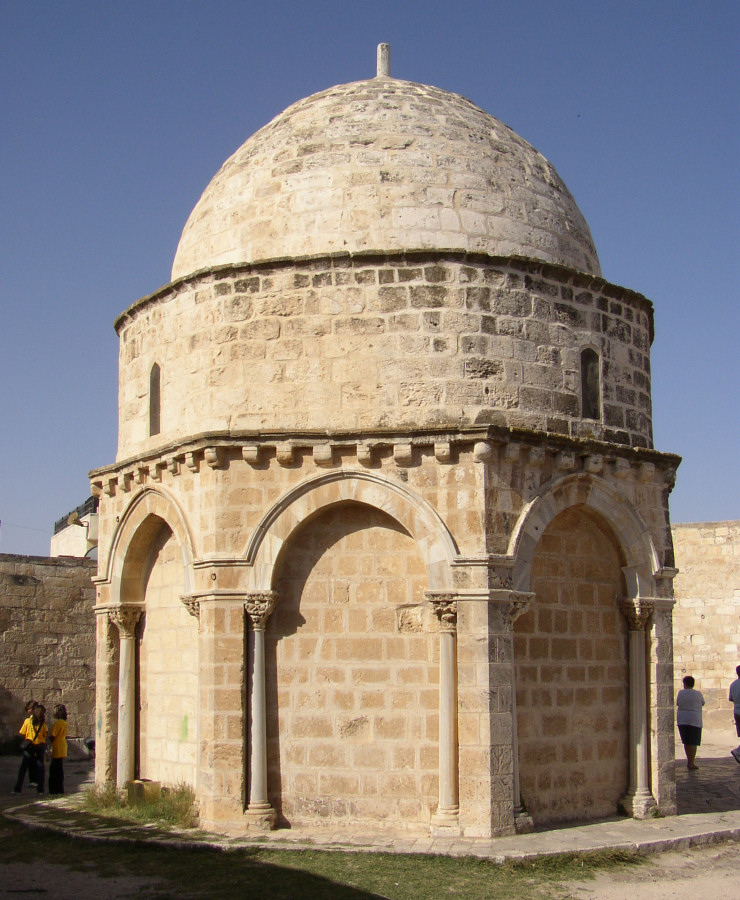 Church of the Ascension:
Forty days after the resurrection, Jesus ascends to heaven from this site, entrusting his mission to his disciples.
This unique Crusader-era structure from the 12th century raises questions due to its form and the Status Quo that grants this site to the waqf (وَقْف = Muslim religious endowment). Originally built with an open dome symbolizing the Ascension and awaiting Jesus’ return, it stands on Byzantine ruins destroyed during the Persian invasion in 614 CE and later by Fatimid ruler Al-Hakim in 1009. The Crusaders rebuilt it, but after the Muslim reconquest in 1187, the open dome was replaced with a... closed one, reflecting a Muslim view of Jesus as a prophet. Inside is the stone believed by Christians to bear Jesus’ footprint from his ascent.
Luke 24:50–51, Acts 1:9–12
-
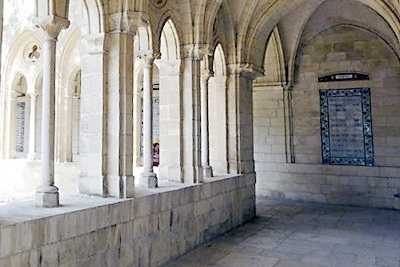 Church of the Pater Noster (Eleona):
Jesus taught his disciples the traditional prayer here.
According to Christian tradition, this is where Jesus taught his followers how to pray. Founded by Helena, mother of Constantine the Great, the bizantine emperor who embraces the christanity shortly before his death. It is now maintained by the French Carmelite community. The church and monastery walls are adorned with mosaic plaques of the Lord’s Prayer in every language, including Braille.
Inside the monastery, remnants of the Byzantine church are visible.Matthew 6:9–13, Luke 11:1–4
-
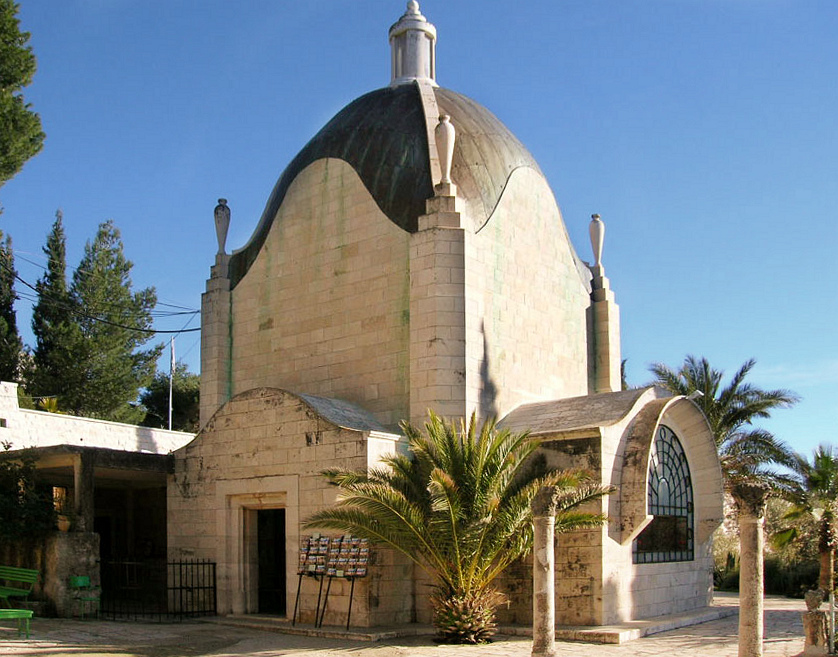 Dominus Flevit Church:
Jesus wept over Jerusalem, foretelling its destruction.
According to the New Testament, Jesus, upon arriving in Jerusalem, gazes upon the city from the Mount of Olives and weeps, knowing it will be destroyed.
Designed by Antonio Barluzzi, the church offers one of the most iconic views of the Old City.Luke 19:41
-
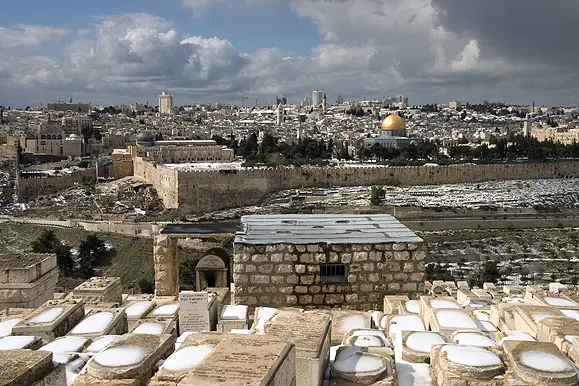 Jewish Cemetery on the Mount of Olives:
The oldest Jewish cemetery in the world, with over 3,000 years of history and 150,000 graves.
A sacred site in Judaism, believed to be the place of messianic resurrection.
-
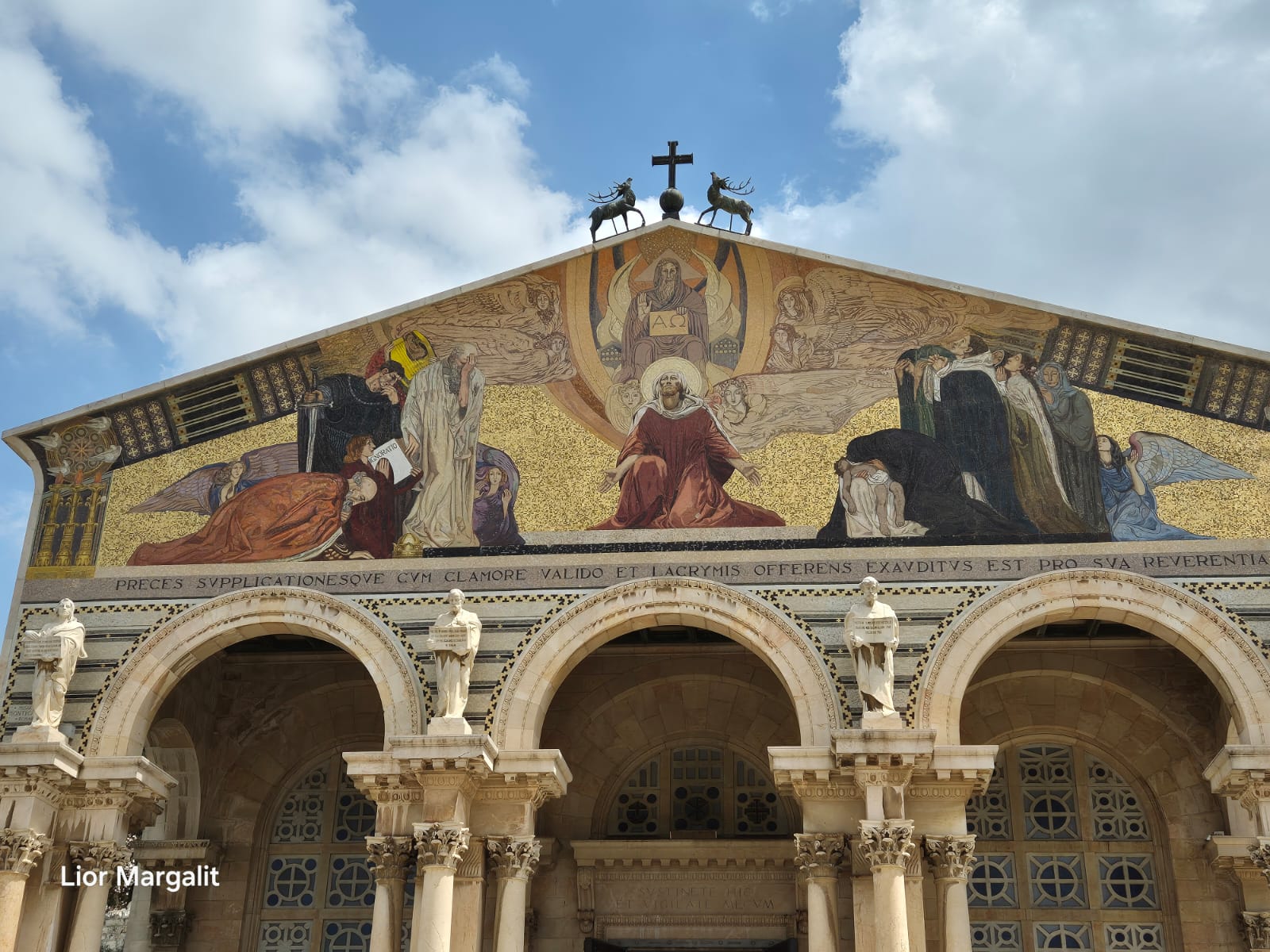 Basilica of the Agony – Church of Gethsemane (Church of All Nations):
Jesus prays before being taken to trial.
After the Last Supper, Jesus comes down to the Garden of Olives to pray to God about his fate. He asks his disciples to stay awake until his return, but they fall asleep. Jesus, anguished, awaits the priests accompanied by Judas, who betrays him, pointing him to the captors with a kiss. The church, built by Antonio Barluzzi on Byzantine ruins, has its altar placed over the rock where Jesus prayed, and the mosaics depict the scene.
Luke 22:39–46
-
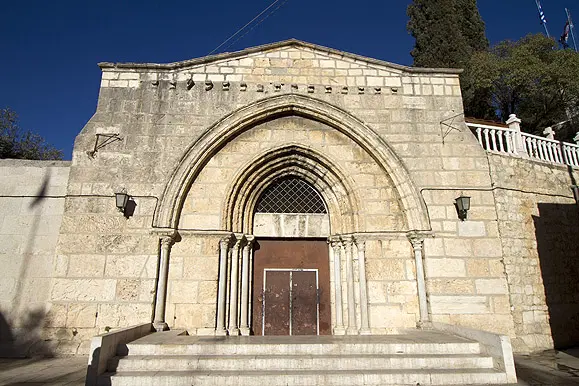 Tomb of the Virgin Mary:
According to Eastern tradition, this is where Mary was buried.
Built by the Franciscans in the 14th century... Inside lies the tomb of the crusades Queen Melisende.
-
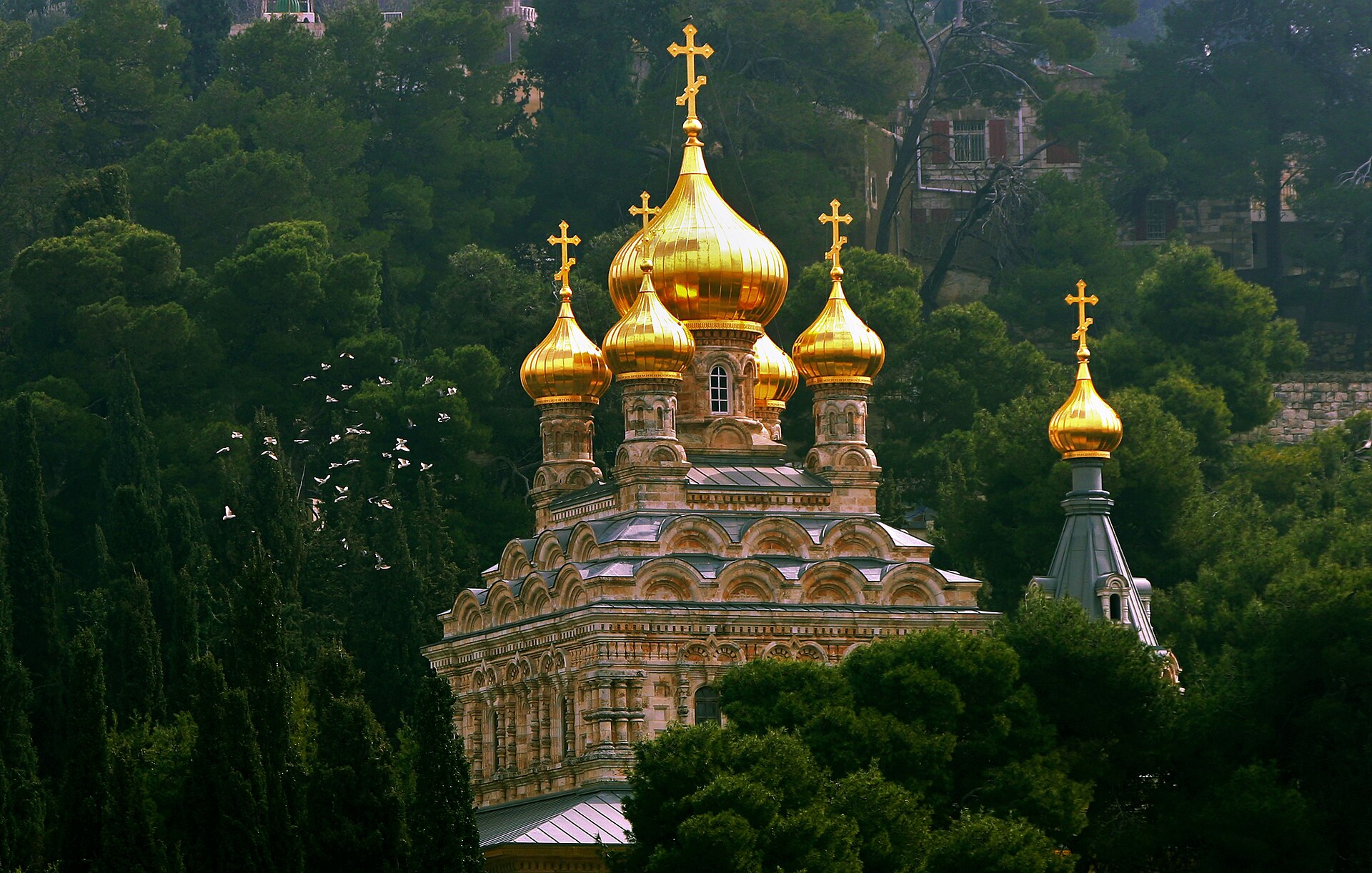 Russian Church of Mary Magdalene:
Famous for its golden onion-shaped domes. Dedicated to Mary Magdalene.
Built by Tsar Alexander II in the 19th century... A prime example of Russian Orthodox architecture outside Russia.