-
Historia
In the 13th century, a new force rose in the East and threatened Constantinople, the capital of Byzantine dominance. The Ottoman leader changed the course of history and founded the empire that bears his name, "The Ottoman Empire". His goal: to bring down the Byzantine Empire. In 1451, Mehmet II conquered Constantinople and renamed it Istanbul. As a symbol of victory, he converted the Hagia Sophia church into a mosque. In 1516, Sultan Selim I defeated the Mamluks at the Battle of Marj Dabiq in Turkey, marking the beginning of a new era in the Land of Israel: the Ottoman period.
-
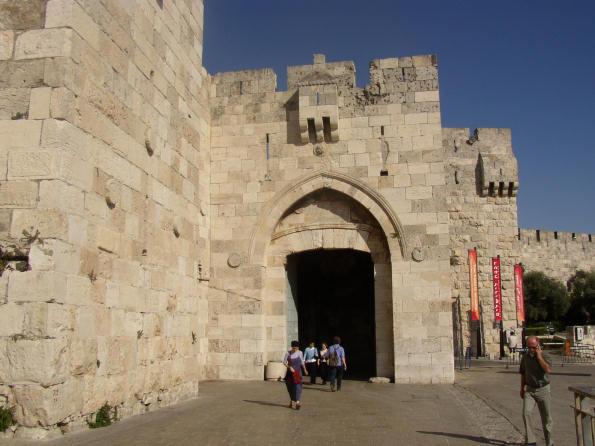 Jaffa Gate:
Jaffa Gate (Sha'ar Yafo שער יפו in Hebrew, Bab al-Halil "Hebron Gate" بَابُ الْخَلِيلِ in Arabic).
Jaffa Gate is one of the most iconic entrances to Jerusalem’s Old City. Built in 1538 by order of Ottoman Sultan Suleiman the Magnificent, it served for centuries as the main access point for pilgrims and travelers arriving from the port of Jaffa. On the wall, you can see an Arabic inscription left by Suleiman, including the date of construction. Above the entrance, another inscription blesses Abraham with the famous shahada ("There is no god but Allah, and Abraham is the friend of Allah"). The reason for this inscription is that, in Arabic, this gate is called Bab al-Halil, "Halil" refers to Hebron, the city of Abraham, who is also known as "Halil."
-
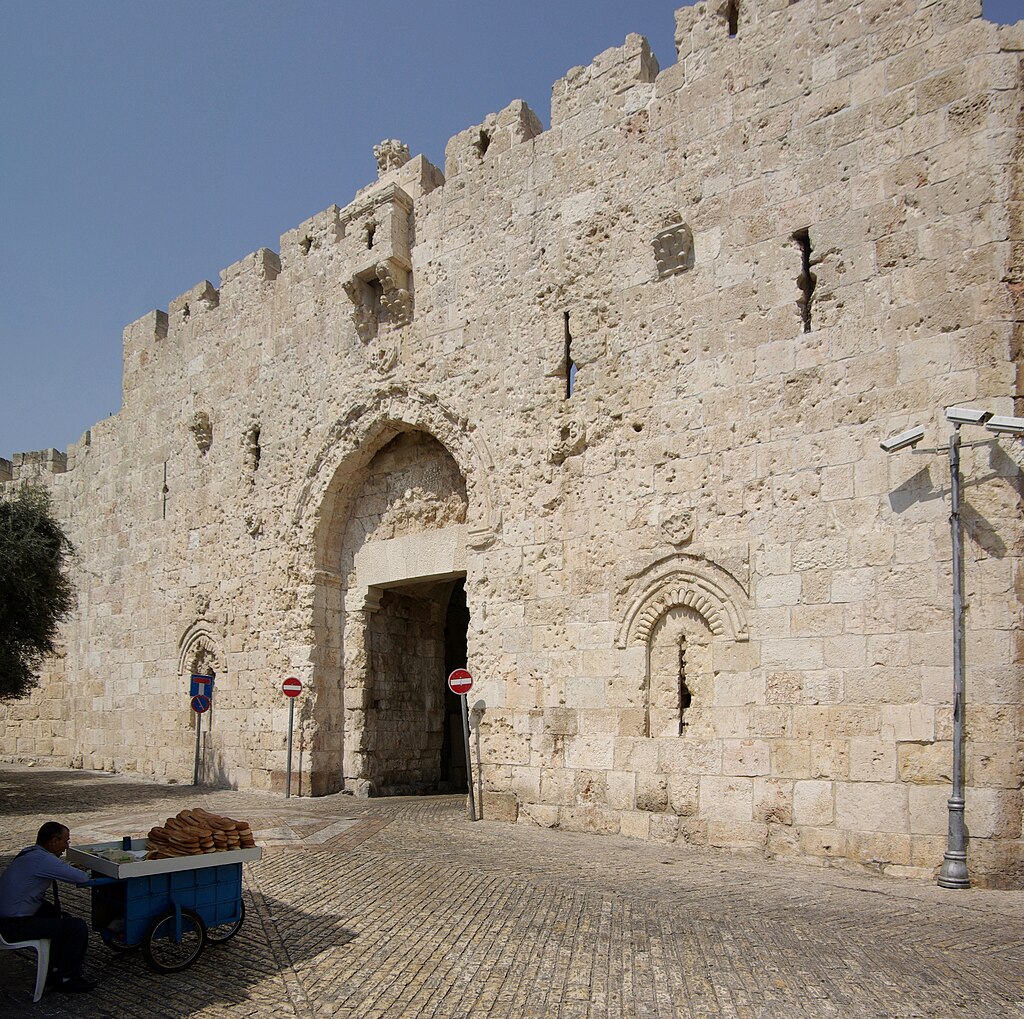 Zion Gate:
Southwestern gate of Suleiman’s wall.
Sultan Suleiman the Magnificent built these walls in the 16th century. The area we see here, located outside the walls of Jerusalem, was supposed to be included within the city limits as ordered by the Ottoman sultan. However, due to a miscalculation by the engineers, this area was left outside the walls. Legend has it that the sultan ordered the execution of the engineers responsible for the error, and that their tombs are located at the Jaffa Gate as a warning to visitors about the seriousness of disobeying the sultan’s orders. The mysterious events that occurred at this gate, also known as the Gate of the Jews or David’s Gate, reflect the historical traces left along this path. This gate, along with the wall built in the 16th century by Suleiman the Magnificent, connects Mount Zion, left outside the city limits, with the Roman Cardo that runs through Jerusalem.
-
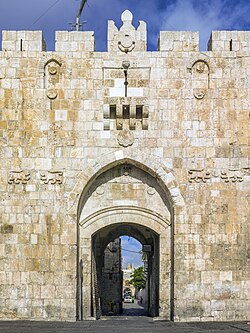 Lions’ Gate:
Jerusalem’s eastern gate.
This unique entrance to Jerusalem stands out for the presence of "two lions" that appear to greet visitors. In reality, these "lions" were not part of the original wall structure. As in many other cases, the Ottomans reused architectural elements found in Jerusalem. These figures are actually the symbol of Mamluk leader Baibars: two lions. It’s likely they came from a Baibars building that was destroyed during the Turkish incursion.
Lions’ Gate is the only entrance to the city from the east. In Arabic, it is known as Bab al-Asbat (باب الأسباط), meaning "Gate of the Tribes." From this point begins the procession of the Via Dolorosa. -
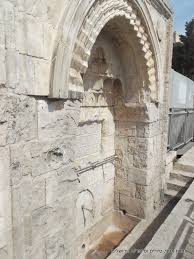 Sabil Suliman:
16th-century water dispenser.
This is a water dispenser, common in Ottoman architecture. The term used is sabil (سَبِيل), meaning "water dispenser." It was built by none other than Suleiman the Magnificent, who also commissioned the walls surrounding Jerusalem.
If you look closely at this sabil, you’ll notice fascinating details: it incorporates elements found in Jerusalem, such as a Crusader-era arch and rosette. And just below, the bathtub... is actually a Roman sarcophagus!