-
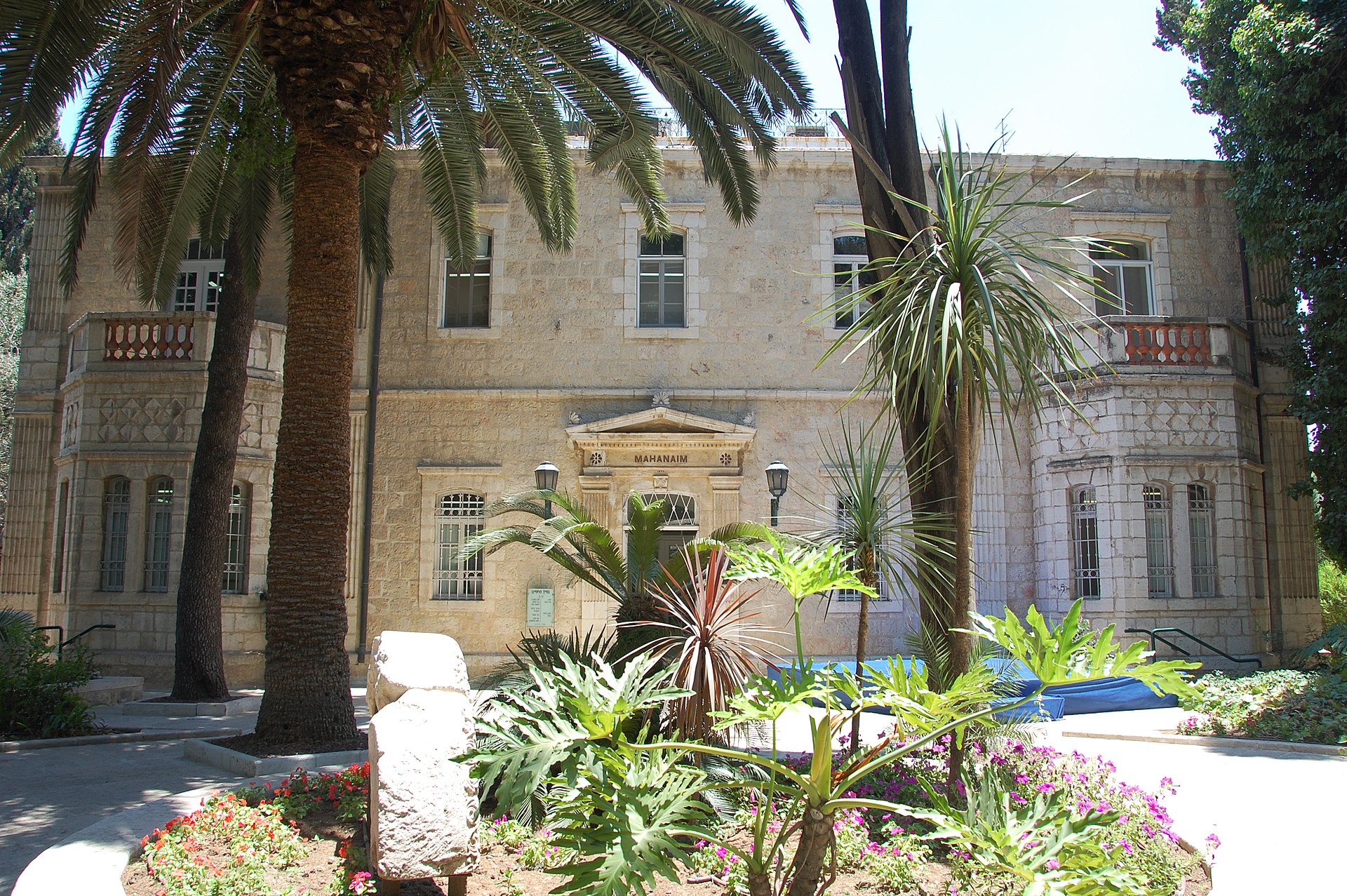 Beit Mahanaim:
Residence of banker Frutiger from the 19th century.
This building, constructed in the late 19th century and named Mahanaim (מחניים – Two Camps, referring to Jacob’s camps in Genesis 32), has hosted various institutions and historical figures:
Frutiger Family: Residence of Swiss banker Johannes Frutiger.
Girls’ School: Home to the Evelina de Rothschild School.
World War I: Used as a food and medical supply distribution station.
British Mandate: Residence of Menachem Ussishkin and Shai Agnon.
British Commissioner’s House: Temporary residence of the British commissioner after the 1927 earthquake.
Anecdote: Ussishkin built another house with the same name.
Today: Headquarters of the Ministry of Education and Culture since 1949. -
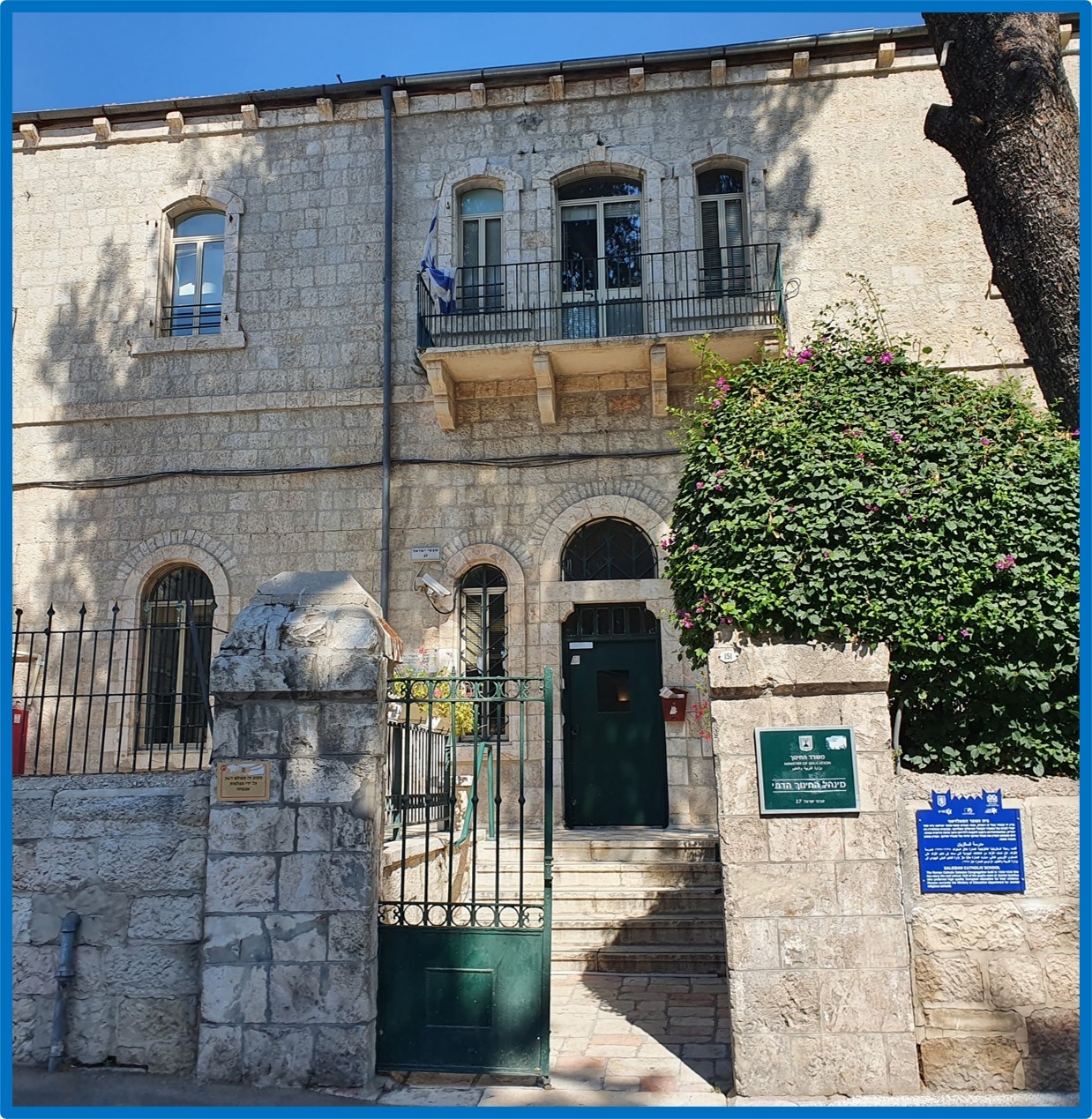 Salesian School:
Boys’ school run by the Salesian Order.
Between 1928 and 1938, this was the boys’ school of the Salesian Order. Although Catholic, half of its students were Jewish due to its high academic standards.
Today: Belongs to Israel’s Ministry of Education and Culture. -
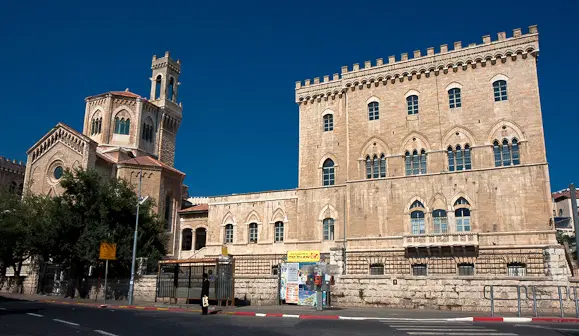 Italian Hospital:
Hospital founded by an Italian association, later confiscated by the British.
Built by the Associazione Nazionale per Soccorrere i Missionari Italiani and designed by Antonio Barluzzi, his first project.
World War II: Confiscated by the United Kingdom and used as a military hospital by the R.A.F.
Today: Headquarters of Israel’s Ministry of Education and Culture. -
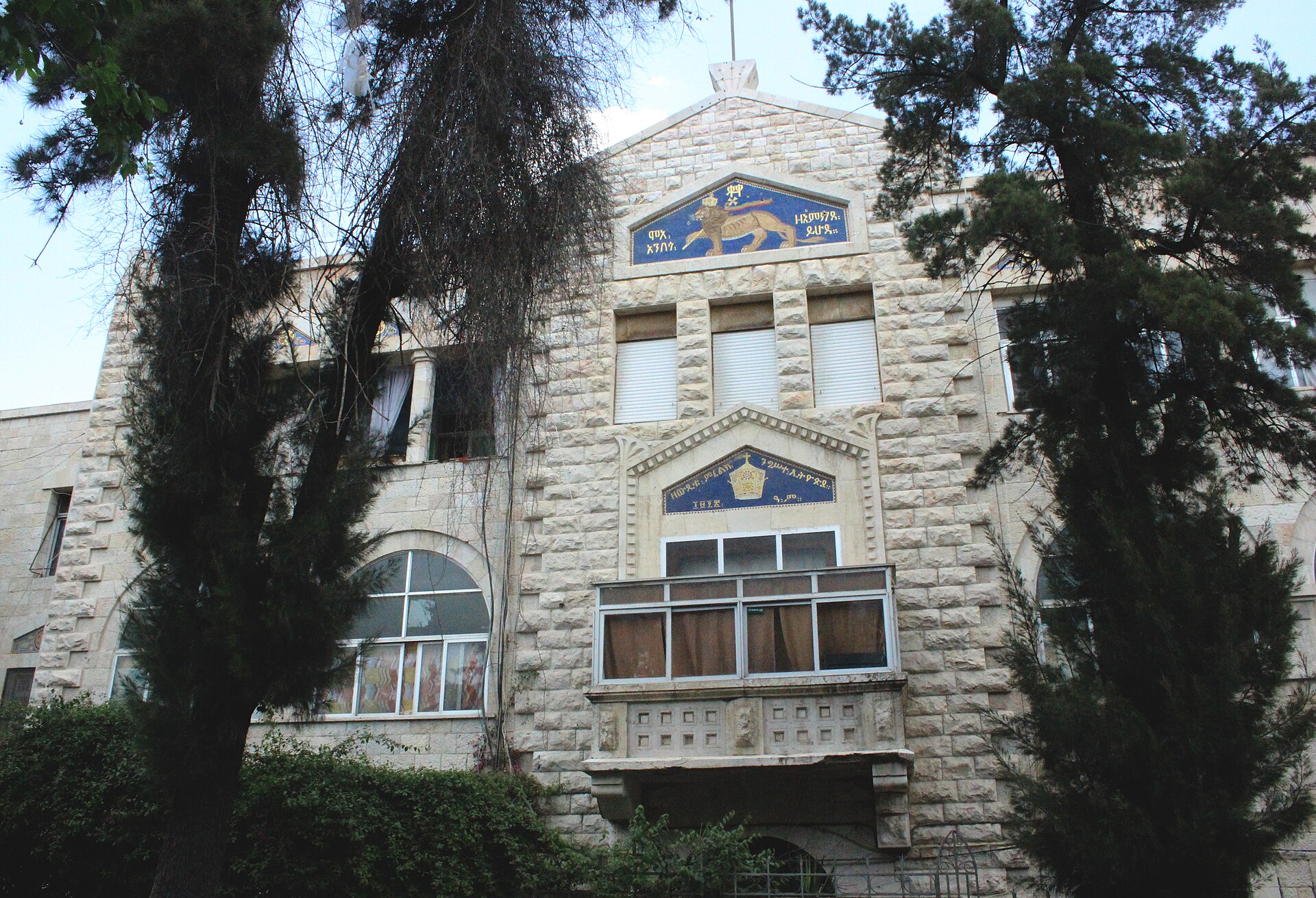 Ethiopian Consulate in Israel:
Ethiopia’s consulate in Israel until 1973.
Built in 1925 for Empress Zauditu. The façade features the Lion of Judah.
Later served as the official residence of the Ethiopian consul. In 1936, Haile Selassie stayed here for half a year. His birthday was celebrated annually on July 23.
Today: Since 1973, the building offers rental apartments. -
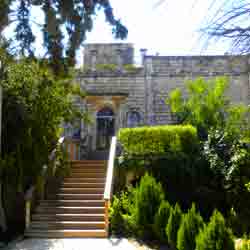 Reverend Kelk’s House:
Residence of missionary Arthur Kelk with panoramic views of Jerusalem.
Two-story house with a courtyard, residence of Reverend Arthur Kelk, a missionary sent by "The Church Ministry Among the Jewish People." From its rooftop, one could see all of Jerusalem and the Moab Mountains.
-
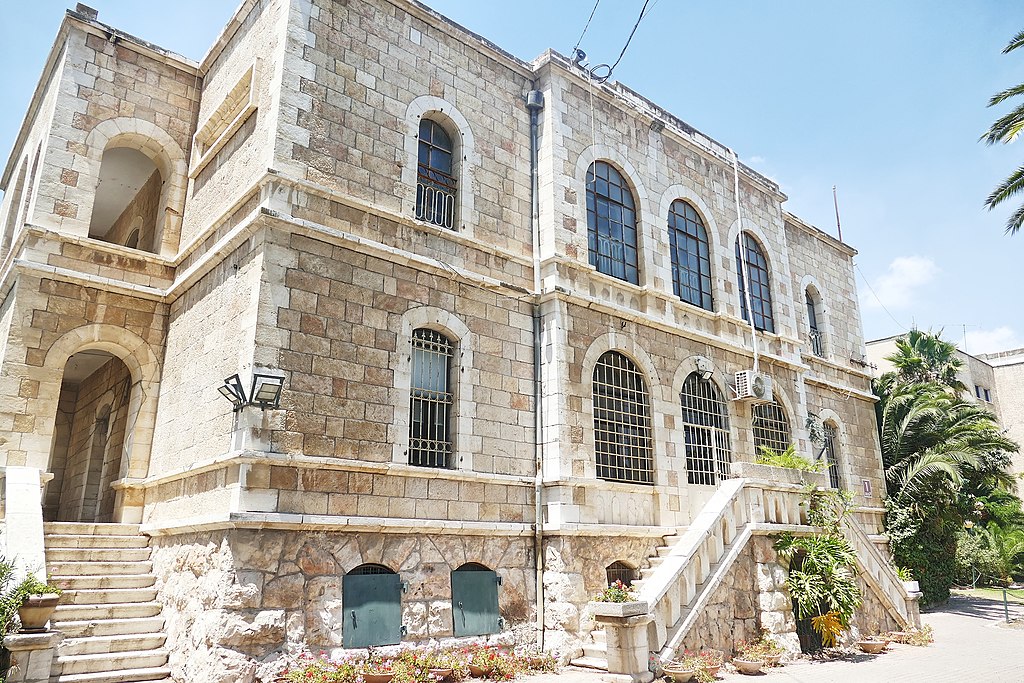 German Clergy Building:
Stay of Kaiser Wilhelm II in 1898.
This Protestant German building is especially known for hosting Kaiser Wilhelm II during his visit to the Holy Land in 1898. A camp was set up in the surrounding field to honor his arrival and that of his wife, Augusta Victoria. It was here that the famous meeting between Zionist leader Theodor Herzl and Kaiser Wilhelm II took place. Herzl aimed to convince the German emperor to support the creation of a Jewish state in these lands, though he was unsuccessful.
British Mandate: Later used as the residence of British military commissioner Ronald Storrs.
Today: Part of the ORT Technical School. -
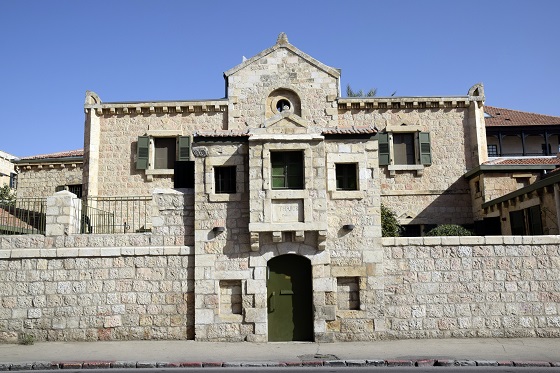 Tabor House:
Home of architect and archaeologist Conrad Schick.
To understand this unique two-story building, we must know its builder. In 1889, Conrad Schick, a German Protestant architect and self-taught archaeologist, built and lived here with his wife Friederike until his death. He was responsible for major discoveries and constructions in Jerusalem. He built his "dream house" in the style of a German fortress. As an archaeologist, he placed a replica of the "Gezer Stone" beneath one of the windows.
The name Tabor reflects Schick’s Protestant reverence for the mountain where, according to tradition, Jesus was transfigured. He even added below the name "Thabor" on the entrance plaque the verse from Psalm 89:13 that inspired him.
Today, the building houses the Swedish Theological Institute.