-
Historia
In 1946, a young Bedouin goat herder was searching for a lost goat that had wandered into a cave in the Judean Desert. The boy didn’t dare enter the dark cave, so he decided to scare the goat out by throwing a stone inside. But the sound he heard caught his attention, a noise of broken pottery.
He entered the cave and found his goat, along with ceramic jars containing leather scrolls. To him, these scrolls seemed useful for repairing his worn-out sandals or for kindling a fire on a cold night.
When he brought the scrolls to a local shoemaker, who happened to be an archaeology enthusiast, he immediately recognized the potential significance of the find.
After a long journey, the scrolls eventually reached the Israel Museum. Nearly 1,000 unique manuscripts were discovered, including the oldest known copies of the Bible, writings on apocryphal texts, and sectarian documents from the Sons of Light. -
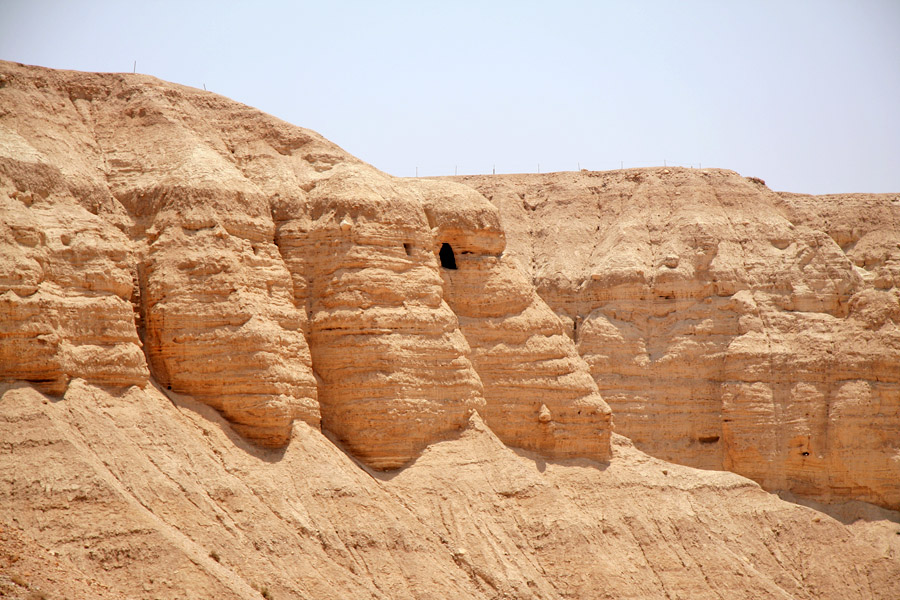 Qumran Caves:
These caves are where the scrolls were found.
The particular type of stone (Lashon לשון) is sandy and soft, which allows for the formation of natural caves like these. In the early 1st century, a new type of religious sect began to emerge, groups who lived in isolation from society in the caves of the Judean Desert. One such group was the Essenes, a Jewish sect that lived on the outskirts of Jerusalem and practiced a life of asceticism, avoiding all worldly pleasures.
This may have been the place where they lived and slept in these caves. -
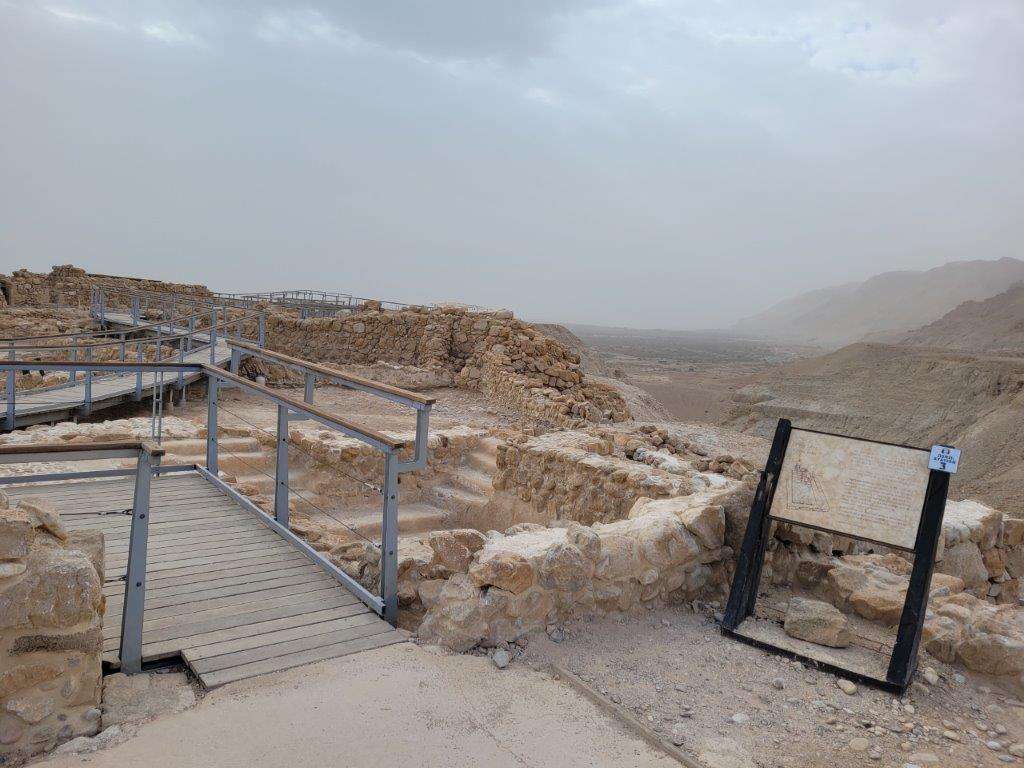 Mikveh (Ritual Bath):
One of the many ritual baths found at Qumran.
During the 1st century BCE, the Jewish people embraced the concept of purification of both body and soul. This new yet ancient ideology was already part of divine commandments, but only took formal shape during that century. It can be seen in their clothing, kitchen utensils, and especially in the ritual bath (Mikveh מקוווה), where Jews would immerse themselves for spiritual and physical purification. It was mandatory before entering the Great Temple, but also a daily practice.
Modern archaeology holds that “If a Mikveh is found, it is synonymous with a Jewish settlement.”
This is the case at Qumran, where 11 Mikvaot (plural of Mikveh) were discovered, indicating that the Jewish inhabitants of Qumran, likely members of the Essene sect, were deeply committed to the purification of body and soul.