-
.jpg) Bethphage:
Bethphage:Traditional site where Jesus began his triumphal entry into Jerusalem on Palm Sunday.
Jesus seeks a donkey to enter Jerusalem, fulfilling the prophecy of Zechariah, which foretells the Messiah entering the city riding a donkey. From here, Jesus descends toward Jerusalem, greeted by crowds singing: "Hosanna to the Son of David!" In this small village stands the Franciscan church, designed by Italian architect Antonio Barluzzi, commemorating the tradition of Jesus being welcomed at the entrance to Jerusalem with palm branches on Sunday (Palm Sunday).
Matthew 21:1, Mark 11:1, Luke 19:30
-
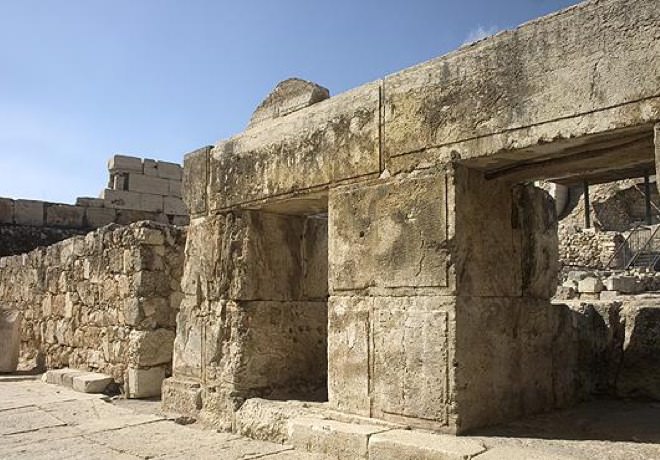 Overturning the Money Changers’ Tables:
Jesus confronts the merchants in the Temple.
Jesus confronts the merchants in the Temple, driving them out for turning a sacred place into a marketplace.
Matthew 21:12, Mark 11:14, Luke 19:45, John 2:13
-
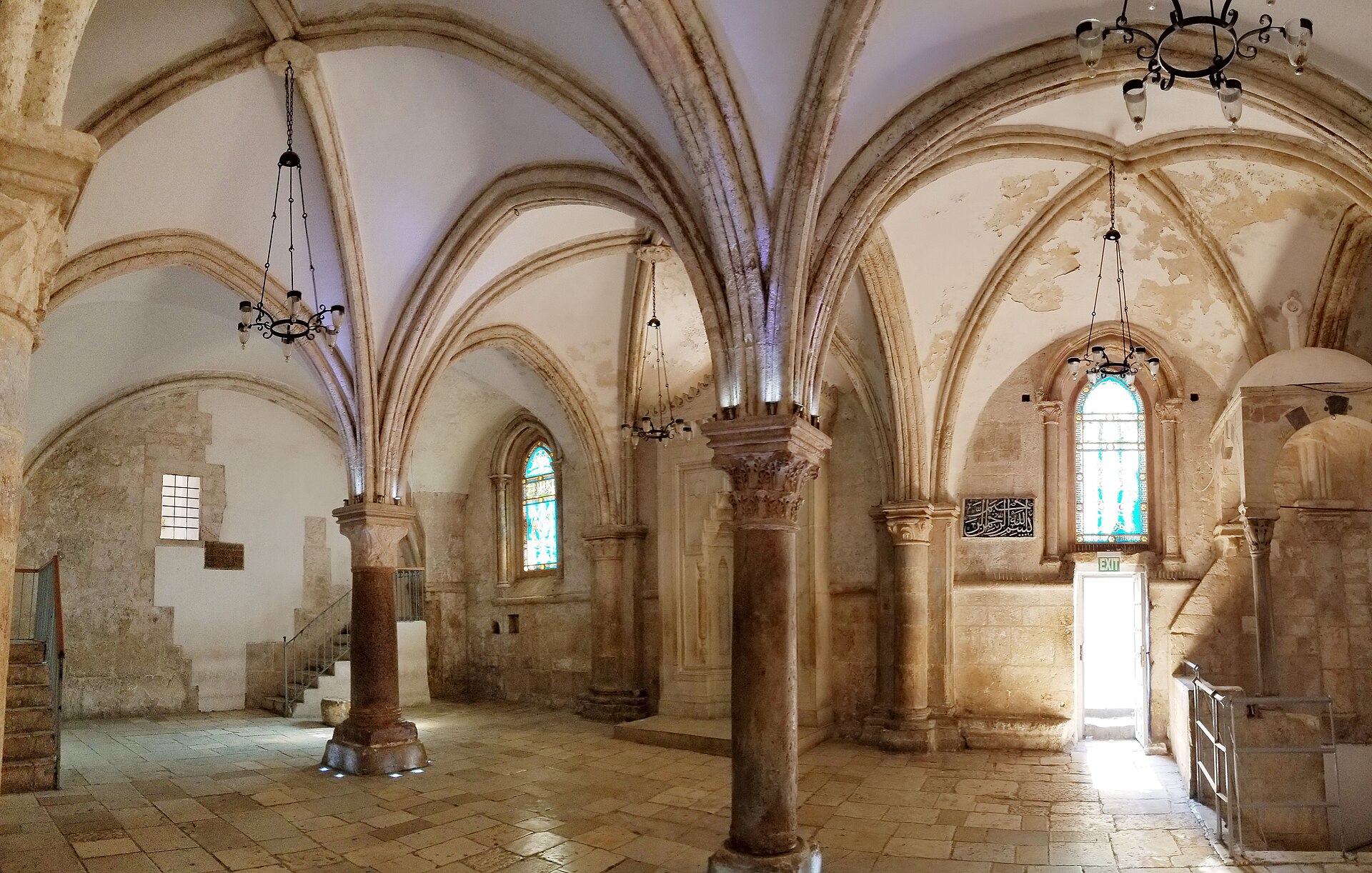 The Cenacle – The Last Supper
On the upper floor of the same complex as David’s Tomb lies the room of the Last Supper (Cenacle).
Leonardo da Vinci famously depicted this unique moment when Jesus, together with his apostles, celebrated what would be his final Passover meal. Although this site was built by the Crusaders in the 12th century and converted into a mosque in the 14th century (as seen in its walls), the building stands atop the ruins of the Byzantine church Agia Sion, the same one beneath the Abbey of the Dormition. It is precisely here that the church protected the room where the Last Supper took place and the space where the apostles received the Holy Spirit on Pentecost.
Matthew 26:17–30, Mark 14:12–26, Luke 22:7–39, John 13:1–30, Acts 2:1–13
-
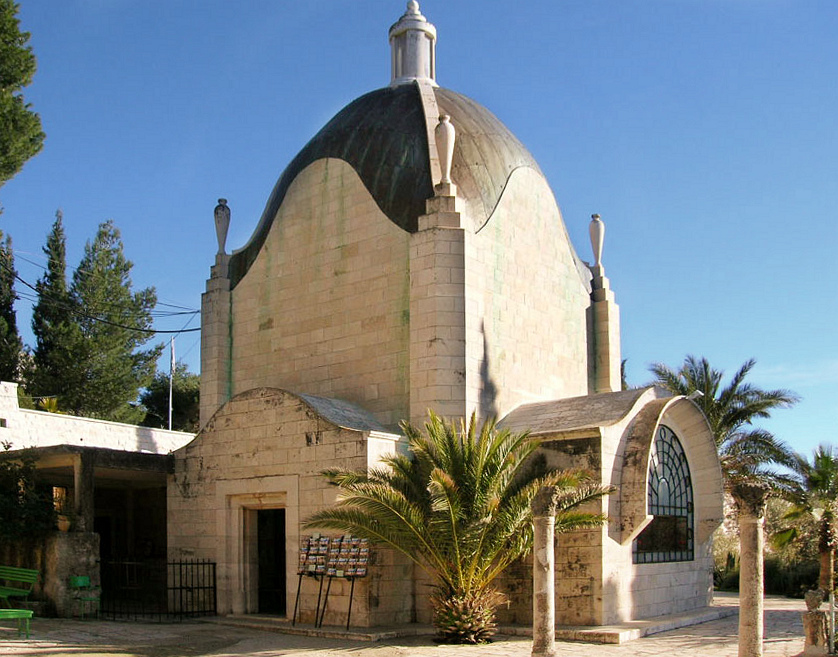 Dominus Flevit Church:
Built in the shape of a teardrop, commemorates the place where Jesus wept over Jerusalem, foretelling its destruction.
This church, built by the renowned Franciscan architect Antonio Barluzzi, reflects what Jesus saw, one of the most iconic panoramas of the Old City of Jerusalem.
Luke 19:41
-
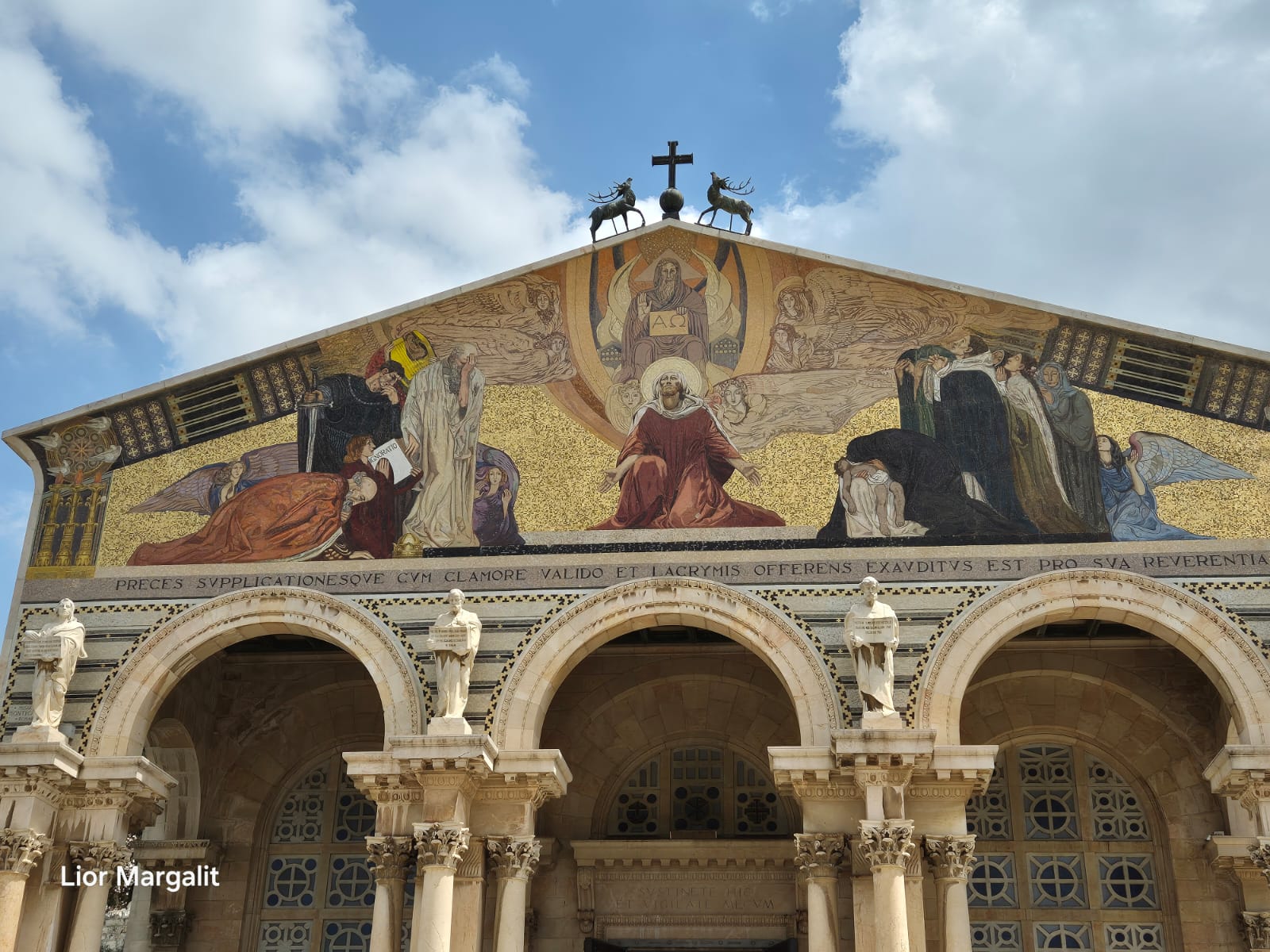 Basilica of the Agony – Church of Gethsemane (Church of All Nations):
Jesus descends with his disciples to the Mount of Olives and stops here to pray, awaiting his arrest.
This church, built next to the Garden of Gethsemane, was designed by Antonio Barluzzi atop Byzantine ruins. It commemorates the moment of Jesus’s anguish before his betrayal. The altar is placed over what Christian tradition believes to be the rock where Jesus prayed. The paintings reflect Gospel texts, and Barluzzi once again succeeds in evoking the atmosphere of agony that Jesus experienced that night.
Luke 22:39–46
-
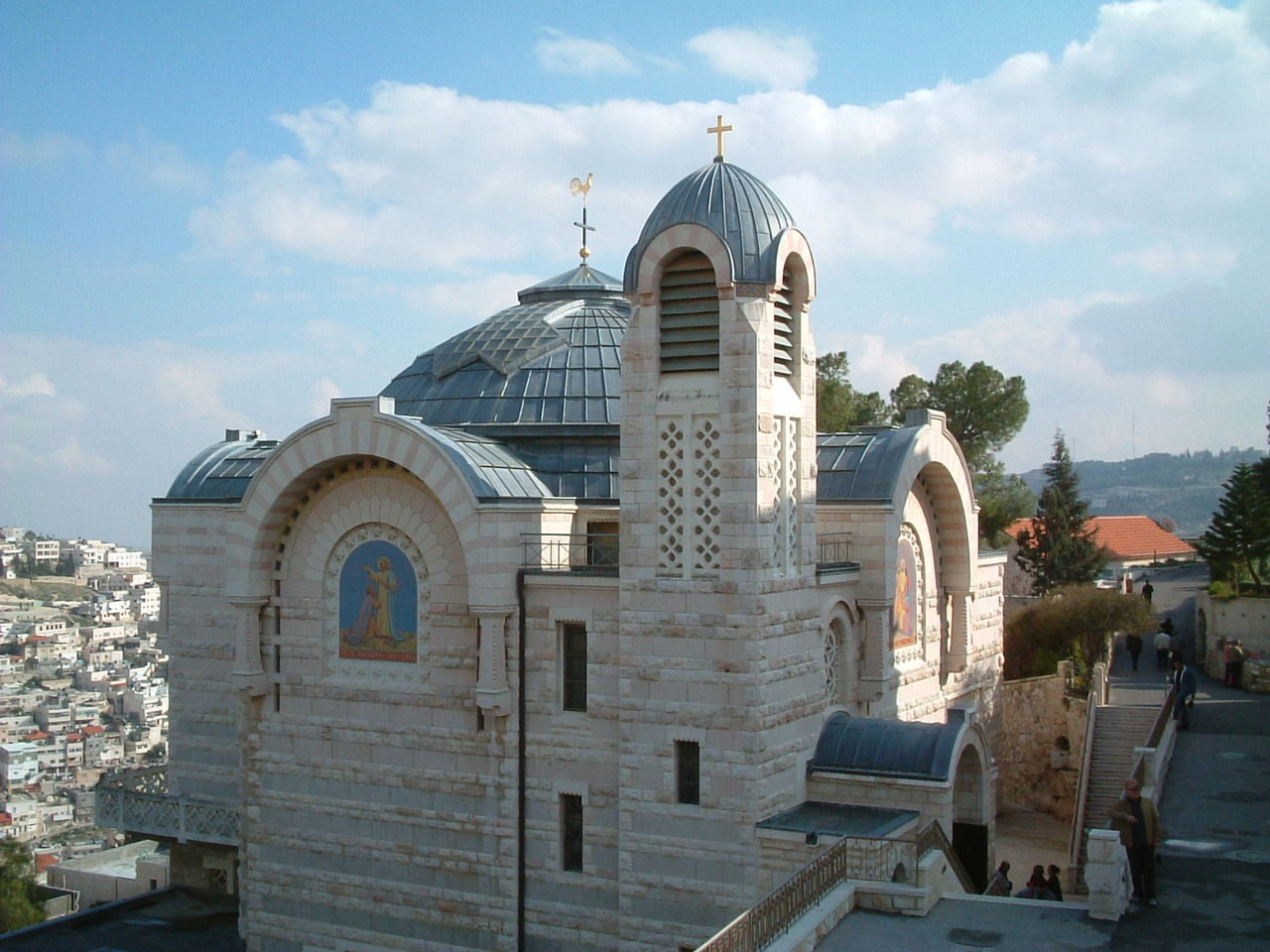 Church of Saint Peter in Gallicantu
Likely the house of High Priest Caiaphas, where Jesus was held before being taken to Pontius Pilate.
This cross-shaped church was built over the ruins of a Byzantine church destroyed during the Muslim conquest in the 7th century. It is believed to be the site of Caiaphas’s house, where Jesus and Peter were imprisoned before being brought before Pontius Pilate. The church’s name comes from the New Testament account where Jesus tells Peter he will deny him three times before the rooster crows. And so it happened: when Jesus was arrested in Gethsemane and taken to Caiaphas’s house, Peter denied knowing him three times until the rooster crowed.
Matthew 26:69–75, Mark 14:66–72, Luke 22:54–62, John 18:15–27