-
History
This unique geological phenomenon is often mistakenly called a crater due to its resemblance to impact craters formed by celestial objects hitting the Earth’s surface. What we see here is called מכתש – Mahtesh in Hebrew, a term used to describe its distinct formation and structure.
Unlike a crater, which is formed by a powerful impact that compresses the center downward and raises the edges due to the force of the collision, a Mahtesh is the result of millions of years of erosion.
Imagine building a sand mountain at the beach and pouring water into its center. The water carves a stream outward, carrying sand away and leaving a hollow surrounded by the original rim.
That’s what happened here. For this to occur, a very low point is needed to continuously drain the eroded material over millions of years. And Israel has just that—the lowest place on Earth: the Dead Sea, over 400 meters below sea level.
In summary: a mountain eroded over millions of years by rain, forming a river that, thanks to the Dead Sea’s low elevation, carried away sediment and left behind a massive hollow surrounded by the mountain’s rim.
In Israel, we can see three Mahteshim. -
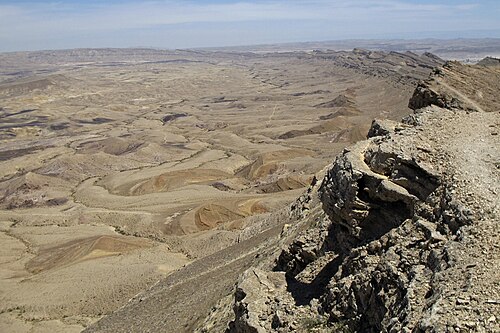 Mahtesh Gadol (The Large Mahtesh)
The second largest Mahtesh in the Negev.
Over 14 km long and 6 km wide, this Mahtesh reaches a depth of more than 400 meters. Like all Mahteshim, it requires a drainage river—here it’s the Hatira River, which flows into the Zin River and eventually reaches the Dead Sea. At the base of this “crater,” you’ll find soil from the Jurassic period!
-
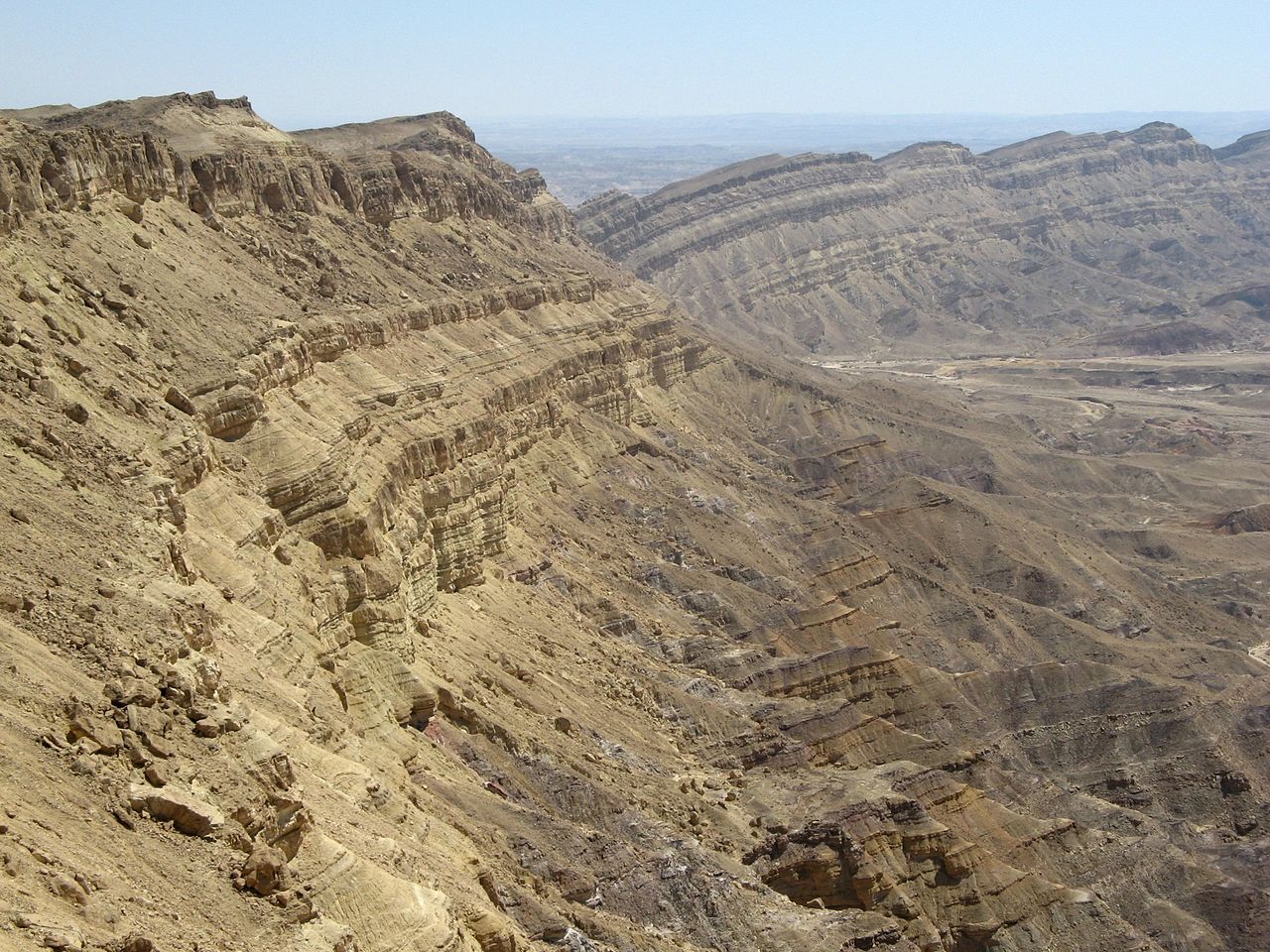 Mahtesh Katan (The Small Mahtesh)
The third largest Mahtesh in the Negev.
Measuring 8 km long and 6 km wide, this Mahtesh also reaches a depth of over 400 meters. Its drainage river is the Hatzera River, which flows into the Zin River and eventually into the Dead Sea.
-
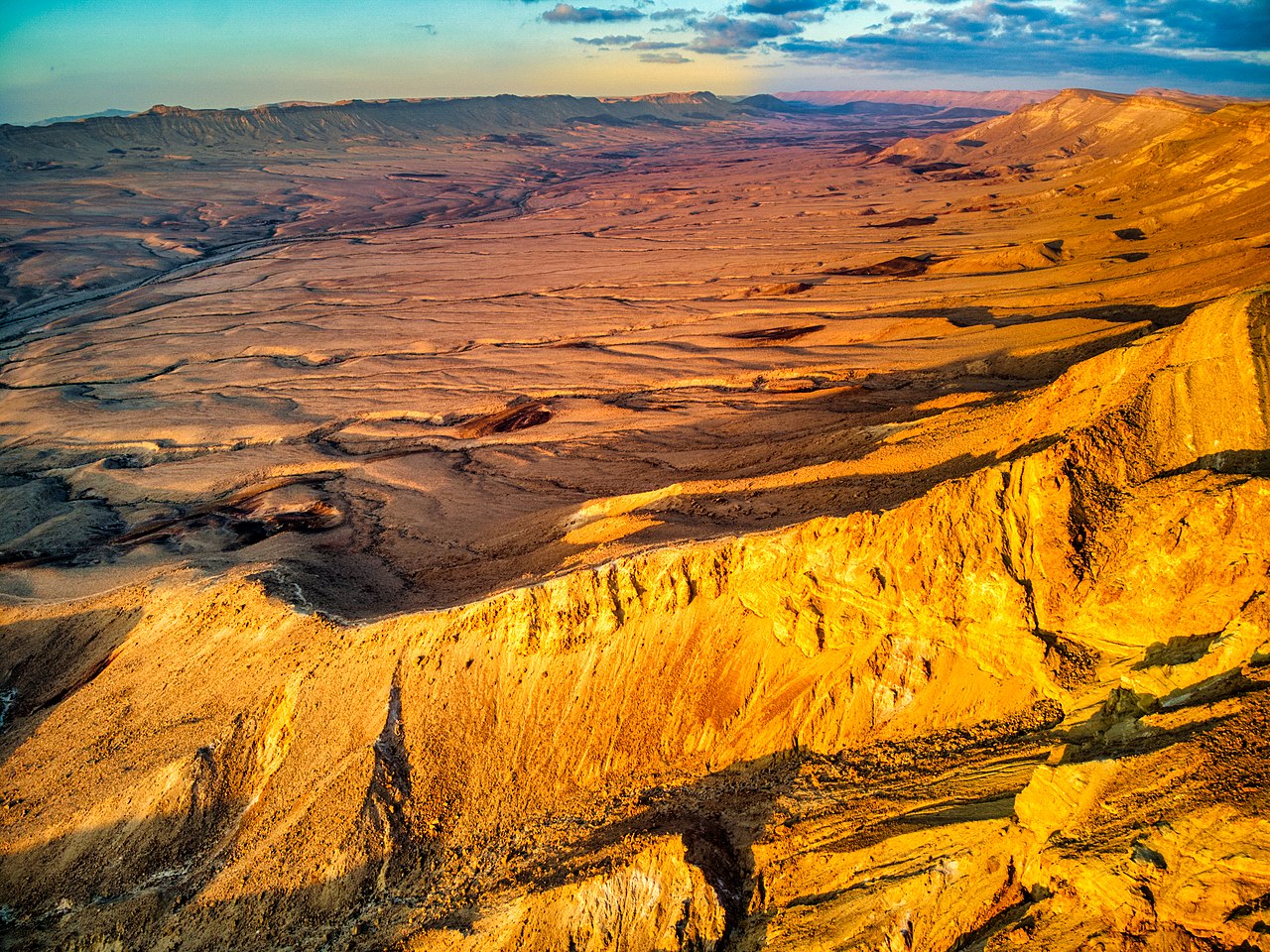 Mahtesh Ramon
The largest Mahtesh in the Negev.
Stretching 40 km in length and 9 km in width, this Mahtesh has a depth of over 350 meters. Its drainage river is the Ramon River, which connects to other rivers and eventually reaches the Dead Sea. This immense Mahtesh contains geological secrets that attract scientists from around the world. It offers a rare opportunity to observe nearly all geological eras in one place—including volcanic remnants atop Triassic-period soil!