-
History
According to the Bible, the patriarch Abraham lived in the region of Be’er Sheva (באר שבע – Seven Wells or Seventh Well). Interestingly, this site welcomes visitors with a well at the entrance, and additional wells can be found inside. Considering this is a desert region, access to water is crucial for the survival of any settlement.
Don’t confuse this site with the modern city of Be’er Sheva, located just a short distance away.
Archaeological research dates this site back to the time of the patriarch Abraham. -
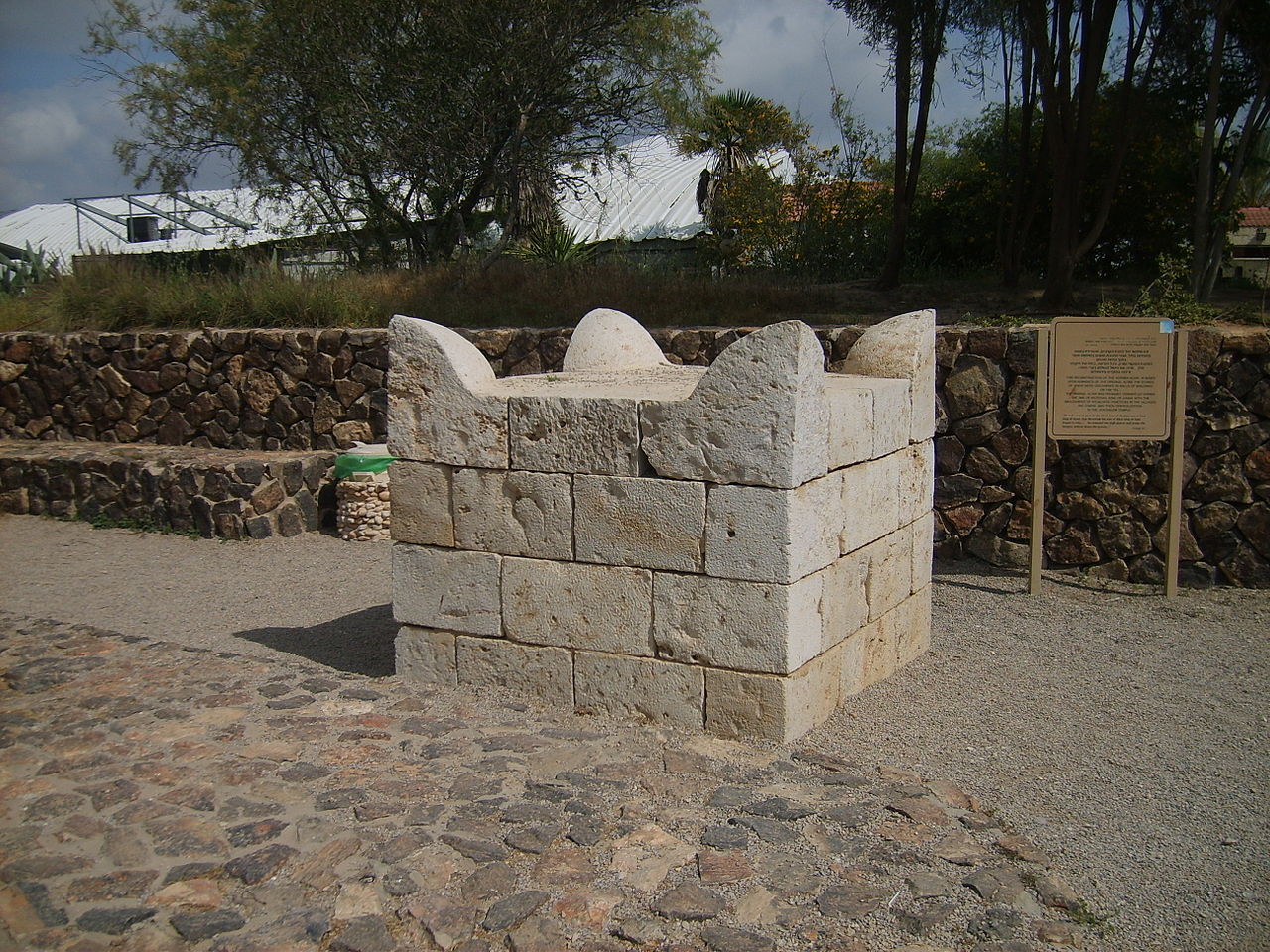 Altar
AltarFour-horned altar from the Bronze Age.
In biblical times, sacrificial altars were described as having four horns—one on each corner. This altar was found dismantled among the inner structures of the site, suggesting it was intentionally taken apart. The original is now housed in the Israel Museum. According to the Bible, someone condemned to death could find refuge by grasping the horns of the altar.
Kings I 1:50
-
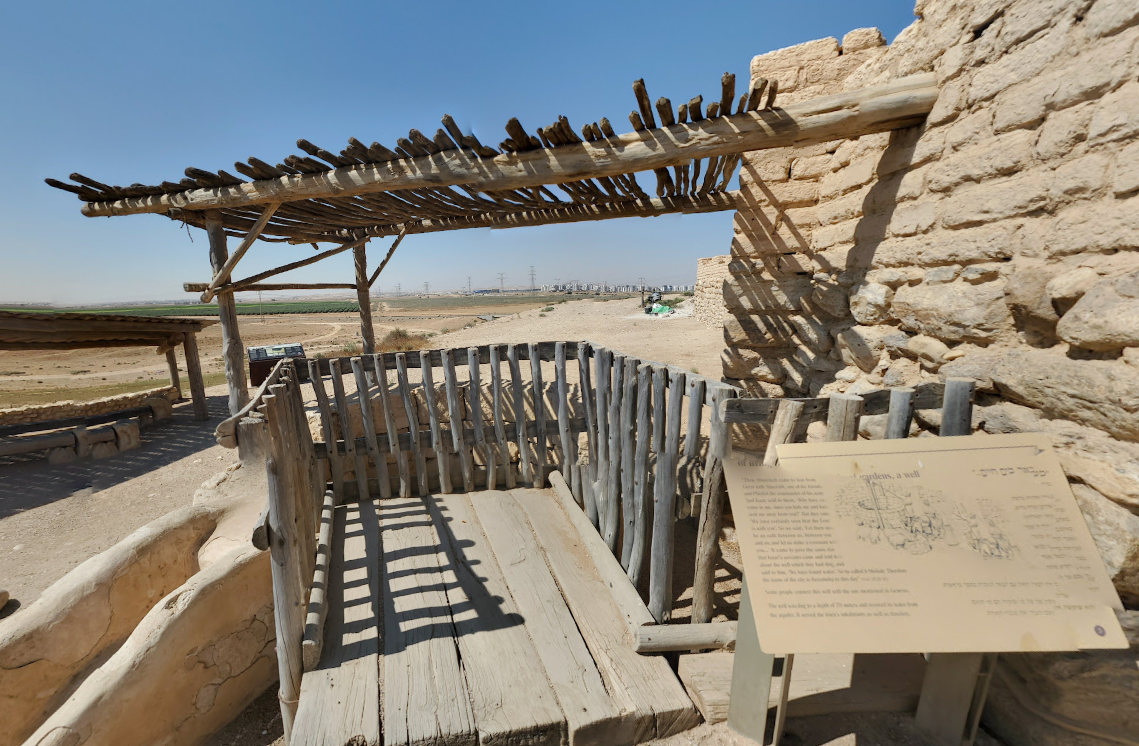 Water Well
Water system of Tel Be’er Sheva.
This water well at the entrance is connected to the Be’er Sheva and Hebron rivers, possibly as described in the Book of Genesis, where Abraham seals a covenant with Abimelech over the use of the well. Later, his son Isaac also makes a covenant regarding the same water source.
Genesis 21:22, Genesis 26:23